Every pet owner leaving town faces the same decision: send the animal to a boarding facility, or hire a professional sitter to manage the pet inside its own home. Both options solve the same immediate problem: care during an absence, but they operate on different structural models. Boarding facilities centralize animals in a shared space under staff supervision. Home sitters decentralize care, visiting or staying in the owner's residence. Neither model is universally superior. The right choice depends on the pet's health status, temperament, the length of the trip, and the specific risks the owner is trying to manage. This guide breaks the decision into concrete evaluation criteria, so the choice is based on facts rather than habit or convenience.
Health and Disease Prevention Protocols

Boarding facilities house multiple animals in overlapping spaces, even when kennels are physically separated. Shared ventilation systems, communal exercise yards, and staff moving between enclosures create transmission pathways for airborne and contact-based illnesses. Reputable facilities require proof of core vaccinations before intake for dogs; this typically means rabies, distemper, parvovirus, and often Bordetella (kennel cough); for cats, rabies and feline panleukopenia at minimum. Facilities that skip this verification step are a warning sign, not a convenience. Parasite prevention (flea, tick, and intestinal worm control) is usually mandated as well, since shared flooring and yards allow parasites to move between animals within hours.
Home sitting removes the multi-animal exposure risk almost entirely. The pet remains in its own environment, encountering no unfamiliar animals unless the owner has other pets in the household. This matters most for animals with incomplete vaccination schedules puppies and kittens still completing their initial shot series, or senior animals with compromised immune systems. A six-month-old puppy without a completed parvovirus series should not enter a group boarding environment regardless of how clean the facility appears.
Stress-induced conditions are a separate concern from infectious disease. Cats in particular are prone to stress-related cystitis and appetite suppression when removed from familiar territory. Dogs with anxious temperaments can develop gastrointestinal upset, self-trauma from excessive licking, or refusal to eat for the first 24–48 hours in a new location. Home sitting largely avoids this triggering event, since the pet's physical environment does not change. Boarding facilities that specialize in anxious animals will offer separate quiet wings or single-animal suites, but this is a premium service tier, not the default.
Environmental Control and Routine Continuity
Climate control is a structural, not cosmetic, issue in hot regions. A boarding facility's central air conditioning must run continuously across large shared spaces, and any outdoor exercise yards need shaded, temperature-monitored access during peak heat hours. Facilities operating in high-temperature urban environments, such as those in the Gulf region, are expected to keep indoor kennel temperatures within a controlled range and to restrict outdoor time to early morning or evening. Ask specifically how the facility measures and logs indoor temperature; a verbal assurance without a monitoring system is not sufficient for animals sensitive to heat, such as brachycephalic breeds (pugs, bulldogs, Persian cats) that struggle to regulate body temperature.
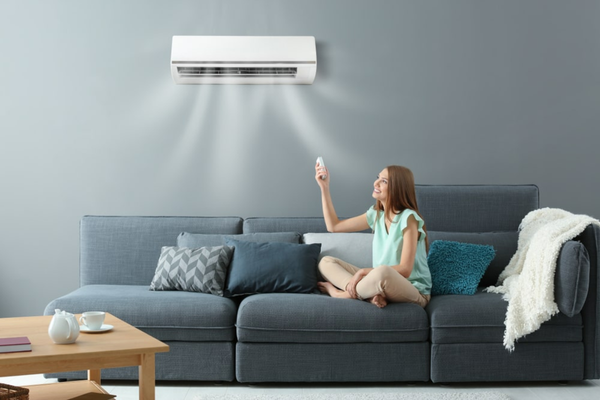
Home sitting keeps the pet inside its existing climate setup, using the same air conditioning unit and settings the animal is already acclimated to. This removes the adjustment period entirely. The tradeoff is that a home sitter must be given clear instructions on thermostat settings and, ideally, be able to detect equipment failure. A boarding facility, by contrast, has backup systems and staff trained to notice environmental problems across the whole building, not just one unit.
Feeding schedules and exercise routines also diverge structurally. Boarding facilities operate on fixed staff shift timing — feeding happens at set hours for the whole population, which may not match a pet's usual schedule down to the hour. Exercise is typically communal (group yard time) rather than individualized, and animals with specific dietary needs (prescription food, portion control for weight management, multiple daily medications) require facilities to flag and follow individual charts, which introduces room for error when staff manages dozens of animals at once.
Home sitters follow the pet's existing schedule exactly, since they are working within the owner's house and routine. Medication timing, meal portions, and walk timing can match the pet's normal life precisely. This precision matters most for animals with diabetes, kidney disease, or other conditions where timing consistency affects health outcomes directly.
Behavior and Temperament Matching
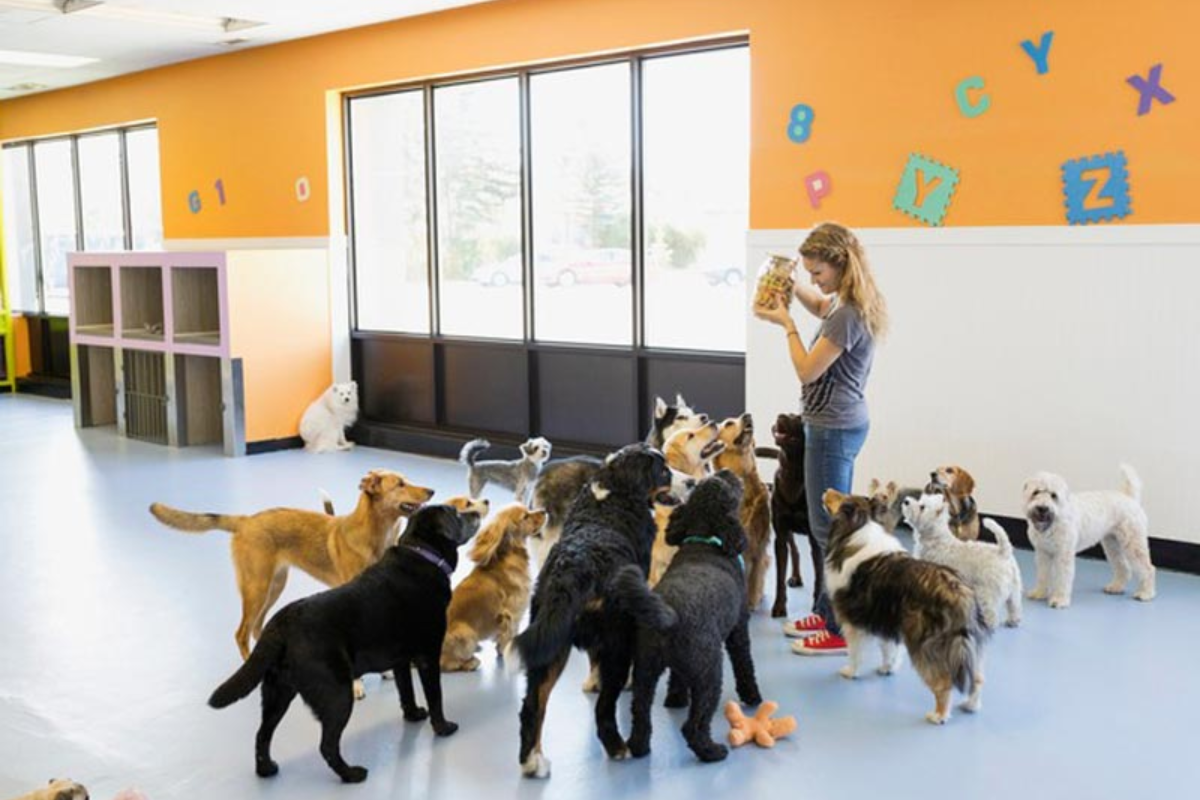
Social and solitary temperaments respond differently to each model. Dogs that are naturally social, enjoy group play, and show no resource guarding around food or toys tend to do well in boarding environments with supervised group activity. The stimulation of other animals can actually reduce boredom-related stress for high-energy, socially confident dogs.
Cats present a more consistent case against boarding, regardless of temperament. Cats are territorial by nature, and even socially confident cats generally show reduced stress when their environment stays constant. Most professional advice favors home sitting for cats unless the owner's home cannot be secured or the trip is unusually long.
Anxious or reactive animals those that show fear responses to unfamiliar people, resource guard aggressively, or have a bite history are poor candidates for group boarding. Facilities can accommodate them with solo housing, but this removes most of the social benefit boarding offers and usually costs more. A home sitter working one-on-one, in a familiar space, generally produces a calmer outcome for these animals, since the sitter adapts to the pet rather than the pet adapting to a new facility's routine and staff turnover.
Multi-pet households add another variable. Animals that are bonded to each other (littermates, long-term companions) usually board better together, since separation itself can trigger distress independent of the environment change. Home sitting handles multi-pet households naturally, since the group stays together in the same space with no separation at all.
Security, Oversight, and Emergency Readiness
Boarding facilities have a fixed veterinary relationship or, in larger operations, an on-site veterinary technician. Emergency response is typically fast because the facility has established protocols, knows the signs of common issues in their population, and often has a vet on call or within a short drive. This is a meaningful advantage for pets with known health conditions or older animals where sudden decline is a real possibility during the boarding period.
Home sitting places emergency response on the sitter's individual judgement and their relationship with the owner's regular veterinarian. A well-vetted, experienced sitter will have the owner's vet contact saved, know the nearest emergency clinic, and carry basic first-aid knowledge. This should be confirmed before booking, not assumed. Ask any sitter directly what they would do if the pet stopped eating for 24 hours, or showed signs of heatstroke — a vague answer is a signal to look elsewhere.
Home security is a separate consideration unique to in-home sitting. Granting a stranger access to a residence, including key handling, alarm codes, and awareness of valuables, is a real trust exercise. Reputable sitting services conduct background checks on staff and use secure key management systems (lockboxes, coded access, or in-app key tracking) rather than physical key handoffs with no audit trail. Ask any independent sitter for references and proof of a clean background check before handing over house access.
Boarding facilities remove the home-access question entirely, since the pet leaves the house rather than a stranger entering it. Facilities carry their own security considerations, though verify that the facility uses microchip scanning at intake to confirm animal identity against records, and confirms this again at pickup. Misidentification is rare but has occurred at facilities without strict verification steps, and it is a completely preventable risk when the protocol is followed.
Financial Structures and Cost Dynamics
| Cost Factor | Boarding Facility | Home Sitter |
|---|---|---|
| Base pricing unit | Per pet, per night | Per visit or per overnight stay (not per pet) |
| Multi-pet households | Modest discount for additional pets sharing a kennel — but not linear (2nd dog ≠ half price) | Little to no added cost for extra pets in most cases — labor doesn't scale with pet count |
| Best fit for | Single-pet or simpler households | Multi-pet households — generally more cost-effective |
| Care-frequency scaling | Flat per-night facility rate regardless of how much attention a pet needs | Scales directly with actual care needs (e.g., cat = 1 visit/day vs. dog = 3 walks/day priced accordingly) |
| Holiday/peak pricing | Predictable surcharge, often 20–50% above standard rate (demand-driven, not cost-driven) | Not mentioned as having an industry-standard surcharge pattern |
| Size/breed scaling | Rate scales with animal size | Not typically size-dependent |
| Add-ons | Grooming, extra playtime, medication administration priced separately | Medication administration may be included in visit; extras less standardized |
| Entry/compliance cost | May require proof of recent vet vaccination — potential added vet visit if lapsed | May charge a one-time "meet and greet" fee for initial consultation |
| Booking timing | Early booking avoids surcharge risk and availability risk | Less exposure to surge pricing or "fully booked" risk |
Boarding facilities generally price per pet, per night, with the rate scaling by animal size and any add-on services (grooming, extra playtime, medication administration). Multi-pet households usually get a modest per-additional-pet discount when animals share a kennel, but pricing rarely drops linearly — a second dog is not half price. Holiday periods (school breaks, major public holidays) carry a predictable surcharge across the industry, often 20–50% above standard rates, driven by demand rather than added cost of service. Booking early avoids both the surcharge and the risk of a fully booked facility.
Home sitters typically price per visit or per day of overnight stay, independent of the number of pets in most cases, since the labor cost (traveling to the home, spending time there) does not scale directly with pet count the way kennel space does. This makes home sitting comparatively more cost-effective for multi-pet households. Per-visit pricing also means costs scale with actual care frequency; a cat needing one visit daily costs less than a dog needing three walks per day, and the pricing reflects that difference directly rather than a flat facility rate.
Additional costs to compare directly: boarding facilities often require proof of recent vaccination administered by a vet, which may mean an added vet visit cost if records have lapsed. Home sitters may charge a "meet and greet" fee for an initial consultation, a standard and reasonable practice that lets both parties confirm compatibility before a longer booking.
Licensing, Insurance, and Legal Compliance
Commercial boarding facilities are subject to business licensing requirements that vary by jurisdiction but generally include a commercial trade license, health and safety inspections, and, in many regions, a specific animal-care or veterinary-adjacent permit. Facility insurance should cover liability for injury, illness, or death occurring on-site, and a legitimate operation will provide proof of this coverage on request. Insist on seeing a current license and insurance certificate rather than accepting a verbal claim; this single check filters out a large share of unregulated operators.
Independent home sitters occupy a less standardized regulatory space. Many jurisdictions do not require a specific pet-sitting license, which means the legal compliance burden shifts to checking the sitter's individual insurance and bonding status directly. A professional sitter operating legitimately will carry liability insurance covering damage to the home and injury to the pet while under their care, and should be willing to provide proof of this without hesitation. Sitters working through an established agency typically carry this coverage automatically as a condition of employment; fully independent freelancers should be asked directly, since coverage is not guaranteed by default.
Contracts matter in both models. A boarding facility contract should specify medical treatment authorization limits (what the facility can approve without contacting the owner) and liability terms for illness contracted on-site. A home sitting agreement should specify property liability, what happens if the pet requires emergency veterinary care exceeding a pre-agreed spending limit, and clear check-in communication expectations. Verbal agreements without any written terms are a risk in both models, regardless of how trustworthy either party seems at the outset.
Practical Decision Matrix
Boarding is objectively better when:
- The pet is a socially confident dog that enjoys group play and shows no resource guarding.
- The owner's home cannot be reasonably secured for a stranger's access during the trip.
- The pet has a chronic condition requiring on-site veterinary monitoring beyond what a sitter can provide.
- The trip is short (2–4 days), and the facility has same-day vet access on-site.
- Cost efficiency favors a single-pet household with a straightforward per-night rate.
Home sitting is objectively better when:
- The pet is a cat, or any animal that shows elevated stress with environmental change.
- The household has multiple pets, especially bonded animals that should not be separated.
- The pet has anxiety, reactivity, or a bite history that makes group housing unsuitable.
- Medication timing or a specific medical routine requires precision matching the pet's existing schedule.
- The trip is longer, and routine continuity matters more than concentrated veterinary access.
Neither boarding nor home sitting is the default correct answer. Boarding suits socially confident, healthy animals whose owners cannot secure the home during an absence, and it offers faster access to on-site veterinary support. Home sitting suits cats, anxious animals, multi-pet households, and any situation where routine continuity and reduced disease exposure outweigh the benefit of concentrated professional oversight. The decision comes down to matching the pet's actual health and temperament profile against the structural strengths of each model — verified vaccination and licensing records, confirmed climate control, and a clear emergency plan should be non-negotiable regardless of which option is chosen.
Also read:
 Shahba Mayyeri
 Umema Arsiwala
 Shahba Mayyeri