Summer turns air conditioning from a comfort feature into a survival tool. For small business owners running offices, retail outlets, or boutique spaces, this shift shows up directly on the DEWA bill. Residential tenants feel the same pressure the moment temperatures climb past 40°C and cooling systems run almost around the clock.
Utility costs are one of the few operational expenses a tenant can control without spending money on new equipment or renegotiating a lease. Small adjustments to AC settings, appliance timing, and building maintenance add up to real savings over a billing cycle. This article breaks down how DEWA charges work in summer and lays out eight specific, actionable steps tenants and small operators can apply immediately.
Decoding the DEWA Slab Tariff & Peak-Load Hours
DEWA charges electricity using a slab (tiered) tariff system. Instead of a flat rate per kilowatt-hour, the price per unit increases as total monthly consumption crosses certain thresholds. Residential rates typically start around AED 0.23 per kWh for the first 2,000 kWh and climb to roughly AED 0.38 per kWh once consumption passes 6,000 kWh. Commercial accounts usually pay a flat per-unit electricity rate, but that rate combines with a monthly fuel surcharge, a meter service charge, a housing fee, and 5% VAT to form the final bill.
This structure means a modest increase in daily usage does not create a modest increase in cost. Crossing into a higher slab raises the rate applied to additional units consumed that month. A boutique that runs an extra hour of AC each day, or a household that leaves a unit running while the space is empty, can tip into a higher bracket and see a disproportionate jump in the total bill.
Peak-load hours run from 12:00 PM to 6:00 PM during summer months, from June through September. This is when outdoor temperatures reach 45-50°C and electricity demand across the grid hits its highest point, driven almost entirely by air conditioning. DEWA does not currently apply time-of-day pricing to residential customers, meaning the rate per kWh stays the same at 2:00 PM or 2:00 AM. The case for avoiding peak hours is indirect but still significant: AC systems work harder and consume more electricity per hour when outdoor temperatures hit their daily maximum, so the same appliance uses more power to reach the same indoor result during the afternoon than it would in the early morning or evening.
Air conditioning accounts for 60-70% of total electricity consumption during peak summer heat. This single category of usage determines the shape of the entire bill more than any other appliance or system in a home or commercial unit. Reducing AC load, even by a small percentage, produces a larger absolute saving than adjustments to any other equipment category.
With that financial baseline established, the following eight tips target the specific behaviors and mechanical factors that drive consumption up or down.
8 Practical DEWA Saving Tips
1. Set Thermostats to 24°C Auto Mode and Avoid Over-Cooling
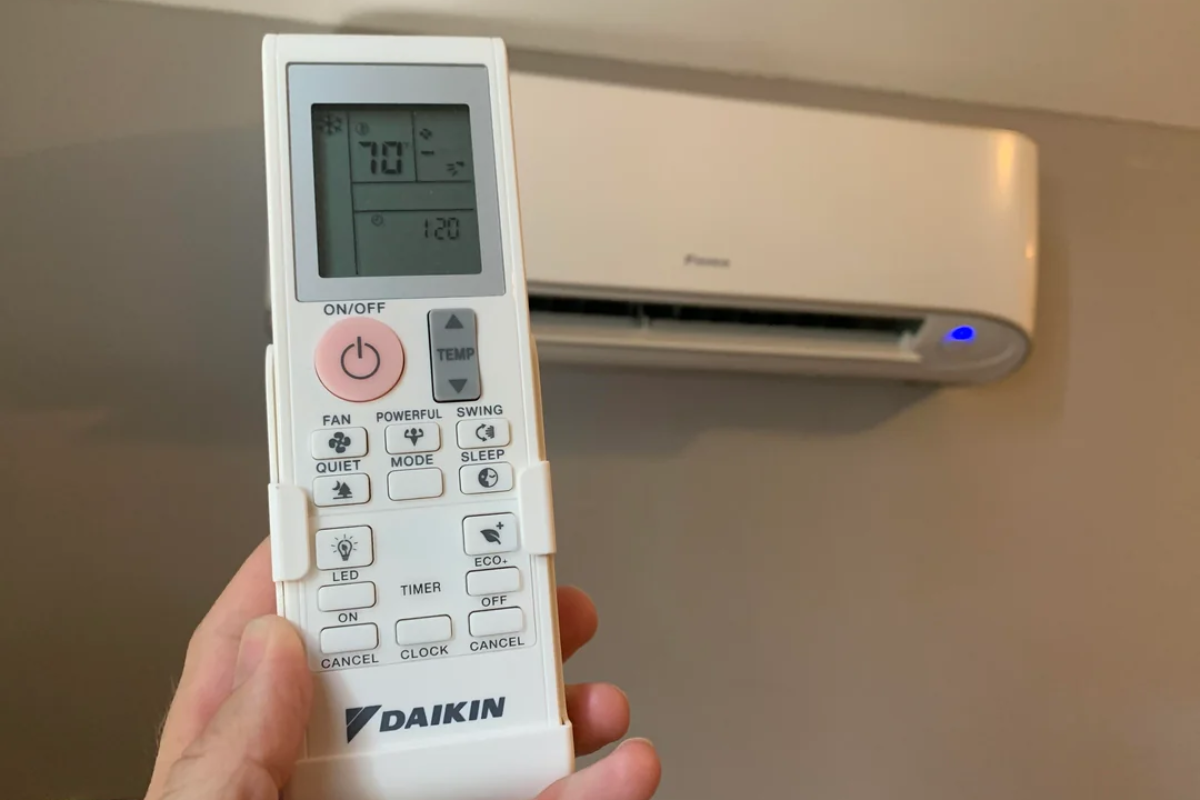
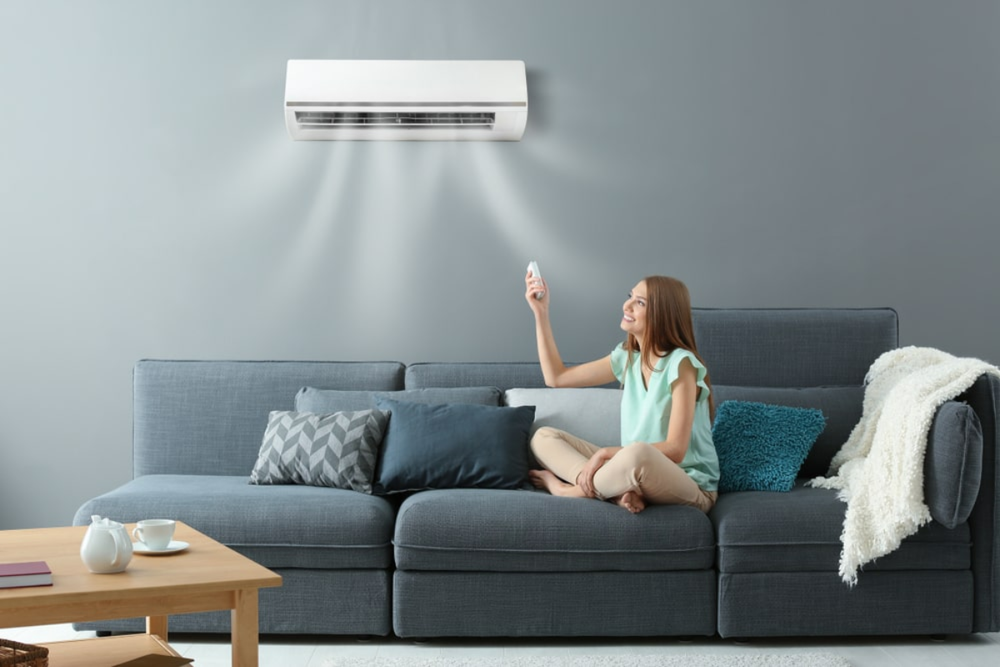
DEWA's recommended AC setting is 24°C, or the thermostat's Auto mode where available. Each degree set below 24°C increases cooling energy consumption by approximately 5%. A unit running at 20°C instead of 24°C is consuming roughly 20% more energy for the same square footage, with no meaningful gain in comfort for most occupants.
For a retail outlet or office, this translates into a fixed daily habit rather than a one-time adjustment. Assign one person to check thermostat settings each morning and confirm they have not drifted down overnight or been reset by staff who prefer colder air. Auto mode allows the compressor to cycle off once the set temperature is reached, rather than running continuously, which reduces energy draw and mechanical wear alike.
For residential units, the same 24°C baseline applies in bedrooms and living spaces. A ceiling fan or standing fan running alongside the AC creates the same perceived cooling as a lower thermostat setting, because moving air increases heat loss from skin without adding electrical load anywhere close to what extra degrees of cooling would require.
2. Shift Heavy Energy Consumption Away from Peak Hours (12 PM – 6 PM)
Heavy appliances and non-essential equipment should run outside the 12:00 PM to 6:00 PM window whenever operations allow it. This includes washing machines, dishwashers, commercial laundry equipment, water heaters, pool pumps, and any batch-process machinery in a retail or light-industrial setting.
A boutique or office can schedule non-cooling loads for the early morning before 10:00 AM or the evening after 7:00 PM. For a small business, this might mean running commercial dishwashers or laundry equipment before opening hours or after closing, rather than mid-afternoon. For a residential tenant, this means running the washing machine or dryer in the early morning or late evening rather than at 3:00 PM.
The reasoning here is mechanical. Outdoor heat during peak hours raises the ambient temperature around outdoor compressor units and other equipment, forcing them to work harder to dissipate heat and complete the same task. Shifting the load to cooler hours reduces the total energy required to do the same job.
3. Maintain Air Conditioning Filters and Duct Vents Regularly
A dirty or clogged AC filter forces the system to draw more power to move the same volume of air through a restricted path. Filters should be checked every two to four weeks during peak summer months and cleaned or replaced as needed. Dust accumulation happens faster in commercial spaces with high foot traffic and in residential units near construction zones or main roads.
Duct vents and return air grilles need the same attention. Blocked vents, whether from furniture placement, stock shelving, or dust buildup, reduce airflow and force the compressor to run longer to reach the set temperature. A retail space with clothing racks or display units positioned in front of return vents is unintentionally increasing its own cooling costs.
Outdoor condenser units need clear space around them, free of stored boxes, plants, or debris, so heat can dissipate properly. A condenser working against restricted airflow consumes more electricity and wears out faster. Scheduling a professional AC service check once per season, ideally before peak summer months begin, catches refrigerant leaks and mechanical issues before they turn into a spike in consumption.
4. Eliminate Standby Power Drain and Phantom Loads
Devices left plugged in but not actively in use still draw power. This includes computer monitors on standby, printers, coffee machines, phone chargers, point-of-sale terminals, and decorative lighting left connected overnight. Individually, these loads are small, but across an office or retail space with dozens of devices, the cumulative draw adds a measurable amount to the monthly bill.
A practical fix is grouping devices onto power strips with a single switch, so an entire workstation or display area can be shut down completely at the end of the day rather than left in standby. For residential tenants, this applies to television setups, gaming consoles, and kitchen appliances with digital displays that stay lit continuously.
Server rooms and back-office equipment deserve a separate audit. Old monitors, unused routers, or backup equipment nobody has switched off in months are common sources of unnecessary consumption, easy to miss because they never appear as a single large expense, only as a steady background drain.
5. Block Solar Heat Gain with Thermal Blinds, Films, and Weather Stripping
Direct sunlight through windows raises indoor temperature and forces the AC to compensate continuously. Thermal or blackout blinds on west- and south-facing windows reduce the heat load entering a space during the hottest parts of the day. For storefronts with large glass frontages, this is often the single biggest source of unnecessary cooling demand.
Window film is a more permanent solution for commercial units with significant glass exposure. Professional-grade films from established manufacturers reduce cooling costs meaningfully when installed correctly, and the investment typically pays for itself within twelve to twenty-four months through reduced AC runtime. Cheap, uncertified films degrade quickly under intense UV exposure, so it is worth budgeting for a proper installation.
Weather stripping around doors and window frames prevents cool air from escaping and hot air from entering through small gaps. Retail spaces with frequently opened front doors benefit from air curtains, which create a barrier of moving air across the doorway to reduce cool air loss each time a customer enters or exits. Checking door seals and window frames for gaps once per season directly reduces how hard the AC system needs to work.
6. Leverage Smart Meters and DEWA Smart App Monitoring Tools
DEWA's smart meters track consumption in near real time, and this data is accessible through the DEWA smart app. Reviewing daily and weekly consumption patterns through the app makes it possible to spot unusual spikes before they show up as a surprise on the monthly bill. A sudden jump in daily kWh usage usually points to a specific cause: a thermostat left at a lower setting, an AC unit malfunctioning, or new equipment added without adjusting other usage.
The app also allows tenants to compare current consumption against previous months and years, which helps separate a genuine increase in usage from normal seasonal variation. For a small business, this comparison is useful when deciding whether a recent equipment purchase or staffing change has measurably affected the bill.
Setting a habit of checking the app once a week during summer months, rather than only when the bill arrives, turns utility management into an ongoing practice instead of a monthly reaction. Some tenants set an informal daily kWh target and use the app to track progress against it throughout the billing cycle.
7. Switch to High-Efficiency LED Lighting and Energy-Star Fixtures
Lighting is a smaller share of total consumption than AC, but it is one of the easiest categories to fix permanently. LED fixtures use significantly less electricity than fluorescent or halogen lighting for the same brightness output, and they generate far less heat, which reduces the indirect cooling load on the AC system as well.
Retail spaces with accent or display lighting should prioritize LED replacements first, since these fixtures often run for the entire duration of business hours. Energy Star-rated fixtures meet specific efficiency benchmarks and are a reliable choice when replacing existing equipment rather than relying on unverified efficiency claims.
Motion sensors in storage rooms, restrooms, and low-traffic office areas ensure lights are not running in unoccupied spaces. Daylight sensors near windows can dim or switch off artificial lighting when natural light is sufficient, useful for boutique spaces with large storefront windows during daytime hours.
8. Optimize Water Conservation via Aerators and Leak Inspections

Water charges appear on the same DEWA bill as electricity and follow a similar slab structure, with rates increasing as consumption crosses set thresholds. Sewerage charges are calculated as a percentage of water cost, so reducing water use lowers both charges simultaneously.
Faucet aerators reduce water flow without a noticeable drop in usability for handwashing or general use, and they are inexpensive to install across multiple fixtures in an office restroom or retail unit. Low-flow showerheads serve the same function in residential units.
Leak inspections deserve regular attention because a small drip from a faucet or a running toilet can waste a significant volume of water over a billing cycle without any visible sign beyond a higher bill. Checking under sinks, behind toilets, and around water heater connections once a month catches leaks early. For commercial kitchens, checking hose connections and valve seals during routine maintenance prevents slow leaks from going unnoticed for weeks.
Managing a DEWA bill through the summer comes down to controlling the handful of factors that actually move the number: AC temperature settings, the timing of heavy loads, mechanical upkeep of cooling systems, standby power draw, solar heat entering through windows, lighting efficiency, and water use. None of these require major capital investment. Most can be implemented within a single week through a mix of settings changes, scheduling adjustments, and basic maintenance checks.
The most effective starting point is the thermostat. Setting AC units to 24°C or Auto mode, and holding that setting consistently, produces the largest single reduction in consumption available to any tenant. From there, shifting heavy appliance use outside the 12:00 PM to 6:00 PM window, clearing AC filters and vents, and checking the DEWA smart app weekly builds a routine that keeps consumption predictable rather than reactive.
Small business owners and residential tenants who treat these steps as ongoing habits, rather than one-time fixes, typically see the benefit reflected across multiple billing cycles as consumption stays within lower slab brackets. The next practical step is straightforward: check the thermostat setting today, review last month's DEWA smart app data, and schedule an AC filter check before the next peak-demand week arrives.
Also read:
 Shahba Mayyeri
 Umema Arsiwala
 Shahba Mayyeri