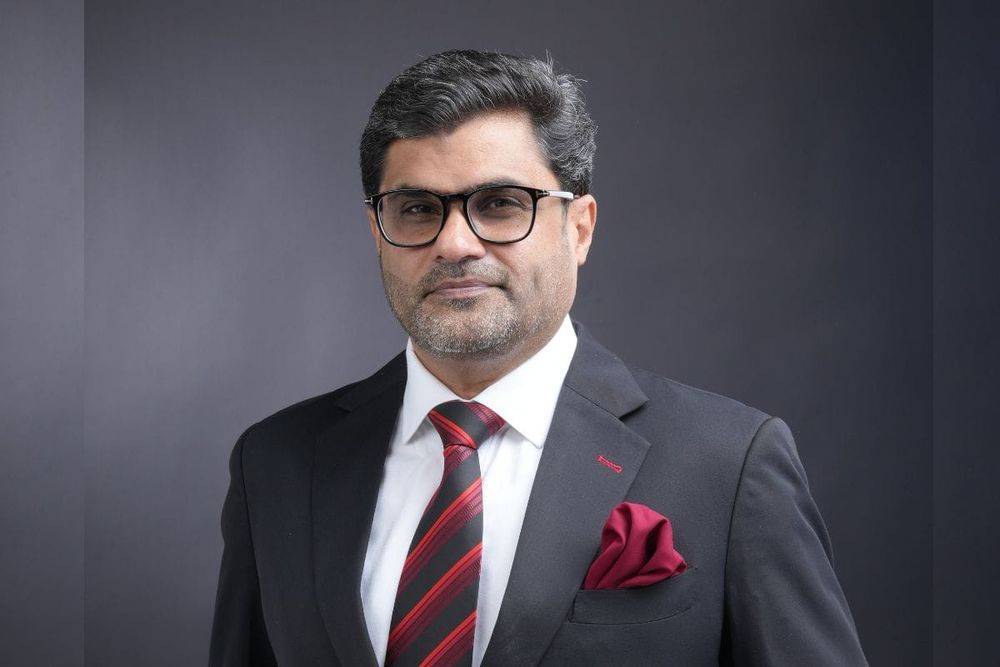
Western Digital, a global leader in data storage solutions, is redefining how businesses manage and secure the world’s growing volumes of information. Owais Mohammed, Regional Lead & Sales Director IMEA, is spearheading this mission by delivering high-capacity, energy-efficient HDD solutions that meet the demands of AI, cloud, gaming and smart city projects.
With the Middle East emerging as a key hub for digital transformation and data centre growth, Western Digital is deepening partnerships across the region to ensure storage is never a bottleneck to progress.
In this exclusive interview, Owais shares insights on the company’s strategic moves, future-ready innovations and how a customer-centric approach drives every decision.
Western Digital has recently split into two independent companies – one for flash (SanDisk) and one for hard disk drives (HDD). What prompted this move, and how will it impact customers and investors in the long-term?
We completed the company split in February 2025, and Western Digital is once again fully focused on its hard disk drives (HDDs) and storage platforms business. Our long history of delivering leading HDD innovation has defined us for decades, and we are excited to further strengthen our commitment to providing the best storage capabilities for our customers.
At Western Digital, everything starts with our customers. Our deep legacy in HDD technology makes us the trusted partner of the world’s largest hyperscalers, cloud service providers, OEMs and channel partners who require scalable, low-risk solutions that evolve with them. We know that our customers not only seek high capacity but also demand high quality and reliability, deep trust, optimised costs per terabyte ($/TB) and the best possible energy consumption per TB (kW/TB). That’s why our consultative approach and robust portfolio ensure business continuity and choice, giving our customers the right perspective and knowledge to prepare for the future and secure success.
It is this commitment to our trusted partnerships and our differentiated portfolio that enables us to execute effectively and deliver strong results. HDDs will continue to form the foundation of global data infrastructure and offer unrivalled value for mass storage in an AI-driven future. Western Digital remains an important pioneer in this field.
Within a competitive landscape featuring players such as Seagate, Samsung and Micron, where does Western Digital perceive its strongest competitive edge today?
Western Digital’s competitive edge comes from our unparalleled expertise in high-capacity HDD and storage platform technology as well as our world-class operational capabilities – from in-house vertical integration across head, media and HDD assembly to disciplined capacity management and a strong commitment to quality.
We have a proven track record in delivering first-rate innovations, pushing the boundaries of storage technology. We were the first to commercially leverage an 11-disk architecture to increase storage capacities and density per drive even further. By successfully incorporating field-proven technologies such as energy-assisted magnetic recording (ePMR), ultra-shingled magnetic recording (UltraSMR) and OptiNAND, we are shipping 32TB drives in volume.
Furthermore, we balance ambition with pragmatism, knowing when “good” is good enough to move forward. We do not innovate merely for the sake of it. We introduce new products and technologies when they make the most economic sense for partners and customers. This is why we continue to ship millions of industry-leading ePMR and UltraSMR HDDs today, while also testing our upcoming heat-assisted magnetic recording (HAMR) technology with two large hyperscale customers. In fact, we expect to complete HAMR qualifications by late 2026 and ramp up volume shipments in the first half of 2027.
It is this culture of relentless, intentional innovation that is in our DNA. At Western Digital, our cultural blueprint drives how we lead, build and deliver purposeful results, quality and the relentless pursuit of better outcomes. We are not just keeping up with the pace of change, we are setting it. And for our partners and customers, this means smarter solutions, faster delivery and enduring value.
With the surge in AI, gaming and cloud applications, storage needs have become more complex. How is Western Digital evolving its products and solutions to keep up with these new demands?
The customer is at the heart of Western Digital. That’s why our engineering teams are developing solutions that are tailored precisely to our customers’ needs. We offer specially designed storage solutions for various segments: from gamers to small and large businesses to smart video integrators and decision-makers in the hyperscale cloud sector – Western Digital has a product optimised for every workload requirement.
What these segments have in common is the data deluge driven by modern technologies. According to IDC, the annual volume of data generated is expected to more than double to 527.5 Zettabytes (ZB) in 2029 (IDC Source: Worldwide IDC Global DataSphere Forecast, 2025-2029, May 2025, Doc #US53363625). To keep up with this flood of information, customers in every sector need storage that is scalable, efficient and tailored to their use cases.
Data needs storage, and storage needs Western Digital. This is why we continuously develop our product and technology range to meet ever-evolving requirements. Especially with AI fuelling large volumes of unstructured data, it is our HDD innovations that are built for improved cost, performance and energy efficiency. Our latest 32TB UltraSMR drive enables cloud and AI customers to store more petabytes (PB) per rack with lower power consumption and cooling requirements without increasing the physical footprint of the data centre. This is particularly important in cloud infrastructures, where high capacity, scalability and total cost of ownership (TCO) are among the most important requirements.
Western Digital has invested in start-ups through Western Digital Capital. What gaps in the data ecosystem are you looking to fill through these partnerships?
Like everything we do, our investments are intentional as well, aimed at accelerating innovation across the data storage landscape. We typically invest in start-ups and businesses that are developing technologies complementing our product portfolio, filling potential gaps or extending our own capabilities in how data is stored, managed and utilised.
An example is our recent strategic investment in Cerabyte, a pioneer in ceramic-based data storage solutions. The start-up is using ceramic-on-glass media for long-term data storage, which has the potential to provide cold storage for massive amounts of data with extremely long retention periods. Simultaneously, it does not have the same power or maintenance requirements that traditional storage demands.
You’ve highlighted carbon efficiency as part of your product development. What concrete steps is Western Digital taking to align storage innovation with environmental responsibility? How do you balance the pressure of rapid innovation with responsible e-waste management and circular economy practices?
Sustainability is core to our values at Western Digital, and we believe that innovation and environmental responsibility must go hand in hand. We’ve launched several initiatives to reduce our environmental footprint and help our customers do the same. One flagship program is our advanced circular economy initiative for HDDs. In collaboration with partners, we recently ran a pilot program that processed about 22,680 kilograms (50,000 pounds) of end-of-life storage devices to recover critical materials. Using a novel, eco-friendly method, the pilot managed to reclaim over 90% of the valuable elements, including rare earth metals like neodymium and dysprosium from HDD magnets, which can now be returned to the supply chain. This is a great achievement, because traditionally those rare earth elements were lost in shredding or ended up in landfills. Furthermore, Western Digital has been recognised among America’s Greenest Companies 2025 by Newsweek, which reflects our efforts in energy efficiency and sustainable practices at our facilities.
At a product level, our highest-capacity HDDs help customers lower their environmental impact. By improving storage density per drive, customers need fewer HDDs to deploy the same amount of storage, which translates into less hardware and lower total power consumption (including energy and cooling costs). Moving from 26 TB to 32 TB drives to deploy one petabyte (PB) of storage, for example, can lead to 18.7% fewer racks, 18.8% fewer drives and 18.8% lower total power consumption.
What future developments in storage technology are you most excited about, and how do you see Western Digital shaping or leading these advancements?
We are very proud of our roadmap, which includes HDDs with up to 40TB and exciting new technologies. This includes the qualification and volume delivery of HAMR drives, but we are already looking beyond this horizon. To increase storage density even further, we are working on innovations in the field of storage materials, as well as new recording technologies such as Heat-Dot Magnetic Recording (HDMR) that could enable us to achieve over 100TB per drive. More information on this will follow at a later stage.
Given the ever-growing volumes of data around us and exciting new developments in AI, it is a good time to be involved in the storage sector. We are delighted to be part of this segment and to shape the future of HDD technology with our partners, jointly pushing the boundaries of what is possible.
Looking ahead, what are Western Digital’s key priorities and growth strategies in the Middle East over the next 1–2 years?
The Middle East is undergoing a rapid digital transformation, and Western Digital is deeply committed to supporting this journey. One of our top priorities is to be a key enabler of the region’s booming data centre, cloud and AI ecosystem. We see governments and enterprises launching ambitious initiatives from Saudi Vision 2030 to the UAE’s National Digital Transformation Programme – all of which will generate enormous amounts of data and require a robust IT infrastructure. Driven by the explosion of cloud services, smart city projects, AI adoption and IoT deployments, the Middle East's data centre market is expected to grow to $9.61 billion by 2029, at a CAGR of 9.52%.
As HDDs are the foundation of the required IT infrastructure to support the growing demands of data storage, it is our goal to become a trusted partner for IT decision-makers in the region. With our regional presence, our dedicated support and expertise, we continue to build, maintain and strengthen our customer relationships across the UAE, Saudi Arabia, Qatar, Turkey and South Africa.
This also includes our channel and distribution network. The Middle East has a vibrant reseller and distributor community that services businesses of all sizes. We are continuing with our training programmes, localised marketing campaigns and incentive programmes for these partners to fully support them and align our efforts.
Overall, with our high-capacity, high-quality storage portfolio and know-how, we aim to be the cornerstone for all these digital transformation efforts, ensuring data storage is never a bottleneck to progress.
Also Read:
 Shahba Mayyeri
 Shahba Mayyeri
 Shahba Mayyeri
 Shahba Mayyeri




![Interview with Nader Bassit, CEO of El Greco Restaurant [Wakira Investments] in Dubai](https://storage.ghost.io/c/8e/d7/8ed7937e-239e-4c73-8661-3ab95a578ef0/content/images/size/w300/2023/08/Untitled-design--1-.jpg)