Few cities can claim that the debate over artificial intelligence has already been settled within their borders, yet Dubai has been acting that way for some time, with government departments appointing dedicated AI leaders, regulators creating licences built around the technology and private companies setting up in purpose-built campuses.
The conversation that once centred on how far these tools could be trusted has quietly given way to a more practical one about how quickly they can be deployed, who should oversee them and where the next wave of investment will land.
For business owners and investors watching from the outside, that shift changes what a sensible strategy looks like. The more interesting question now is what happens when an entire city treats AI as everyday infrastructure rather than an experiment, and what that means for anyone doing business here.
Dubai AI Festival and Why It Matters to Investors
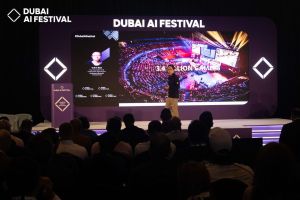
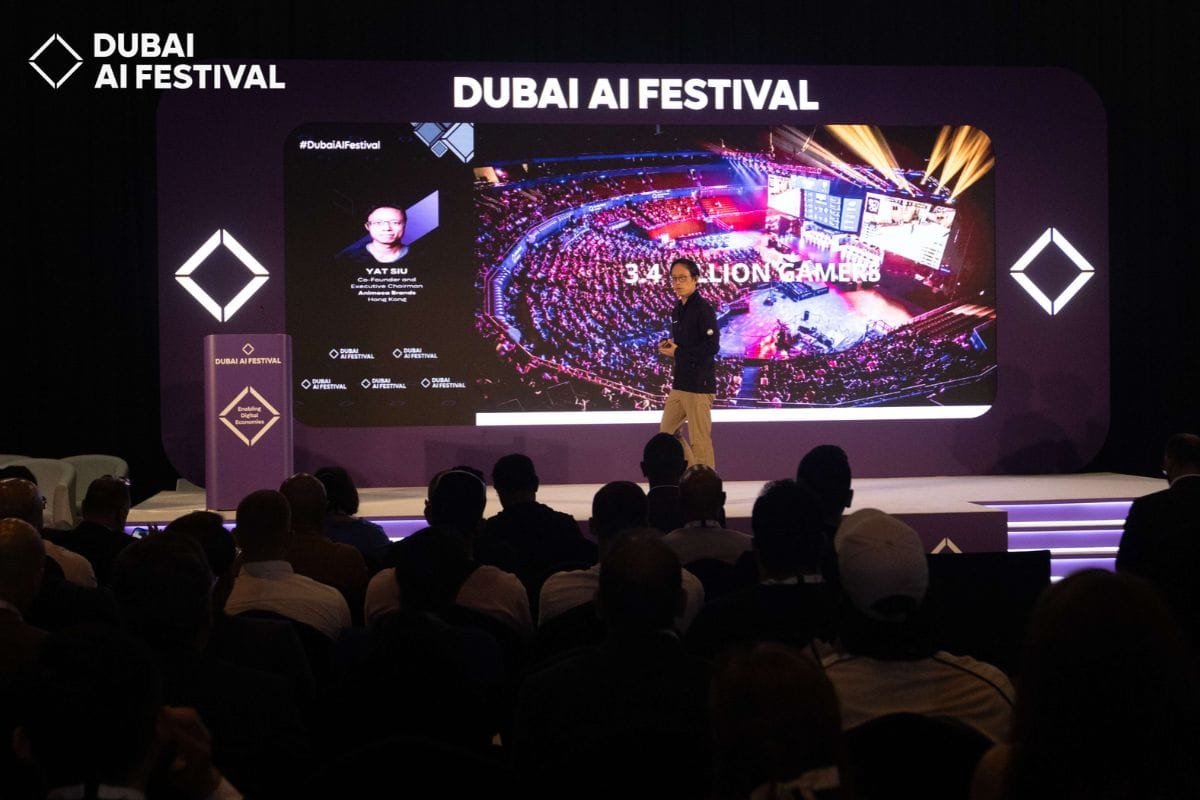
The clearest public signal of that shift is the Dubai AI Festival, which is returning for its third edition on October 26-27 at Dubai World Trade Centre. The move to a larger venue says a lot on its own, because the previous edition had already drawn more than 10,000 participants from 100 countries, including around 500 investors. For 2026 the organisers set their sights higher, expecting more than 20,000 attendees, over 500 investors and exhibitors and speakers numbering in the hundreds, with participation from more than 120 countries.
The programme was shaped around themes that reach well beyond product demonstrations, including global AI governance, access to AI for everyone, and the ethics of innovation. That mix of policy, capital and technology is what makes the event useful as a barometer, since it shows investors and founders where the city intends to compete and which rules they can expect to operate under.
A Government That Chose to Lead by Example
The festival is the showcase, but the groundwork was laid in government offices. In 2024 the Crown Prince launched the Dubai Universal Blueprint for Artificial Intelligence, an annual plan designed to help deliver the Dubai Economic Agenda D33 targets by adding AED100 billion a year to the economy and lifting productivity by 50 percent. Rather than leaving adoption to the private sector, the plan began with public bodies themselves, and its first phase called for a chief AI officer in every Dubai government entity, with candidates assessed by the Dubai Centre for Artificial Intelligence.
That requirement has since turned into real appointments, with chief AI officers named in 22 government entities, and the same reporting notes that the city’s standing in the Global AI Readiness Index now sits within the top 10. When the agencies that issue permits, run transport and manage health services all have someone accountable for AI, the technology stops being a pilot project in a corner of the organisation and becomes part of how decisions are made.
Rules and Credentials That Make the Market Easier to Trust
Adoption at scale needs a framework that businesses can rely on, and Dubai has been building one in layers. The first is the Dubai AI Licence, which now covers 315 entities, while the Dubai AI Campus hosts more than 180 AI companies. For a founder deciding where to base a team, a licensing route designed specifically for AI work removes a good deal of the guesswork that usually surrounds new technologies.
The second layer is the Dubai AI Seal, developed by the Dubai Centre for Artificial Intelligence to classify and endorse trusted AI providers, with the first certified companies celebrated during Dubai AI Week 2025. A visible mark of that kind helps buyers who lack the technical background to judge a vendor’s claims, which matters in a market where many companies are adopting AI for the first time and need some assurance about who they are dealing with.
Infrastructure and Skills Behind the Ambition
Software and regulation only go so far without computing power and people to run it. On the infrastructure side, du announced a new AED2 billion hyperscale data centre project during Dubai AI Week 2025, developed in collaboration with Microsoft, which gives some sense of the scale of private capital following the policy direction. Data centres are rarely the most glamorous part of an AI story, but they are the physical foundation that makes everything else possible, and their arrival tells investors that the commitment goes beyond conference announcements.
The skills pipeline receives similar attention. The Dubai AI Academy aims to train and upskill 10,000 professionals by 2030, and the effort starts much earlier in the education system, since AI Week in Schools in 2025 reached more than 10,000 students from 60 Dubai schools. Building familiarity among young people and working professionals alike is what allows adoption to deepen over time instead of stalling once the early enthusiasm fades.
The Economic Case Taking Shape
Dubai’s push is also a bet on where regional growth will come from. Industry projections cited alongside the festival announcement suggest that AI could contribute USD 320 billion to the Middle East economy by 2030, with the UAE leading regional adoption (PwC Middle East). Whatever the final figure turns out to be, the direction of travel is clear enough that governments, banks, developers and logistics firms are all planning around it rather than waiting to see how things develop.
For investors, the appeal lies in how many parts of the chain are being developed at once, from licensing and certification to data centres and training. A market where regulators, buyers and suppliers are all moving in the same direction tends to be easier to read than one where adoption is patchy, and that predictability is a large part of what the city is selling.
What This Means for Business Owners
For anyone running a company in Dubai, the practical lesson is that waiting for AI to prove itself is no longer the cautious option, because the surrounding environment has already moved on. Clients are becoming used to faster responses, government services are becoming more automated and competitors are finding ways to cut routine costs, so the baseline expectation is shifting even for businesses that never describe themselves as technology companies.
The sensible response is rarely a dramatic overhaul. It usually starts with identifying the repetitive tasks that consume the most staff time, testing a trusted tool against one of them and building from there, while paying attention to the certification and licensing routes the city now offers. Dubai has answered the question of whether AI can be used, and the more useful one for every business now is where it can be used first and how carefully it can be governed along the way.
Also Read:
 Shahba Mayyeri
 Shahba Mayyeri
 Shahba Mayyeri

 Shahba Mayyeri
 Shahba Mayyeri