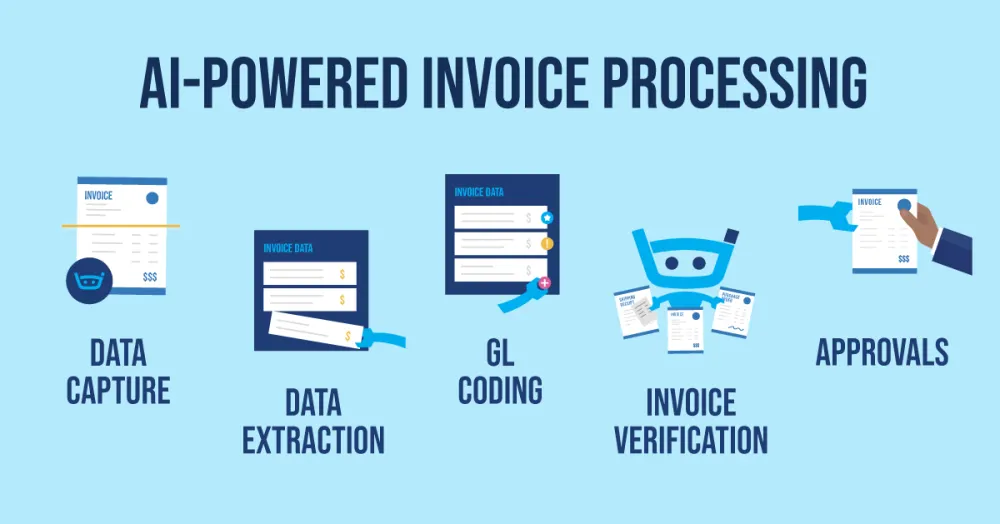
For a boutique professional services consultancy, time is the ultimate tradeable commodity. Whether specializing in digital transformation advisory, boutique marketing strategy, corporate tax restructuring, or legal risk management, a lean consultancy thrives or dies based on its billable utilization rate. Every hour an elite consultant spends actively solving a client’s problem translates directly into top-line corporate revenue.
Conversely, every hour spent on back-office administration represents an explicit financial loss.
Historically, the end of the fiscal month introduced a dreaded operational bottleneck for lean advisory firms. Managing partners and senior consultants were forced to halt revenue-generating client delivery to manually track billable hour logs, cross-reference scope-of-work agreements, draft line-item tax invoices, and chase outstanding payments.
This administrative friction, collectively known as accounting overhead, significantly drains the agility of lean operations.
However, the widespread commercial deployment of intelligent, AI-powered invoicing tools is completely eliminating this systemic inefficiency. By replacing rigid, template-driven legacy software with contextual artificial intelligence, lean consultancies are automating their entire billing lifecycles, recovering lost capacity, and drastically protecting their net profit margins.
The Operational Drag of the Legacy Billing Cycle
To understand the transformative impact of artificial intelligence in the back office, one must first look at the inherent failures of traditional invoicing workflows. For a typical lean consulting firm operating with fewer than fifteen team members, employing a full-time internal finance director or a dedicated accounts accounts receivable team is often financially unviable.
Consequently, the burden of bookkeeping falls squarely onto the shoulders of the consulting staff or the founding partners.
The legacy billing process is defined by its fractured, multi-step nature. A consultant must aggregate data from various disconnected sources: looking up client email threads to verify agreed-upon project milestones, checking digital calendars for billable workshop hours, and cross-referencing timesheet applications to calculate total resource expenditures.
Once this data is collected, it must be manually typed into a static document template, adjusted for specific regional tax compliance parameters such as the UAE Federal Tax Authority VAT regulations, and manually emailed to the client's procurement department.
This manual method is incredibly prone to human error. A single mistyped line item, an incorrect Tax Registration Number, or a miscalculated discount can cause a client's accounts payable department to reject the entire document. This rejection restarts the multi-week approval loop, severely compromising the consultancy's short-term cash flow predictability.
Contextual Data Ingestion: Turning Plain Prose into Compliant Ledgers
The core innovation of modern AI invoicing platforms lies in their ability to completely bypass the manual data entry pipeline through advanced Natural Language Processing and intelligent optical character recognition. Unlike traditional rules-based automation, which breaks down the moment an invoice format or data structure changes slightly, generative AI models can comprehend context, intent, and unstructured language.
For a busy managing partner, generating a professional, tax-compliant invoice no longer requires sitting in front of complex accounting software for an afternoon. Instead, they can simply type a single, unstructured paragraph into an AI invoice assistant or drop an entire client email negotiation thread directly into the platform interface.
The AI scans the plain text, instantly extracting the critical contractual parameters, including the baseline project scope, the agreed-upon milestone values, individual hourly consulting rates, and localized tax obligations.
Furthermore, advanced platforms allow consultants to dictate billing terms using basic voice-to-text notes while traveling between client sites. The underlying AI automatically transcribes the audio, structures the data into clear line items, applies the appropriate regional currency conversions, and drafts a beautifully branded, error-free PDF invoice within seconds.
By converting loose, informal business communications into precise financial data, artificial intelligence reduces the time required to generate complex corporate bills from hours to a few simple clicks.

Eliminating the Friction of Multi-Currency Reconciliation
As the global knowledge economy expands, lean consultancies based in major commercial hubs are increasingly serving international clients across multiple geographic borders. Managing a diverse client portfolio means dealing with a chaotic mix of regional billing standards, varying tax jurisdictions, and fluctuating foreign exchange rates.
For a small internal administrative team, manually calculating currency conversions and tracking real-time cross-border wire transfers is an operational nightmare that frequently results in subtle ledger discrepancies.
AI-driven billing platforms completely eliminate this multi-jurisdictional friction by integrating directly with global banking APIs and foreign exchange ledgers. When an international invoice is generated, the AI automatically computes the exact real-time exchange rates, displays the appropriate local currency equivalents, and appends the necessary international routing codes to guarantee smooth execution.
Once the funds cross the border and land in the corporate account, the platform’s machine learning algorithms automatically handle the reconciliation process.
The AI scans the incoming transaction metadata, matches it against open invoices based on payment value and sender identity, and instantly updates the corporate ledger without requiring human intervention. This continuous, automated reconciliation provides boutique consultancies with real-time visibility into their international cash positions, removing the traditional month-end anxiety associated with manual bank statement audits.
Automated Debt Chasing: The Psychology of Intelligent Reminders
Compiling and sending an invoice is only half the financial battle, the true threat to a lean consultancy's survival is the prolonged collection window, or Days Sales Outstanding. Clients, particularly large enterprise corporations with rigid, bureaucratically slow accounts payable cycles, frequently delay payment processing, forcing small consulting firms to spend valuable time acting as collection agents.
Manually chasing late-paying clients is both time-consuming and interpersonally uncomfortable. Managing partners often hesitate to send aggressive payment reminders for fear of damaging hard-won, long-term client relationships.
AI invoicing tools elegantly solve this problem by deploying autonomous, behavioral-based communication loops.
The system continuously tracks the lifecycle of every sent invoice. The moment an account passes its formal due date, the AI initiates a highly personalized, escalating notification sequence. Rather than blast out cold, robotic form letters that clients routinely ignore, the AI analyzes the historical communication habits of the specific client point-of-contact. It then drafts conversational, polite reminders tailored to their preferred digital channel, whether that means sending an email during their historical peak productivity hours or delivering a structured update via the WhatsApp Business API.
This automated diligence accelerates the collection cycle by up to forty-five percent, keeping corporate cash flowing smoothly into the firm without straining essential professional partnerships.

Real-Time Cash Flow Predictive Analytics
Beyond the immediate structural savings realized by cutting down daily manual administrative hours, the consolidation of financial data within an intelligent AI infrastructure unlocks a massive strategic asset: forward-looking business intelligence. Traditional, manual bookkeeping models are fundamentally reactive, focusing on historical reports that simply tell a business owner what they spent and earned during the previous month.
For a boutique consultancy navigating variable, project-based revenue streams, relying solely on historical financial records is highly dangerous. AI platforms change this dynamic entirely by switching from historic reporting to active, predictive cash flow modeling.
Because the AI possesses real-time visibility into open proposals, active client retainer contracts, pending invoice due dates, and historical client payment timelines, it can project a consultancy’s actual liquidity curve over the upcoming quarter with immense accuracy.
The predictive engine can flag potential financial dry spells weeks before they manifest, alerting management to adjust internal resource allocations, ramp up business development pipelines, or delay non-essential capital investments. This advanced financial foresight gives independent consultancy owners the confidence to make swift, data-backed decisions regarding hiring senior talent or opening new office premises, effectively democratizing elite fractional CFO capabilities for small businesses.
Maximizing the Billable Potential of the Modern Advisory Firm
The ongoing transition toward automated, AI-driven back-office management marks a crucial milestone in the evolution of modern corporate consulting. Lean advisory firms can no longer afford to let their most valuable, expensive human assets waste time on highly repetitive manual data entry, paper-shuffling, and administrative follow-ups.
Implementing intelligent invoicing systems allows boutique consultancies to effectively eliminate the logistical disadvantages of being a small operation.
By automating the entire invoicing pipeline from initial data ingestion to final bank reconciliation and debt collection, these modern platforms allow consultants to focus entirely on what they do best: delivering world-class strategic insights to their clients.
Ultimately, embracing artificial intelligence within the corporate accounting infrastructure is not about replacing human talent, it is about liberating it, ensuring that every ounce of creative and analytical energy within a lean firm is pointed directly toward driving client success and sustainable business growth.
Also Read:
 Ummulkiram Pardawala
 Umema Arsiwala
 Ummulkiram Pardawala
 Umema Arsiwala