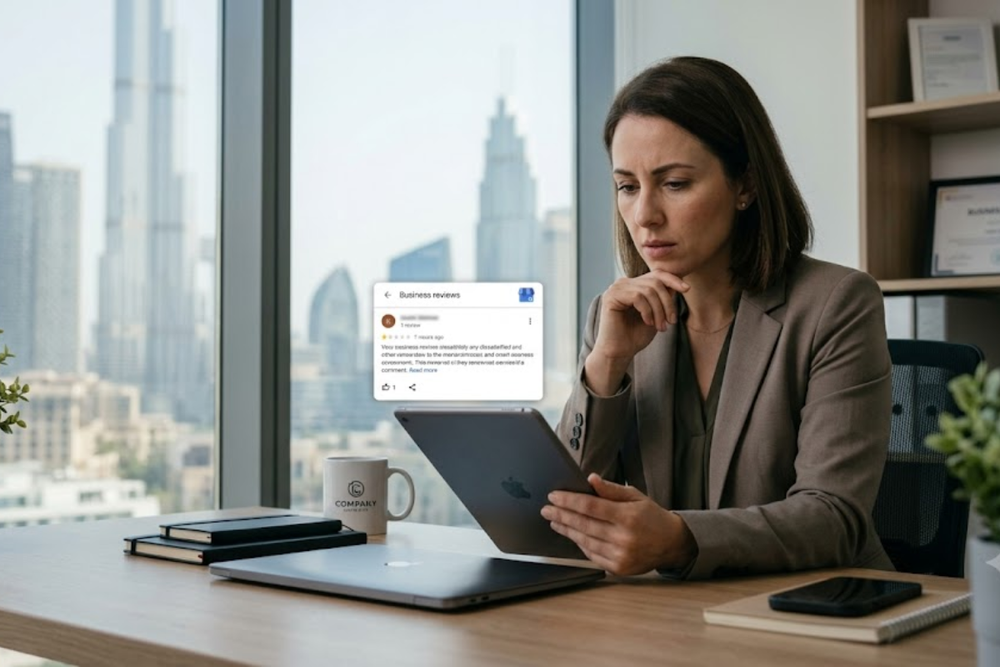
Seeing a one-star review pop up in your notifications feels personal, even when you know it shouldn't. You built this business with your own hands, your own money, and a lot of late nights, so a stranger's public complaint can land like a punch to the gut. Maybe the review feels exaggerated. Maybe it touches on something you already knew was a weak spot. Either way, your stomach drops, and your first instinct is to respond immediately, defensively, or not at all.
None of those instincts serves you well. Negative reviews are not a sign that your business is failing. They are a normal part of operating in public, and every business with enough customers eventually collects a few. What actually determines the damage is not the review itself, but how you respond to it. A thoughtful, calm reply can turn a bad review into proof that you run a business worth trusting. A rushed or emotional one can turn a single complaint into a lasting reputation problem.
This guide walks through exactly what to do, in order, from the moment you see the review to the long-term systems that reduce how often they happen.
Phase 1: Immediate Steps Before You Respond

Give Yourself Time to Cool Down
The single biggest mistake business owners make is replying within minutes of reading a harsh review. Anger and hurt make for bad writing. They lead to defensive language, sarcasm, or accusations that customers reading later will judge harshly, even if the original complaint was unfair. Step away for a few hours, or at least take a walk around the block, before you draft anything. Nothing about review platforms rewards speed over quality here. A response written the next morning with a clear head will almost always beat one written in the heat of the moment.
Read It Again, Slowly
Once you're calm, reread the review, looking specifically for facts rather than tone. Strip out the emotional language and ask what actually happened, according to the reviewer. Did they say the food was cold? Was a staff member rude? Is that a delivery three days late? Separate the factual claim from the way it was delivered. You can disagree with someone's tone while still taking their factual claim seriously.
Check Whether the Review Is Authentic
Not every negative review comes from a real customer. Some come from competitors, some from people who never actually visited, and some are the result of mistaken identity with a similarly named business. Before drafting a response, do a quick investigation:
- Check your booking, order, or point-of-sale records for the date and details mentioned.
- Ask the staff who were working that day whether they remember the interaction.
- Look at the reviewer's profile. A brand-new account with only one review, written in unusually generic language, can be a warning sign, though it isn't proof by itself.
- Compare the details against your actual operations. If the review mentions a menu item you don't sell, or a service you don't offer, that's a strong signal that something is off.
This step matters because your response strategy changes completely depending on what you find. A genuine complaint deserves an apology and a fix. A fabricated one deserves a calm, factual correction and, if needed, a platform report.
Loop In Your Team Quietly
If the review names a specific employee or incident, talk to that staff member privately before you respond publicly. Not to assign blame in a harsh way, but to understand what actually happened from their side. This protects you from publicly apologizing for something that didn't occur as described, and it also gives you real information you can use to improve internal processes.
Phase 2: Drafting the Public Response
Start With Acknowledgment, Not Defense
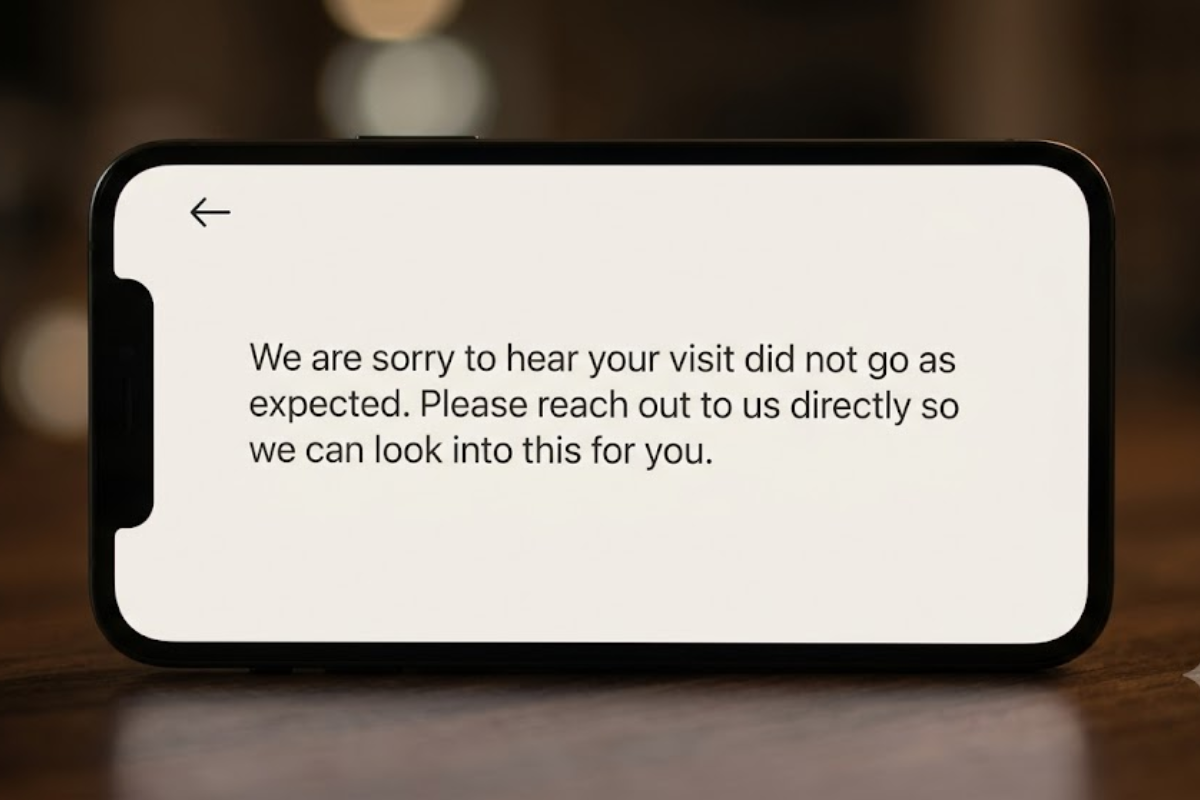
Open your response by acknowledging the person's experience, even if you disagree with parts of it. A simple line like "Thank you for taking the time to share this feedback" or "We're sorry to hear your visit didn't go as expected" sets a respectful tone immediately. This isn't about admitting fault; you don't believe you have. It's about showing every future reader that you take feedback seriously and don't get defensive under pressure.
Be Specific, Not Generic
Vague, copy-pasted responses ("We apologize for your experience, please contact us") read as insincere and make it look like you didn't actually read the complaint. Reference the specific issue they raised. If they said their order arrived late, mention that directly: "We understand your delivery arrived later than the estimated time, and that's not the standard we aim for." Specificity signals that a real person read the review and cared enough to respond properly.
Keep the Tone Calm and Professional, Every Time
This applies even when the review feels unfair, rude, or wildly exaggerated. Future customers reading your response are judging your character as much as the original complaint. A composed, professional reply to an angry review often earns you more trust than a five-star review would, because it shows how you behave under pressure. Avoid sarcasm, avoid all-caps, and avoid arguing point by point in public.
Move the Resolution Offline
Public review sections are not the place to negotiate refunds, argue about details, or share account information. After acknowledging the issue, invite the person to continue the conversation privately: "Please reach out to us directly at [contact method] so we can look into this properly and make it right." This protects customer privacy, keeps sensitive details out of public view, and shows other readers that you have a real process for resolving problems rather than just talking about them.
Keep It Brief
A good response is usually three to five sentences. Acknowledge the issue, briefly explain what you're doing about it (without over-explaining or making excuses), and invite them to continue the conversation privately. Long, defensive responses tend to work against you, since they read as an attempt to relitigate the complaint publicly.
Follow Up Once the Issue Is Resolved
If you manage to resolve the situation with the customer directly, it's worth asking politely whether they'd consider updating or removing their review to reflect the resolution. Most review platforms allow customers to edit their own reviews at any time, and many people are willing to do this if they feel genuinely heard and helped.
Phase 3: Handling Fake, Spam, or Unfair Reviews
Know What Actually Qualifies for Removal
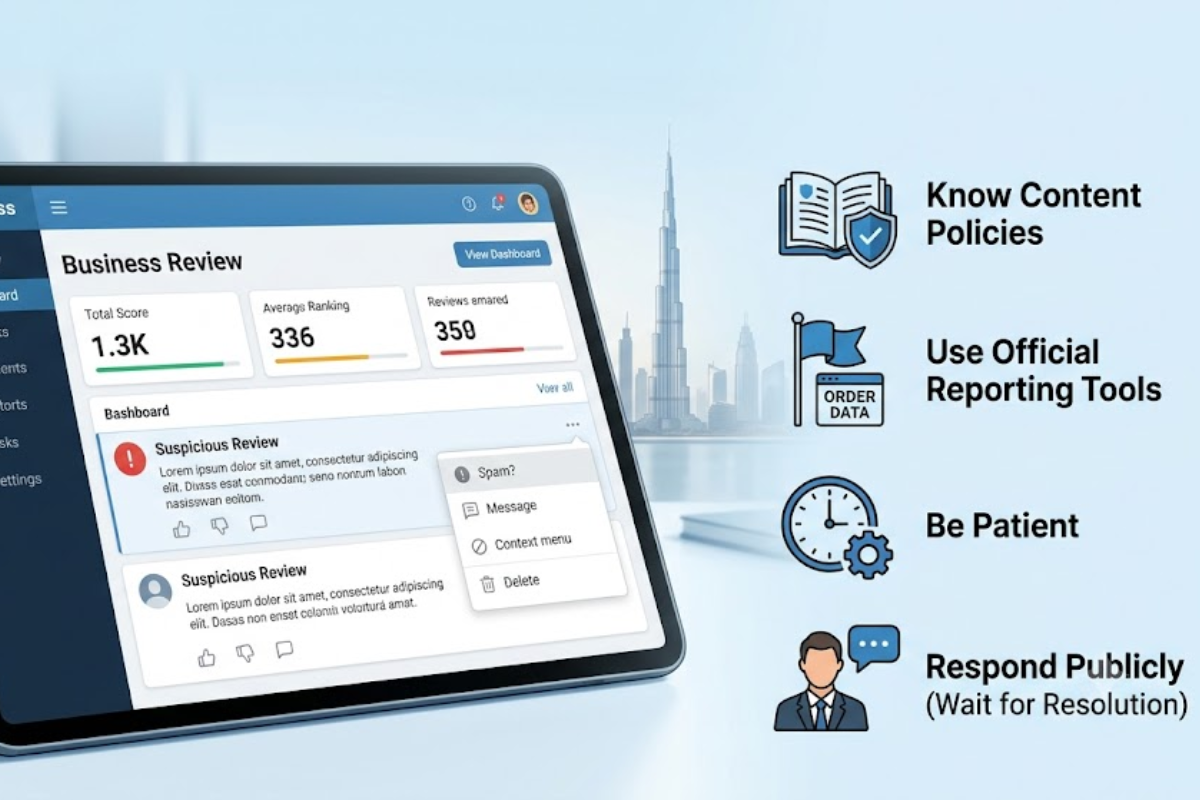
Review platforms, including Google Business Profile, TripAdvisor, and Yelp, only remove reviews that violate their specific content policies. Simply disagreeing with a review, or finding it unfair is not grounds for removal. Legitimate grounds typically include:
- The reviewer has no evidence of ever being a customer.
- The review contains hate speech, threats, or harassment.
- The review is clearly spam, promotional content, or unrelated to your business.
- The review violates the platform's conflict-of-interest rules, such as being posted by a competitor or a current or former employee.
- The content includes private information that shouldn't be public.
Use the Official Reporting Tools
Each platform has a built-in flagging mechanism, usually found by clicking a menu icon or "report" option next to the review itself. When you report a review, provide as much factual detail as possible: order numbers, dates, staff schedules, or anything that demonstrates the review doesn't match your actual records. Vague reports that just say "this is unfair" are far less likely to succeed than ones backed by specific evidence.
Be Patient With the Process
Platform review teams process reports manually in most cases, and it can take anywhere from a few days to several weeks to get a response. Some reports are denied on the first attempt even when the review is genuinely fake, particularly if your initial report lacked detail. If your first report is rejected and you have strong evidence, resubmitting with more documentation is a reasonable next step.
Respond Publicly While You Wait
Reporting a review doesn't mean you should ignore it in the meantime. Post a calm, factual public response noting that you have no record of this transaction and inviting the person to contact you directly with their order details. This protects your reputation with readers while the report is under review, without accusing the person outright of lying.
Avoid Retaliation
Never respond to a suspected fake review with anger, accusations, or public arguments, even if you're fairly confident it's not real. This almost always backfires, since readers can't verify who's telling the truth, and an aggressive response damages your credibility regardless of the review's authenticity.
Phase 4: Long-Term Strategy and Prevention
Build a Steady Stream of Genuine Reviews
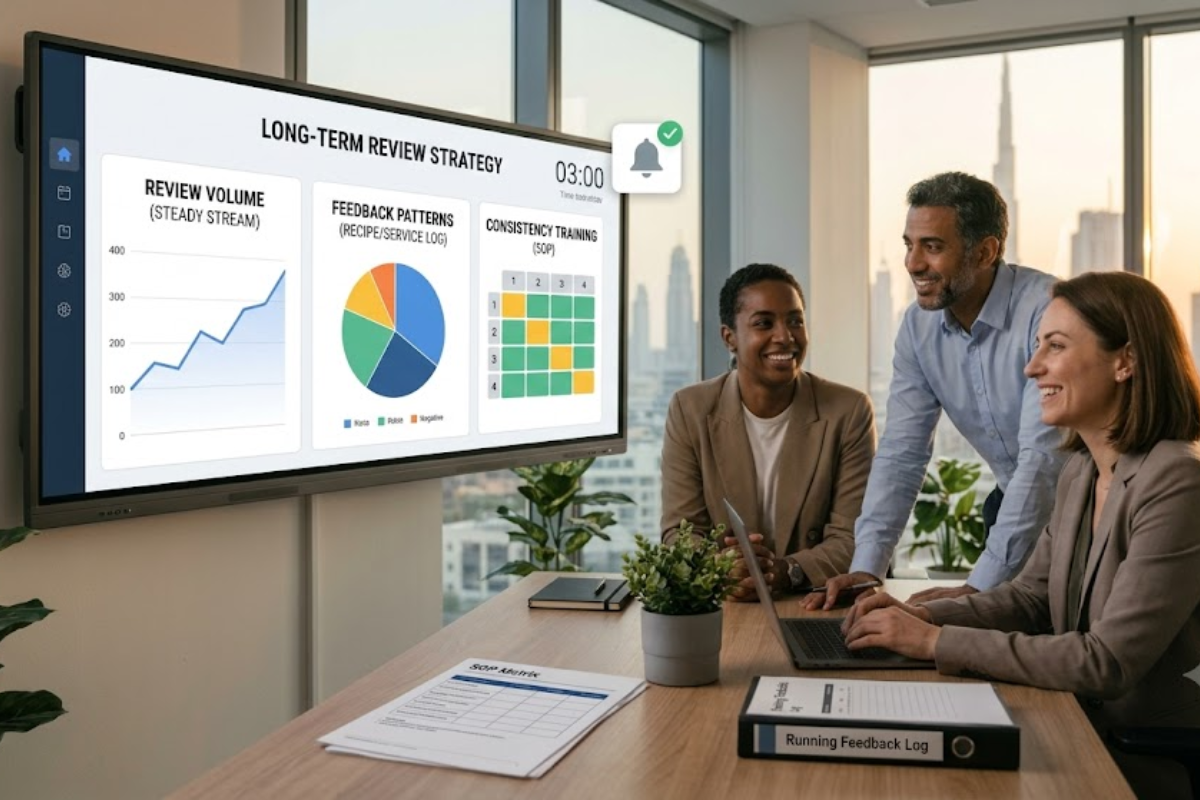
The most effective long-term defense against the sting of a bad review is having a larger body of honest, recent positive reviews around it. Ask satisfied customers directly, right after a good interaction, whether they'd be willing to leave a review. A simple prompt at checkout, on a receipt, or in a follow-up message works well. Avoid offering discounts or incentives in exchange for reviews, since most platforms explicitly prohibit this and can penalize your listing if discovered.
Treat Every Review as Free Feedback
Even harsh or poorly written reviews often contain a kernel of useful information. If multiple people mention slow service during weekend rushes, that's a scheduling problem worth addressing. If several reviews mention the same menu item disappointing people, it's worth revisiting that recipe or supplier. Keep a simple running log of recurring complaints so patterns become visible over time instead of getting lost in the noise of individual incidents.
Train Your Team on Consistency
Many negative reviews trace back to inconsistency rather than one bad employee. Clear standard procedures for common tasks, whether that's how orders are packed, how phones are answered, or how complaints are escalated internally, reduce the variability that leads to bad experiences in the first place.
Set Up Alerts So Nothing Slips By
Use the notification settings on each review platform, or a simple monitoring tool, so you find out about new reviews quickly rather than stumbling across them weeks later. Fast, thoughtful responses matter more than instant ones, but a two-month delay looks like neglect to anyone reading your review section.
Accept That You Can't Please Everyone
Some negative reviews reflect a genuine mismatch between what a customer wanted and what your business offers, rather than an actual failure on your part. Trying to rewrite your entire business model around one dissatisfied person usually does more harm than good. The goal is steady improvement based on patterns, not a reactive scramble after every individual complaint.
A negative review is uncomfortable, but it isn't a verdict on your business. What matters is the sequence that follows: staying calm long enough to think clearly, checking the facts before assuming the worst, responding with genuine acknowledgment rather than defensiveness, and using the platform's actual tools when a review crosses into fake or abusive territory.
Over time, the businesses that handle criticism this way tend to build stronger reputations than those with a flawless-looking review section, simply because customers can see how they behave when something goes wrong. Handle it with patience and honesty, and each difficult review becomes one more piece of evidence that your business is run by someone who takes customers seriously.
Also read:
 Umema Arsiwala
 Umema Arsiwala
 Umema Arsiwala