
It's Sunday night. Your feed is due tomorrow. You open the app, stare at the blank caption box, and nothing comes. You already posted the product shots. You already did the "meet the team" post. You already ran the discount. Your brain is empty, but your business still needs sales this week.
This happens to almost every small business owner who runs daily operations without a marketing team behind them. The good news is that running out of ideas doesn't mean you have to run out of sales. Most content that sells isn't invented. It's found. It's already sitting inside your business, in places you're not looking because you're too busy running the business to notice them.
Below are six practical ways to keep selling without needing a single new "idea."
1. Turn Your Customer Service Logs Into Sales Assets
Every question a customer asks you is proof that other people have the same question, and most of them never ask. They just quietly leave without buying.
Open your WhatsApp, email, or Instagram DMs from the last two weeks. Look for repeated questions. Common ones for small businesses include delivery timing, sizing, ingredients, warranty terms, or payment options.
Take the top five questions and turn each one into a short post. Use this simple format:
- The question, written exactly as a customer asked it
- A direct, honest answer
- One line connecting the answer to a reason to buy now
For example, if three customers asked, "Does this fade after washing?" your post becomes a short answer about the fabric and dye process, ending with a note that this is why the product holds its color after a year of wear. You're not creating new content. You're publishing your inbox.
This works because the questions are already proven to matter. Nobody has to guess if people care. They already asked.
2. Let Customers Sell For You With Real Proof
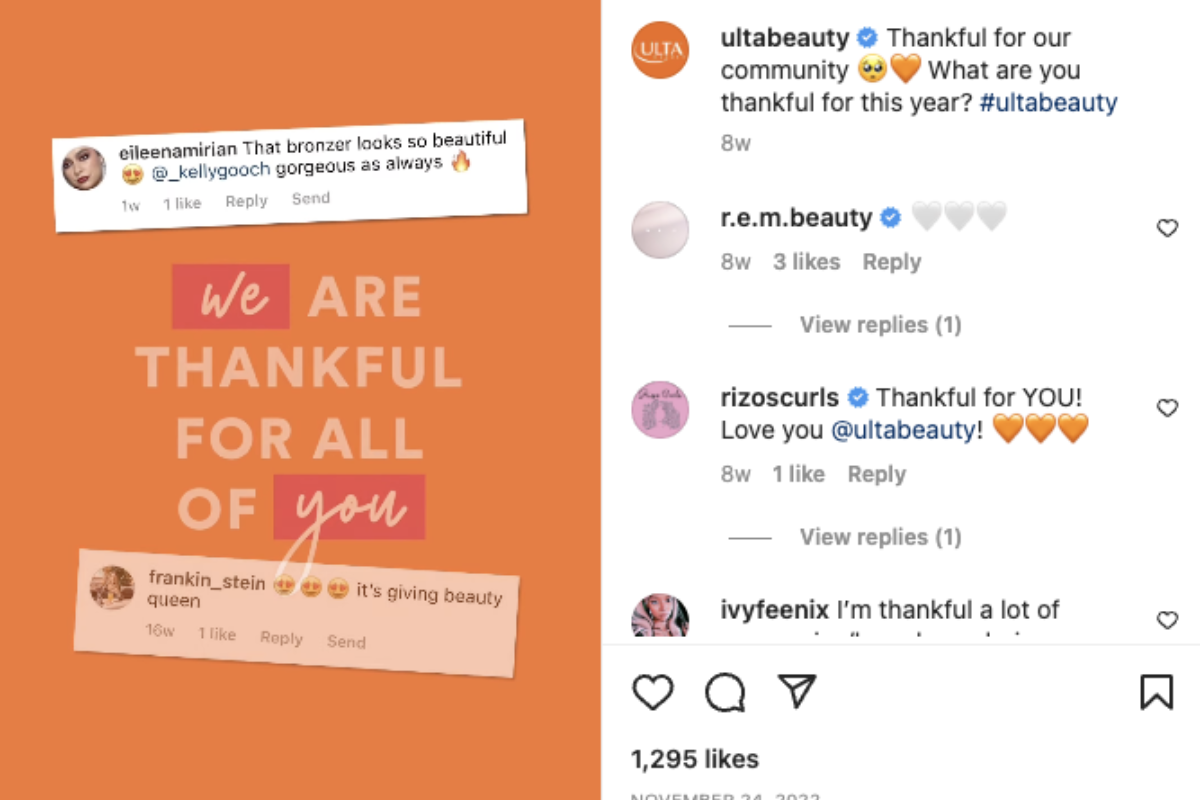
You don't need a new idea if a customer has already given you one. Go through your reviews, saved messages, tags, and repeat orders. Look for three types of proof:
Direct praise
A customer wrote something kind about your service or product. Screenshot it, add your logo, and post it with one sentence about what problem it solved.
Before-and-after results
A client used your service and got a visible outcome. This applies beyond fitness or beauty. A cleaning business can show a messy garage and the same garage after service. A tailor can show a badly fitted abaya and the altered version.
Repeat behavior
If a customer has ordered from you five times, that's a story on its own. Ask them for permission to share why they keep coming back. Most people say yes because it feels good to be asked.
None of this requires a script, a shoot, or an idea. It requires ten minutes of scrolling through what customers have already given you for free.
3. Repurpose Your Core Offer Instead of Inventing a New One
Small business owners often assume they need a new topic to talk about. In most cases, you need a new angle on the same offer, not a new offer.
Take your main product or service and describe it through five different lenses:
- Who is it for?
Instead of describing the product, describe the exact person who needs it, using their situation, not their demographics.
- What problem does it remove?
State the specific inconvenience it solves, not the feature. A meal prep service isn't "healthy food." It's "one less decision to make on a workday."
- What happens if someone waits?
Describe the cost of delay plainly. A gym membership postponed by three months is three months of the same frustration continuing.
- How does it compare to doing it yourself?
Show the time, cost, or risk of the DIY version next to your version.
- What makes it different from the obvious alternative?
Not your competitor by name, but the general default option people usually pick instead of you.
Each of these becomes its own post, using the same product, same photo, same price. You're not repeating yourself. You're showing five real reasons to buy, and most audiences never see all five, because they don't follow every post.
4. Show Operations Instead of Talking About Them
Operational transparency is one of the most underused sales tools available to small businesses, especially in industries where trust is a real concern, like food, beauty, repair services, or anything involving deliveries and appointments.
You don't need a concept for this. You need a phone and five minutes during work you're already doing.
Film or photograph:
- The moment an order gets packed
- The quality check before something ships or gets delivered
- The cleaning or prep process customers never see
- The exact steps between "order placed" and "order received"
Add one caption explaining what's happening and why it matters. If you inspect every unit before it leaves your workshop, show that. If you use a temperature-controlled van for deliveries, film the thermometer reading. People buy from businesses they can see clearly, and most competitors never show this side of the operation, because they assume it's boring. It isn't boring. It's reassuring.
5. Use Direct Product Demonstrations Instead of Concepts
When you're out of ideas, stop trying to be clever and start showing the product doing its job. A demonstration doesn't need a concept, a hook, or editing skill. It needs the product, a camera, and thirty seconds.
Some formats that require zero creative planning:
- Unboxing in real time, showing exactly what a customer receives
- A size or fit comparison, holding the product next to a common object or on a real body
- A single-use walkthrough, showing how the product is used from start to finish, once, with no cuts
- A stress test, showing the product surviving something customers worry about, like water, heat, or daily wear
If you sell a service instead of a product, demonstrate the service delivery itself. A cleaning company can film thirty seconds of a single stain being removed. A consultant can film sixty seconds of one real client question being answered on the spot. Demonstrations don't ask an audience to imagine anything. They remove the guesswork, and removing guesswork is what actually drives a purchase decision.
6. Answer Questions in a Zero-Click Format
Many customers today never plan to visit your profile or website first. They search a question directly on Google, Instagram, or TikTok, and decide based on the first clear answer they see. This means your job isn't to create an idea. It's to answer a real, already-existing question in a format that gets read in three seconds without needing a click.
Pick a question customers commonly search or ask, and answer it directly in the post itself, not hidden in a link.
Format examples:
- A short caption stating the answer plainly, with the product shown underneath as proof
- A simple graphic with the question at the top and a two-line answer below it
- A caption written the way you'd answer a friend, using no jargon and no unnecessary setup
Examples of question types that convert well for small businesses: "How long does delivery take within the city?" "Is this suitable for sensitive skin?" "Do you offer installment payments?" "What's the return policy?" "How many people does this serving size feed?"
This tactic works because it captures buyers at the exact moment they're deciding, not browsing. A person searching "is this cream safe during pregnancy" is closer to buying than someone scrolling for entertainment. Give them the answer directly, and you remove the last barrier standing between the question and the sale.
Build a Content Calendar and a Brand Storyboard So Nothing Feels Random
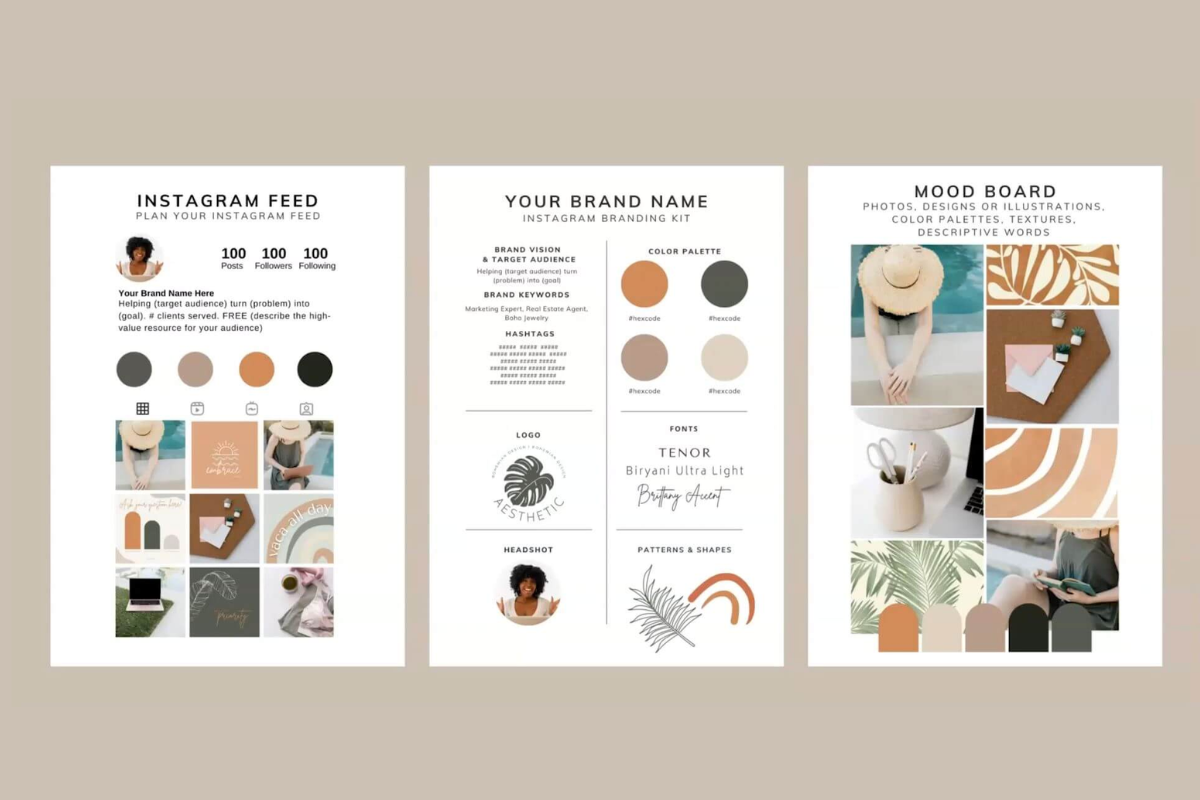
Once you have real material to work with, the next problem is usually confusion. You post one style on Monday, a completely different look on Wednesday, and by the weekend, your page feels like it belongs to three different businesses. A content calendar and a simple brand storyboard fix this, and neither one takes long to set up.
Set Up a Basic Content Calendar
A content calendar isn't a strict schedule you have to obey. It's a slot-based plan that tells you what type of post goes where, so you're never deciding both "what do I post" and "how should it look" at the same time.
Build it around the six tactics already covered:
- One slot each week for a customer question, pulled from your messages
- One slot for customer proof, a review or a repeat order story
- One slot for a core offer angle, rotating through the five lenses
- One slot for an operations or behind-the-scenes clip
- One slot for a direct product demonstration
- One slot for a zero-click answer post
Assign these slots loosely across the week rather than fixing them to exact days. A calendar tells you the category, not the moment. This means you always know what's coming next, even on the days your brain feels empty.
Create a Simple Brand Storyboard
A storyboard, in this context, is just a one-page visual guide that shows what your brand should look like everywhere it appears. It removes the guesswork later, especially if someone else on your team ever posts on your behalf.
Keep it to five parts:
- Colors. Pick two or three colors you actually use, taken from your logo or packaging. Write down the exact codes so nobody has to guess a shade from memory.
- Fonts. Choose one font for headlines and one for regular text. Use the same two everywhere, on stories, graphics, and captions.
- Photo style. Decide if your photos are bright and light, warm and close-up, or clean and minimal against plain backgrounds. Save three example images as your reference.
- Caption voice. Write two or three example captions that sound like your brand. Formal or casual, short or detailed, first-person or brand-voice. Keep it consistent.
- Logo placement. Decide where your logo sits on graphics, and how big it should be, so every post looks like it came from the same place.
Put this on one page, save it somewhere every team member can find it, and refer back to it whenever something new gets designed. This single page prevents the slow drift where a business ends up looking like five different brands within a year.
Stories and Spontaneous Posts Still Have a Place
None of this means every post has to be planned in advance. The calendar and storyboard exist to keep your look and your categories consistent, not to control every single moment you decide to post. A quick story about a busy morning, a walk-in customer, or something funny that happened at the counter can go up anytime, with no plan attached. As long as it still uses your colors, your voice, and your general style, it will feel like it belongs, even if you posted it on impulse five minutes ago. The calendar handles the planned material. Everyday moments can fill in around it whenever they happen.
Running out of ideas feels like a creative problem, but it's usually an attention problem. The material is already there, in your messages, your reviews, your daily operations, and the questions customers ask you every single day. Your job isn't to invent something new. It's important to notice what's already happening and put it in front of the people who need to see it.
Next time the blank caption box shows up, close the app, open your messages instead, and start there. The content was never missing. It was just waiting to be published.
Also read:
 Ummulkiram Pardawala
 Umema Arsiwala
 Ummulkiram Pardawala