Modern enterprises across Dubai Marina, DIFC, and Business Bay rely heavily on powerful technology. Server racks, laptops, cloud infrastructure, and connected devices form the digital backbone of the region's expanding economy. Yet, this rapid digital growth creates a pressing environmental challenge: electronic waste, or e-waste.
According to data published by the UN Global E-Waste Monitor (UNITAR & ITU), the world generated a record 62 million metric tons of e-waste in 2022, a figure projected to rise 82% to 84 million metric tons by 2030. Surprisingly, less than 22.3% of global electronic waste is formally collected and recycled. In the United Arab Emirates, rapid technological adoption generates over 17 kilograms of e-waste per capita annually, significantly higher than the global average of 7.8 kilograms per capita.
Source: E-waste monitor
For Dubai business leaders operating under Federal Law No. 12 of 2018 on Integrated Waste Management and the Dubai Integrated Waste Management Strategy 2041, treating retired IT equipment as simple trash is no longer viable. Transitioning from a linear model to a circular e-waste economy gives organizations a practical way to meet Environmental, Social, and Governance (ESG) targets while ensuring strict legal compliance.
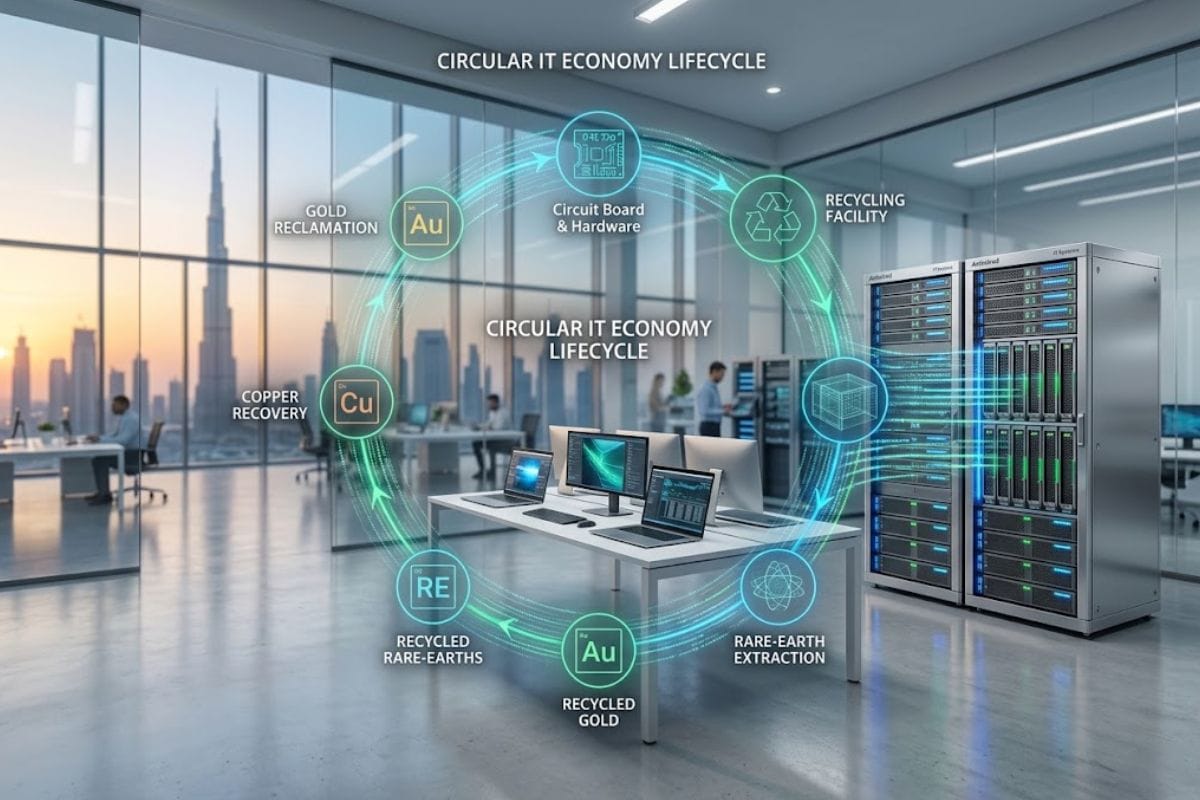
The Anatomy of the Circular IT Lifecycle
A circular IT economy breaks the traditional "take-make-waste" cycle. Instead of sending old devices to local landfills, enterprises maintain hardware components in active use through structured lifecycle management.
- Sustainable Procurement: Sourcing modular hardware designed for easy disassembly, upgrading, and repair from the start.
- Lifecycle Extension: Prolonging active device lifespans through targeted component upgrades and internal redeployment across corporate departments.
- IT Asset Disposition (ITAD): Partnering with licensed disposition specialists in Dubai who sanitise sensitive enterprise data and evaluate functional hardware for secondary markets.
- Material Recovery: Mechanically shredding and refining non-reusable devices at specialised local facilities to extract valuable raw elements like copper, gold, palladium, and rare earth metals.
Data-Backed Proof: Why the Technology Works
Enterprise leaders require clear proof before changing operational practices. Verified data shows that structured IT recycling and refurbishing deliver measurable environmental benefits across carbon footprint reduction, resource conservation, and waste management.
1. Scope 3 Emissions Reductions
Manufacturing complex electronics is carbon-intensive. According to lifecycle assessment data published by the Circular Drive Initiative, manufacturing a single enterprise server accounts for up to 75% or 80% of its total lifecycle carbon emissions (embodied carbon). By extending server lifespans by two to three years or integrating certified pre-owned hardware, organizations can reduce hardware-related Scope 3 greenhouse gas emissions by over 50%.
2. Local E-Waste Diversion & Industrial Processing
Dubai possesses advanced infrastructure designed to handle industrial-scale e-waste. Enviroserve’s "Recycling Hub" at Dubai Industrial City, operated in alignment with Dubai Municipality, spans 280,000 square feet and has the capacity to process 39,000 metric tons of specialized e-waste annually. Utilizing advanced Swiss processing technology, the facility achieves land-diversion rates exceeding 95%. Furthermore, studies by The Green Software Foundation show that refurbishing enterprise devices conserves thousands of liters of clean water usually required to mine virgin materials for new microchips.
3. Precious Material Extraction (Urban Mining)
Extracting raw materials from discarded devices dramatically outperforms primary mining. Research compiled by the United Nations Environment Programme (UNEP) International Resource Panel demonstrates that one metric ton of discarded printed circuit boards (PCBs) contains up to 100 to 400 grams of gold, which is 40 to 80 times more gold and 30 to 40 times more copper than one metric ton of raw mined ore. Advanced mechanical shredding and hydrometallurgical refining processes recover up to 99% of these precious metals, directly reducing the demand for environmentally destructive primary mining.
Source: UNEP
Driving ESG Metrics Through Certified ITAD
Implementing a circular hardware approach directly strengthens an enterprise's ESG performance across all three evaluation pillars:
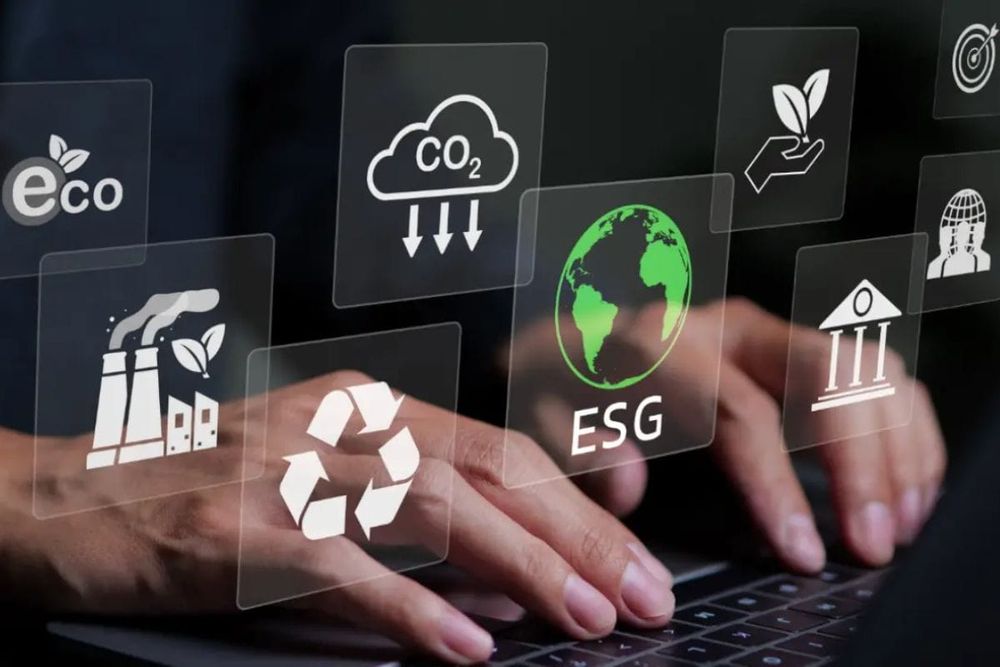
- Environmental: Cuts landfill reliance, decreases raw material extraction, and reduces indirect emissions. Key metrics include total metric tons of Scope 3 CO2 emissions avoided and overall e-waste diversion percentages exceeding 95%.
- Social: Protects customer data privacy and supplies sanitized, refurbished technology to community education programs. Key metrics include volume of functional hardware donated to digital equity initiatives and verified zero data security incidents.
- Governance: Guarantees strict compliance with local regulations like Federal Law No. 12 of 2018 and international data security standards including GDPR and NIST 800-88. Key metrics include 100% compliance audit pass rates and serialized Certificates of Data Destruction issued for 100% of retired assets.
Environmental: Scope 3 Transparency
Accounting standards require corporations to report indirect Scope 3 emissions. Partnering with certified IT Asset Disposition vendors provides IT departments with verified data detailing total carbon avoided, raw materials saved, and landfill tonnage reduced metrics that feed directly into mandatory annual sustainability reporting.
Social: Digital Inclusion
Functional laptops and workstation components removed during enterprise refresh cycles do not need to be destroyed. Once sanitized, this equipment can be re-entered into secondary markets or donated through digital inclusion programs, providing low-income communities and schools access to modern computing power.
Governance: Bulletproof Data Security
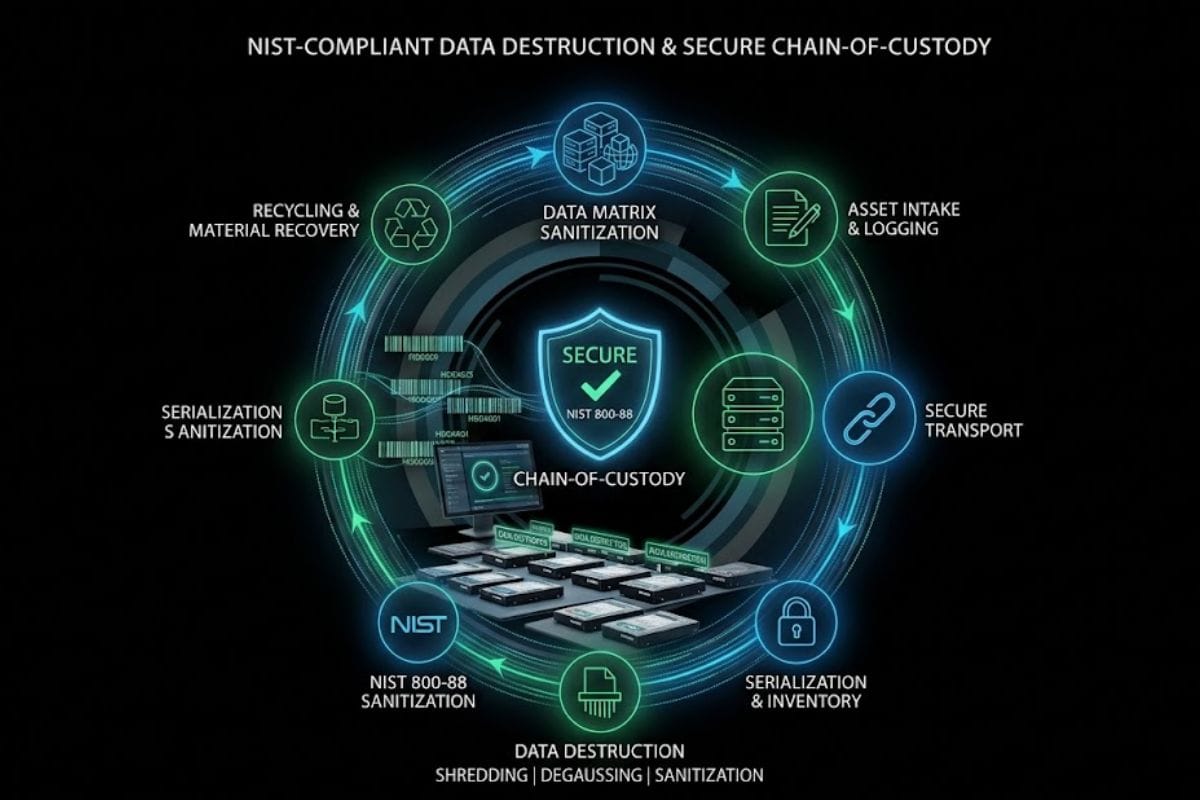
The biggest hurdle to enterprise e-waste recycling is data security. Leading circular IT management systems follow strict hardware sanitization protocols, such as NIST 800-88 Clear and Purge standards. Certified recyclers issue serialized, legally binding Certificates of Data Destruction for every drive wiped or physically shredded, ensuring complete compliance with international privacy laws.
Overcoming Common Circular IT Hurdles
While the business case for circular IT hardware is clear, organizations often encounter operational challenges during implementation.
- Risk of Corporate Data Leaks: IT departments worry that offsite hardware disposition creates data security risks. The solution is requiring licensed vendors to perform NIST-compliant, on-site drive crushing or degaussing before equipment ever leaves the corporate premises.
- Complex Reverse Logistics: Managing hardware collection across multiple corporate offices can prove difficult. The solution is partnering with a single accredited ITAD provider registered on Dubai Municipality’s waste tracking portal, offering centralized inventory tracking, secure chain-of-custody transport, and real-time dashboard reporting.
- Unclear Return on Investment (ROI): Leadership often views e-waste recycling as an added operational expense. The solution is establishing a formal asset recovery program where functional, retired hardware is resold into secondary markets, turning disposition costs into an active revenue-sharing stream.
The linear model of hardware consumption is no longer sustainable. Global supply chain constraints, stricter environmental regulations under the UAE Net Zero 2050 strategic initiative, and mandatory ESG reporting mean businesses can no longer treat old technology as trash.
Adopting a circular e-waste strategy allows Dubai enterprises to build secure, sustainable, and cost-effective IT operations. Reusing, refurbishing, and systematically recycling enterprise hardware turns potential environmental hazards into clear business value, proving that technological progress does not have to come at the expense of the planet.
Also Read:
 Ummulkiram Pardawala
 Umema Arsiwala
 Nour Aboras
 Shahba Mayyeri