Same-day delivery is no longer a premium offering in the UAE. It is a baseline expectation. Consumers in Dubai, Abu Dhabi, and Sharjah have grown accustomed to orders arriving within hours, not days, and businesses that cannot meet that standard are quietly losing ground to those that can. The pressure this creates on traditional logistics infrastructure is enormous, and it is pushing companies across every sector to rethink not just how they store inventory, but where. At the center of this rethinking is a model that is reshaping fulfillment across the country: micro-warehousing. What makes it work, and why are so many UAE businesses betting their logistics strategy on it?
What Micro-Warehousing Actually Means
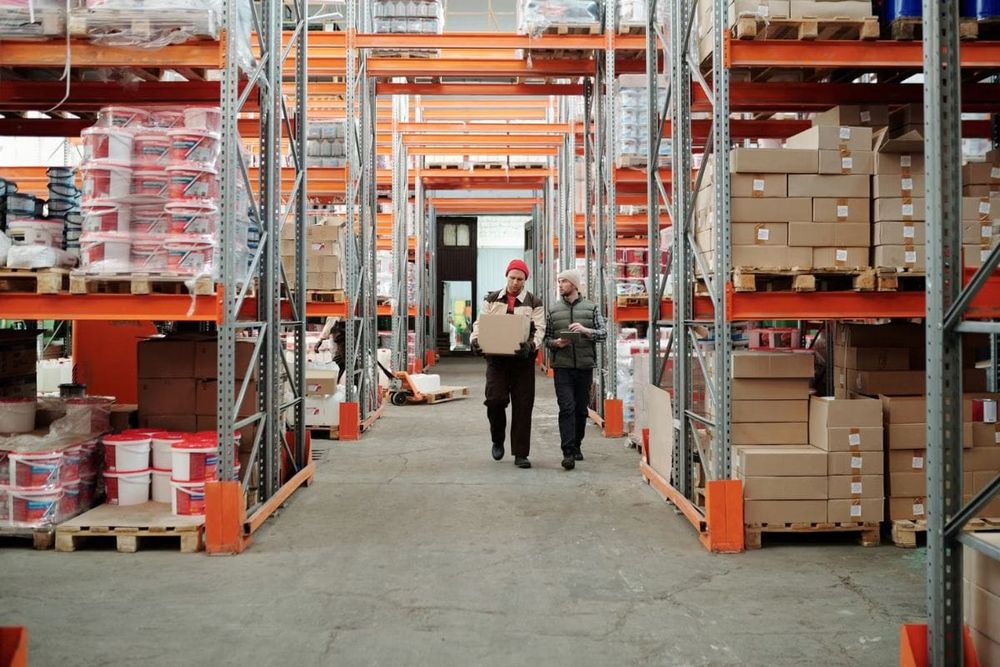
A micro-warehouse is a small-scale storage and fulfillment facility, typically between 3,000 and 10,000 square feet, positioned strategically near customers to enable same-day or next-day delivery. Unlike the sprawling distribution centers on the outskirts of cities that have defined logistics for decades, micro-warehouses are embedded within urban environments, tucked into repurposed retail spaces, light industrial units, and modular facilities inside free zones.
The principle is straightforward: the closer the inventory is to the customer, the shorter the last mile, and the faster the delivery. Unlike traditional warehouses built on the outskirts of urban areas, micro-fulfillment centers prioritize speed and proximity. They are not designed to hold everything a business sells. Instead, they carry a curated selection of fast-moving SKUs, with high-demand products rotated in regularly based on local buying patterns and real-time data. The result is a lean, responsive operation that punches well above its square footage in delivery performance.
Why the UAE Is Particularly Suited to This Model
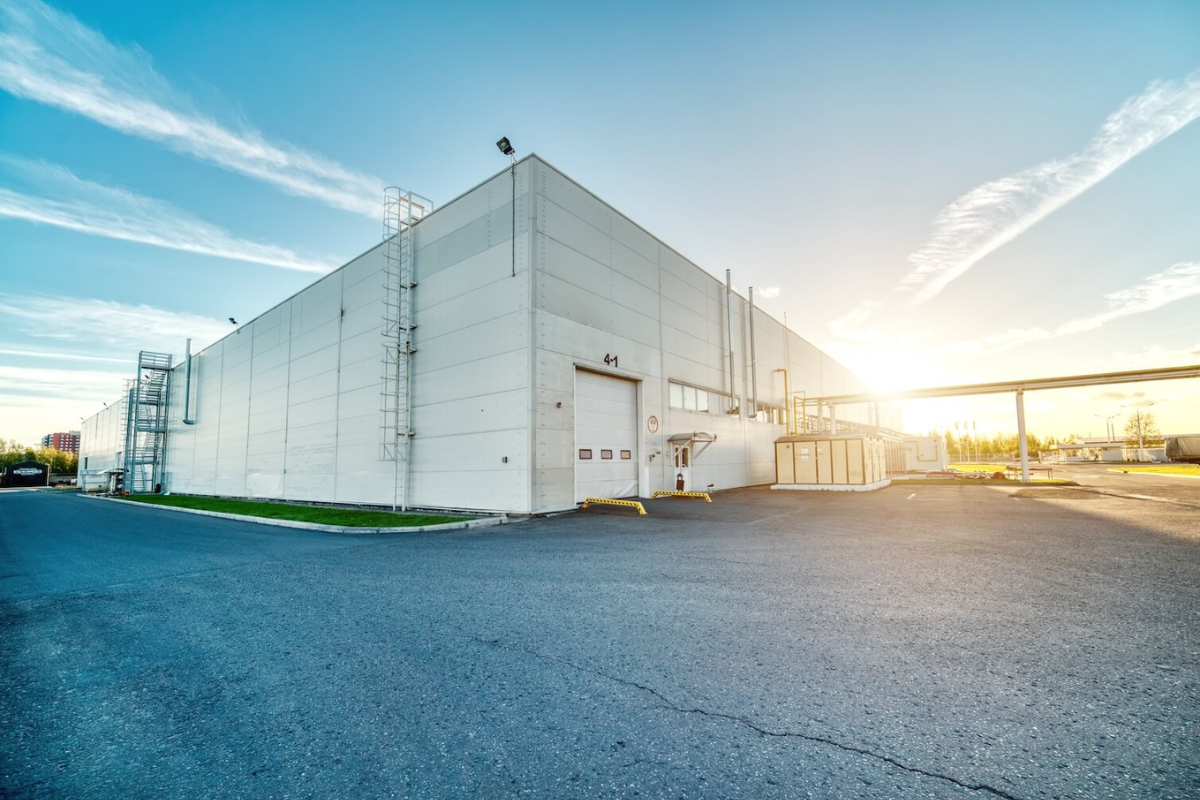
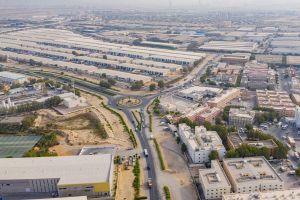
The UAE's urban geography is unusually favorable for micro-warehousing. The majority of the population is concentrated in a handful of dense metropolitan corridors, meaning a relatively small number of strategically placed facilities can reach a very large share of consumers within a short window. Online retailers and direct-to-consumer brands require distributed micro-fulfillment points to meet same-day and next-day delivery expectations in major urban clusters.
The country's e-commerce trajectory makes the infrastructure investment even more compelling. When traditional large-format space is both expensive and scarce, micro-warehousing offers a practical alternative that does not require sacrificing delivery speed.
The Last-Mile Advantage
Last-mile delivery is the most expensive and time-consuming leg of any order's journey, and it is where micro-warehousing delivers its most tangible commercial value. Since last-mile delivery consumes over 50% of logistics budgets, even a 25% reduction in that cost creates serious savings, and some businesses report cutting their order-fulfillment costs by 75% compared to traditional fulfillment methods.
In the UAE context, this translates directly into competitive positioning. When a business has inventory physically located in Jumeirah, Business Bay, or Al Reem Island rather than in an industrial zone 40 kilometers away, it can fulfill an order placed at midday and have it at a customer's door by evening without relying on expensive express courier surcharges. The proximity does the heavy lifting, and the cost savings compound quickly at scale.
Technology That Makes Small Spaces Work Hard
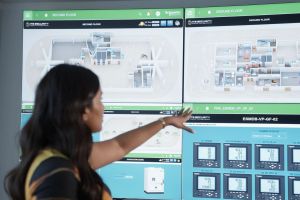
The efficiency of a micro-warehouse does not come from its footprint alone. These facilities are supported by technologies such as robotics, AI, warehouse management systems, and Internet of Things devices, which monitor conditions and optimize throughput. Within a compact space, vertical storage configurations, automated retrieval systems, and AI-driven demand forecasting allow operators to process a high volume of orders with minimal labor and near-zero picking errors.
Automation is particularly critical in compact micro-warehouses where high throughput is needed in limited space, and UAE-based operators are increasingly integrating these tools not as a future investment but as a current operational necessity. Real-time inventory visibility, API connections to e-commerce platforms, and automated restocking triggers are becoming standard features rather than add-ons.
Who Benefits and How
Micro-warehousing is not limited to large logistics operators or established retailers. It has opened a viable path for a much wider range of businesses.
- E-commerce brands and D2C sellers can distribute inventory across multiple urban nodes without committing to full warehouse leases, allowing them to offer fast delivery across the UAE without the capital burden of owning infrastructure.
- SMEs and online merchants gain access to professional fulfillment capabilities through third-party micro-hub providers, competing on delivery speed with larger players at a fraction of the cost.
- Quick-commerce platforms like Noon Minutes and Careem Quik rely on embedded micro-fulfillment infrastructure to power sub-hour delivery of everyday essentials across dense neighborhoods.
- Cold-chain businesses in food, pharma, and fresh produce benefit from temperature-controlled micro-facilities positioned close to residential areas, reducing transit time for perishable goods significantly.
- Omnichannel retailers use micro-warehouses to fulfill online orders from inventory held near their physical store clusters, effectively turning their logistics network into a hybrid fulfillment engine.
The Rise of On-Demand and Aggregator Models

One of the more significant developments in the UAE warehousing landscape is the emergence of aggregator platforms that allow businesses to access micro-fulfillment infrastructure without building or leasing it themselves. A growing share of SMEs, cross-border sellers, and digital-first brands in the UAE are shifting away from owning warehouses toward on-demand warehousing aggregator platforms that offer flexible storage, inventory management, and fulfillment services across Dubai, Abu Dhabi, Sharjah, and key free zones such as JAFZA and KIZAD.
This asset-light approach is particularly attractive in a market where prime urban warehouse space is expensive and in short supply. Businesses pay for what they use, scale up during peak periods without penalty, and scale back when demand normalizes. The model aligns well with how modern e-commerce actually operates: seasonally variable, increasingly diversified, and highly responsive to consumer behavior shifts.
Challenges Worth Acknowledging
Micro-warehousing is not without its operational complexities, and businesses considering the model should approach it with a clear understanding of what it demands.
- Frequent replenishment cycles are essential because micro-warehouses typically hold only 24 to 48 hours of fast-moving stock, requiring precise coordination with regional distribution centers to avoid stockouts.
- Higher coordination overhead comes with running multiple smaller facilities simultaneously, as inventory needs to be monitored, balanced, and restocked across locations rather than managed from a single hub.
- Limited SKU range means micro-warehouses work best for high-velocity products rather than broad catalogs, so businesses with wide product ranges need a hybrid strategy that combines micro-fulfillment nodes with a larger central warehouse.
- Rising urban real estate costs in Dubai and Abu Dhabi continue to compress margins, particularly for facilities that require specialized infrastructure like climate control or pharmaceutical compliance.
For businesses operating in the UAE today, the question is less about whether micro-warehousing is relevant and more about how quickly they can integrate it into their fulfillment strategy. Consumer expectations have already moved. The infrastructure is catching up fast. The businesses that position their inventory closer to their customers now will find it significantly harder for competitors to close the gap later.
Also Read:
 Umema Arsiwala
 Umema Arsiwala
 Ummulkiram Pardawala
 Ummulkiram Pardawala
 Shahba Mayyeri