The efficiency of Dubai’s commercial engine relies heavily on the fluid, relentless movement of its last-mile fulfilment ecosystem. Every day, thousands of delivery vans, e-commerce vehicles, and courier motorcycles weave through high-density commercial corridors, keeping corporate offices and retail establishments fully operational. In hyper-congested zones like the Burj Khalifa district and Trade Centre 1, this high-velocity delivery network has traditionally depended on a highly informal tactical manoeuvre: the quick, un-ticketed curb-side stop. A driver pulls up, leaves the hazard lights blinking, rushes inside a commercial tower to drop off a parcel, and returns before a physical parking warden notices.
However, the introduction of automated, digital infrastructure has brought this legacy logistical practice to a definitive end.
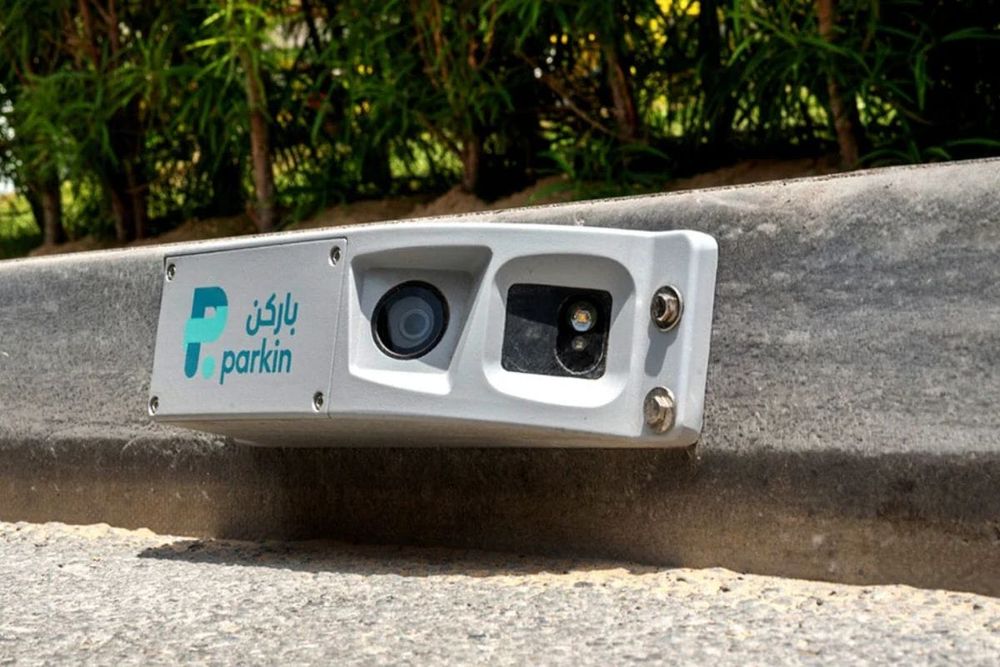
Parkin PJSC, the dominant public parking provider in the emirate, has officially initiated phase one of its advanced, on-street smart parking camera system. By installing more than 500 solar-powered, artificial intelligence enabled curb and pole cameras across critical commercial epicenters, the city has successfully digitized its curb space monitoring.
For standard consumer motorists, this upgrade promises an easier parking experience characterized by seamless mobile application integration and frictionless auto-payments. But for commercial delivery fleets, the deployment represents a fundamental structural disruption. The transition from human-led parking enforcement to flawless, instantaneous AI tracking is forcing a comprehensive redesign of corporate fleet routing, cost sheets, and courier workflows.
Understanding the Infrastructure: The All-Seeing Curb
To understand the scale of the disruption to commercial fleet management, one must evaluate the technical capabilities of the newly deployed Parkin hardware. Unlike traditional parking management architectures across the wider Middle East, which frequently rely on sensors physically embedded beneath the asphalt or generic overhead surveillance, Dubai’s new deployment introduces custom-built, solar-powered curb-side cameras that function as a regional first.
These units utilize cutting-edge automatic number plate recognition (ANPR) software alongside specialized artificial intelligence modules. The instant a delivery vehicle crosses the boundary of a monitored public parking bay in Downtown Dubai or the Trade Centre area, the system captures an image, reads the registration plate, and logs the precise entry time to the exact second. When the vehicle moves away, the camera records the exit timestamp, automatically calculates the exact duration of the stay, and deducts the corresponding tariff from a linked digital account.
Because the units are fully solar-powered, they operate completely independently of the municipal electrical grid, enabling rapid, non-disruptive installation across high-density urban areas without the need to tear up streets to lay down extensive wiring networks.
The Elimination of the Human Grace Window
For commercial fleet operators, the most critical operational consequence of this technological shift is the complete elimination of the informal human grace window. In the past, the physical presence of a parking warden created a natural buffer of time. Courier drivers understood that if they executed a delivery within a window of three to five minutes, the likelihood of crossing paths with a physical warden who would manually issue a parking citation was statistically low.
The AI-enabled camera grid permanently removes this human variance from urban operations. Because the tracking is instantaneous, automated, and continuous, every single vehicle stop is captured. A delivery van stopping for a mere 90 seconds to hand over an urgent corporate document at an office lobby is registered by the system immediately.
If the delivery vehicle is not registered within a centralized corporate parking account or does not immediately activate a parking transaction, the automated system flags the vehicle for an immediate violation. This flawless enforcement capability drastically raises the financial stakes for logistics companies operating in Downtown Dubai, where a sudden accumulation of automated parking fines could easily wipe out the profit margins of an entire day's delivery route.
Administrative Evolution: The Transition to Fleet Wallets
To adapt to an environment where every single curb-side stop is tracked, fleet managers must aggressively move away from antiquated parking payment methodologies. Historically, requiring drivers to manually send individual mParking SMS codes, print physical receipts from roadside kiosks, or navigate offline machines for brief commercial stops created a massive administrative burden and increased the risk of human error.
The current smart camera infrastructure solves this friction point by integrating directly with the centralized Parkin App and the digital Parkin Wallet. This software integration allows commercial logistics corporations to register entire fleets of delivery vans and delivery motorcycles onto unified corporate accounts.
When an asset enters an AI-monitored parking space in Al Corniche or the Burj Khalifa district, the corporate wallet automatically handles the transaction in the background, treating parking fees as a direct, predictable, and fully automated line item within the company's daily operational budget. While this system eliminates the paperwork associated with expense reporting, it also transforms public parking spaces from an occasional operational convenience into a mandatory, inescapable cost for every single physical drop-off executed in the city center.
Levering Occupancy Data for Predictive Fleet Dispatching
While the implementation of automated tracking introduces immediate compliance challenges, the digital system also offers a powerful operational tool for logistics firms capable of leveraging big data. Because all 500 on-street cameras stream real-time occupancy monitoring data straight into Parkin's central tech stack, the city's smart mobility ecosystem now possesses a live, highly detailed map of curb-side availability.
Advanced logistics companies are already exploring ways to integrate this real-time parking availability data stream directly into their corporate routing software and dispatch algorithms. Instead of sending a delivery courier into a highly congested pocket of Downtown Dubai where the smart cameras indicate zero open spaces, dispatch platforms can dynamically alter the route.
The driver can be instructed to hold back, divert to an adjacent, less congested zone, or prioritize a different delivery sequence until the real-time feed shows an open parking slot. By eliminating the time couriers spend circling blocks in search of open parking bays, fleet operators can significantly lower fuel consumption, reduce urban traffic congestion, and improve overall delivery predictability.
The Catalyst for Private Micro-Fulfillment Infrastructure
Over a longer horizon, the relentless automated surveillance of public curb spaces will inevitably shift how major logistics networks structure their physical operations within the city. Relying solely on public, on-street parking infrastructure for high-volume commercial drop-offs is becoming increasingly inefficient and expensive.
This regulatory reality is accelerating a corporate pivot toward the establishment of off-street, private micro-fulfillment infrastructure. Major e-commerce platforms and global delivery networks are increasingly bypassing public on-street spaces altogether by negotiating dedicated, barrier-free loading allocations directly within the subterranean parking facilities of premium commercial and residential towers.
By setting up private micro-hubs inside major corporate buildings, delivery fleets can unload massive shipments in bulk away from public camera grids, utilizing foot couriers or lightweight internal transport solutions to distribute individual parcels across the building's upper floors. This shift is also changing the conversation around urban real estate development, as property managers recognize that providing seamless, private logistics access is a critical requirement for attracting premier corporate tenants who demand efficient, uninterrupted delivery workflows.
Emphasizing Operational Substance Over Legacy Practices
Ultimately, the rollout of Parkin’s AI-powered smart parking cameras serves as a powerful indicator of Dubai’s rapid transition into a highly automated smart city ecosystem. The initiative demonstrates that as an economy scales, the infrastructure tracking its daily operations must evolve beyond manual oversight and embrace the absolute accuracy of automated data management.
For commercial delivery fleets, the initial friction of adjusting to a zero-grace-period environment will eventually give way to a more structured, predictable, and technologically advanced way of operating. The logistics operators that thrive in this upgraded landscape will be those that retire outdated, ad-hoc delivery methods and invest heavily in deep software integration, automated corporate wallets, and data-driven routing mechanics.
By aligning their fleet operations with the invisible digital grid mapping the city’s streets, Dubai's logistics leaders are not merely avoiding automated citations; they are future-proofing their businesses to operate at peak efficiency inside one of the most technologically advanced commercial hubs in the world.
Also Read:
 Shahba Mayyeri
 Ummulkiram Pardawala
 Shahba Mayyeri
 Umema Arsiwala