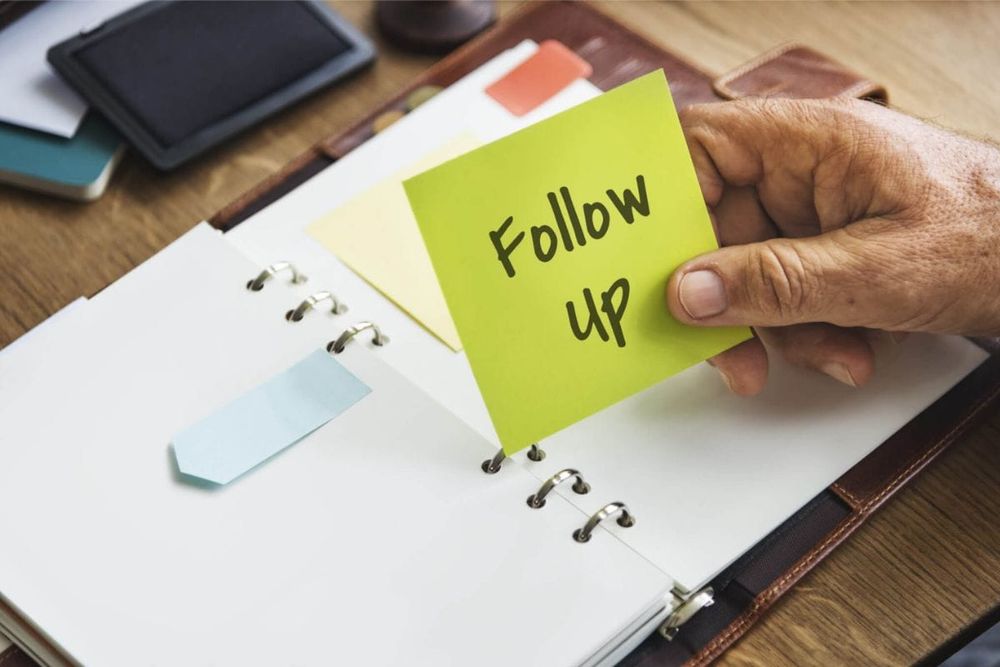
In Dubai's fast-moving business environment, first meetings happen constantly. Coffee at DIFC, a presentation at a client's office, or an introduction at a networking event. These moments are invested in heavily, including preparation time, travel, hosting costs, and the mental energy of putting your best foot forward. Yet, for many businesses, the follow-up is where that investment quietly evaporates.
The follow-up is not glamorous. It does not have the energy of a new pitch or the satisfaction of a signed contract. But it is, consistently, one of the highest-leverage activities in any sales process, and it is one of the most neglected.
In a market as competitive and relationship-driven as Dubai, the business that follows up well almost always has a meaningful advantage over the one that does not.
Why the Follow-Up Gets Skipped
Before addressing how to follow up effectively, it is worth understanding why most businesses do not. The reasons are actually more structural than they first appear.
The pipeline feels full. Dubai generates a high volume of initial meetings, introductions, and referrals. When the top of the funnel is busy, it creates the illusion that follow-up is less urgent because there is always another meeting coming. What this obscures is the rate at which warm prospects are quietly cooling off while attention is directed at the next new conversation.
Fear of appearing pushy is another major factor. In Dubai's relationship-driven culture, there is a genuine concern among many business owners and salespeople about coming across as too eager or transactional. This is a misreading of the market.
A well-structured, value-adding follow-up is not pushy; it is professional. What feels pushy is a follow-up that is purely about chasing a decision rather than continuing to build the relationship.
Additionally, many SMEs simply have no system in place. For them, follow-up depends entirely on individual memory and good intentions. When the week gets busy, and weeks in Dubai tend to get busy, the follow-up falls off the list. Without a structured process that makes follow-up automatic rather than discretionary, it will always compete with more immediate demands and often lose.
Finally, teams frequently misread silence as rejection. When a prospect does not respond after the first meeting, the natural interpretation is that they are not interested. In reality, silence in a business context almost always means busy, not uninterested. Decision-makers in Dubai, particularly at senior levels, are managing significant volumes of communication, so a single unanswered message is rarely a signal to stop.
How Dubai's Market Makes Follow-Up More Important
The specific dynamics of doing business in Dubai amplify the importance of the follow-up in ways that are worth understanding directly.
Dubai operates deeply on relationship capital. Trust is built incrementally through repeated positive interactions over time, it is not established in a single meeting, regardless of how well it goes. The first meeting plants a seed.
Every subsequent interaction, including the follow-up, is part of the process of establishing the trust that converts a prospect into a client. In markets where transactions are more contractual and less relationship-dependent, a single meeting can sometimes be enough. In Dubai, it rarely is. The market is also genuinely busy. Senior decision-makers and business owners in this city are managing multiple priorities simultaneously.
A proposal that lands at the wrong moment, such as during Ramadan, ahead of a long weekend, or mid-quarter when budgets are being reviewed, may generate genuine interest that simply gets deferred. The follow-up is what keeps that interest alive and moves it forward when the timing is right.
Competition is high across almost every sector. Dubai's commercial density means that your prospect is likely speaking to several other providers.
The business that stays present through consistent, relevant, and respectful follow-up maintains a visibility advantage over those that make contact once and wait. In a competitive tender or a relationship-based decision, being remembered at the right moment is often what determines the outcome.
What Effective Follow-Up Actually Looks Like
Effective follow-up in the Dubai market has a specific character. It is timely, personalized, adds value beyond the initial conversation, and respects the relationship rather than treating it as a transaction to be processed.
The 24-hour rule:
The first follow-up should happen within 24 hours of the meeting, ideally the same evening or the following morning. At this point, the conversation is fresh and the impression is live. A prompt, well-crafted message reinforces the professionalism already communicated in the meeting. This is not the moment to push for a decision; it is the moment to thank them for their time, summarize the key points discussed, and confirm any agreed next steps.
Add something of value:
The most effective follow-ups do not just circle back, they bring something new. This could be a relevant article, a connection that might benefit the prospect, or a piece of market information that relates to a challenge they mentioned in the meeting. This signals that you were genuinely listening, that you understand their world, and that your relationship with them is not purely transactional. In Dubai's relationship-driven market, this distinction is significant.
Be specific, not vague:
"Just checking in" is the least effective form of follow-up. It places the burden on the recipient to give the conversation direction and provides no reason for them to respond. Every follow-up should have a clear, specific purpose, such as answering a question from the meeting, sharing the proposal you discussed, proposing a date for the next call, or providing information they requested.
Use the right channel:
WhatsApp is widely used for business communication in the UAE, but it is not always appropriate for every follow-up. A formal proposal or a detailed response deserves an email. A quick check-in with someone you have an established relationship with may suit WhatsApp, while a LinkedIn message works well for new connections where you want to stay visible without being intrusive. Reading the relationship and choosing the channel accordingly is part of what makes follow-up land well.
Respect the calendar:
Dubai's business calendar has natural rhythms that affect follow-up timing. Ramadan changes working hours and communication patterns significantly. Major public holidays, UAE National Day, and the summer months, when a significant portion of the population is traveling, all affect how quickly people respond and how receptive they are. Good follow-up accounts for these rhythms rather than ignoring them.

Building a Follow-Up System That Actually Works
Relying on memory and good intentions to manage follow-up is a strategy that works until it does not. For any business handling more than a handful of active prospects at any given time, a systematic approach is essential.
Use a CRM, even a basic one. A Customer Relationship Management system does not need to be complex or expensive. At its most basic, it is a structured record of every prospect, where they are in the sales process, the last interaction, and when the next follow-up is due.
Tools including HubSpot's free tier, Zoho CRM, and Pipedrive are all accessible and well-suited to SME operations in the UAE. The discipline of logging every meeting and setting a follow-up date immediately after is what separates businesses that lose leads to inertia from those that convert them consistently.
Set follow-up sequences, not individual reminders. Rather than deciding what to do with a prospect after each interaction, define a standard sequence in advance.
For example, you can follow up within 24 hours of a meeting, send a proposal within three days if requested, check in one week after the proposal, follow up again two weeks later with a value-add, and review the prospect's status at 30 days. Having this structure pre-defined removes the decision-making burden and ensures nothing falls through the gap.
Know when to close the loop. Not every prospect converts, and a good follow-up system includes a clear point at which a non-responsive lead is either moved to a long-term nurture list or politely closed.
A final, honest message, something along the lines of acknowledging that the timing may not be right and leaving the door open for the future, is far more effective than continued follow-up into silence. It preserves the relationship and occasionally prompts a response that restarts the conversation.
The Cost of Not Following Up
The cost of a poor follow-up culture is largely invisible because it shows up as deals that simply never happen rather than deals that are visibly lost. There is no rejected proposal to point to, and no declined meeting to analyze.
Instead, the prospect just quietly moves forward with someone else. This is often someone who was no better placed than you were after that first meeting, but who stayed present while you did not.
In a market where building a strong pipeline requires significant investment in networking, in proposals, and in relationship-building over time, allowing that pipeline to leak at the follow-up stage is one of the most avoidable sources of revenue loss a Dubai business can have. The first meeting opens the door; the follow-up is what walks through it.
In Dubai's relationship-driven, highly competitive business environment, follow-up is not an afterthought in the sales process; it is a central part of it. Businesses that treat it with the same intentionality they bring to the first meeting will consistently outperform those that leave it to chance. The discipline is simple. The returns are not.
Also Read:
 Umema Arsiwala
 Shahba Mayyeri
 Ummulkiram Pardawala
 Umema Arsiwala
 Ummulkiram Pardawala