For years, the commercial hospitality and entertainment sectors across the United Arab Emirates operated on a rigid, seasonal calendar dictated entirely by the climate. When the peak summer heat arrives, outdoor spaces across the city go into a state of forced hibernation. From late May until early October, rooftop lounges, beachside exhibition spaces, and garden amphitheaters sit completely vacant. The intense ambient heat combined with high coastal humidity historically made open-air gatherings entirely impossible.
However, a massive wave of technological innovation in microclimate engineering is rewriting the rules of the local events industry.
By moving away from traditional, inefficient portable air conditioners and embracing advanced thermodynamic cooling frameworks, Dubai's premier event operators are achieving the impossible. They are actively extending the outdoor event season directly into the peak summer months. Through a sophisticated combination of high-pressure flash evaporation, localized thermal vectoring, and architectural airflow manipulation, venues are establishing completely controlled, comfortable microclimates under the open sky. This shift is turning what was once a quiet off-season into a highly active, year-round revenue driver.
The Evolution from Brute-Force AC to Microclimate Engineering
To understand why this technological shift is so revolutionary, one must examine the fundamental limitations of traditional cooling methods. For decades, attempts to cool an outdoor space relied on brute-force, high-tonnage commercial HVAC units hooked up to temporary plastic ducting. This approach is an absolute thermodynamic failure in an uncontained environment.
The heavy, refrigerated air produced by standard air conditioning units instantly disperses into the surrounding atmosphere, driven away by natural crosswinds and rising thermal currents. The energy consumption required to run these setups is astronomically high, creating a massive carbon footprint while failing to lower the ambient temperature by more than a few superficial degrees.
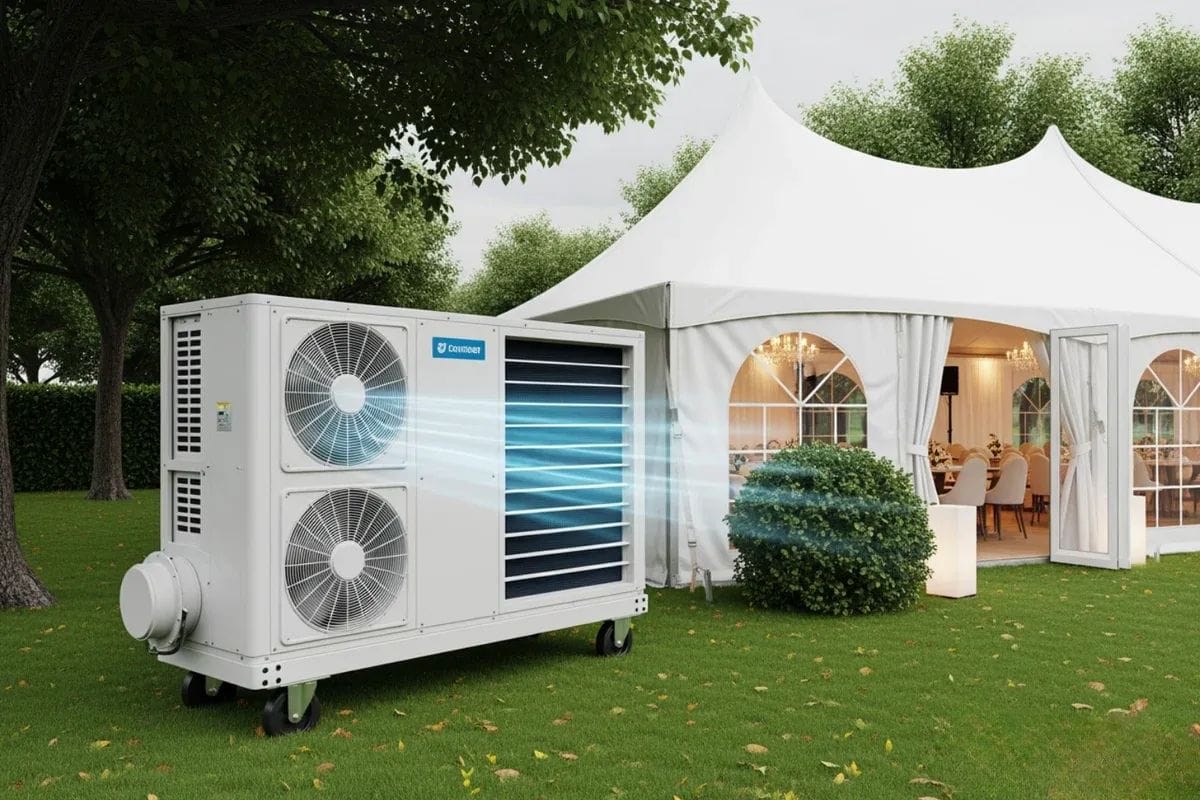
Modern climate control innovation abandons the concept of trying to cool the entire sky. Instead, it relies on precise microclimate engineering, focusing entirely on the specific zone occupied by the event guests.
By analyzing the unique layout of a venue, including wind direction, solar radiation exposure, and natural physical barriers, engineers can build a localized, invisible perimeter of cold air. This targeted method allows operators to establish consistent, comfortable temperatures without wasting energy on the open atmosphere around them.
The Molecular Science of High-Pressure Flash Evaporation
At the absolute center of this open-air cooling revolution is the deployment of industrial-grade, ultra-high-pressure misting and fogging networks. While basic, low-pressure misting fans have been used for years in casual cafes, they are notoriously inefficient in high-humidity coastal zones, frequently leaving guests feeling damp, sticky, and uncomfortable.
The modern systems operating across Dubai’s premium venues utilize specialized high-pressure pumps that force filtered water through laser-machined ceramic nozzles at pressures exceeding seventy bars.
This massive mechanical pressure breaks the water down into microscopic droplets measuring less than ten microns in diameter, creating a cloud of ultra-fine fog. The moment these micro-droplets hit the hot ambient air, a thermodynamic phenomenon known as flash evaporation occurs.
The microscopic moisture instantly absorbs the surrounding latent heat energy to transition from a liquid state into a gas. This immediate phase change strips heat from the air, dropping localized ambient temperatures by fifteen to twenty-five degrees Celsius. Because the droplets evaporate completely before they can touch a surface, guests experience a crisp, refreshing drop in temperature with absolutely zero residual moisture landing on their clothing, furniture, or event décor.
Aerodynamic Manipulation and Invisible Air Curtains
While flash evaporation handles thermal reduction, maintaining that cooled air within an open-air event space requires masterful aerodynamic containment. Cooled air is naturally denser and heavier than hot air, meaning it inherently sinks to the ground. However, even a gentle summer breeze can instantly sweep that pockets of cool air away, ruining the microclimate.
To isolate the event space from the surrounding desert heat, technical designers are deploying high-velocity, directional air curtains along the perimeters of outdoor venues.
These structural air systems blast narrow, continuous streams of high-velocity air vertically or horizontally across the open borders of a space. This movement creates an invisible, highly effective aerodynamic wall that functions exactly like a physical glass window.
The air curtain actively deflects incoming thermal crosswinds, preventing the hot outside air from penetrating the guest zone. At the same time, specialized low-profile induction fans placed inside the venue work in perfect harmony to gently recirculate the cooled air, keeping it moving in a continuous, low-velocity loop that ensures uniform temperatures across the entire floor plan.
Decentralized Mobile Coolers and Water-Pad Technology
For large-scale, temporary outdoor gatherings such as summer festivals, fashion shows, or corporate exhibitions where installing fixed structural infrastructure is not an option, heavy-duty mobile evaporative coolers have become the preferred solution. Moving completely away from energy-intensive compressor designs, these advanced portable units harness the natural power of eco-friendly water-pad technology.
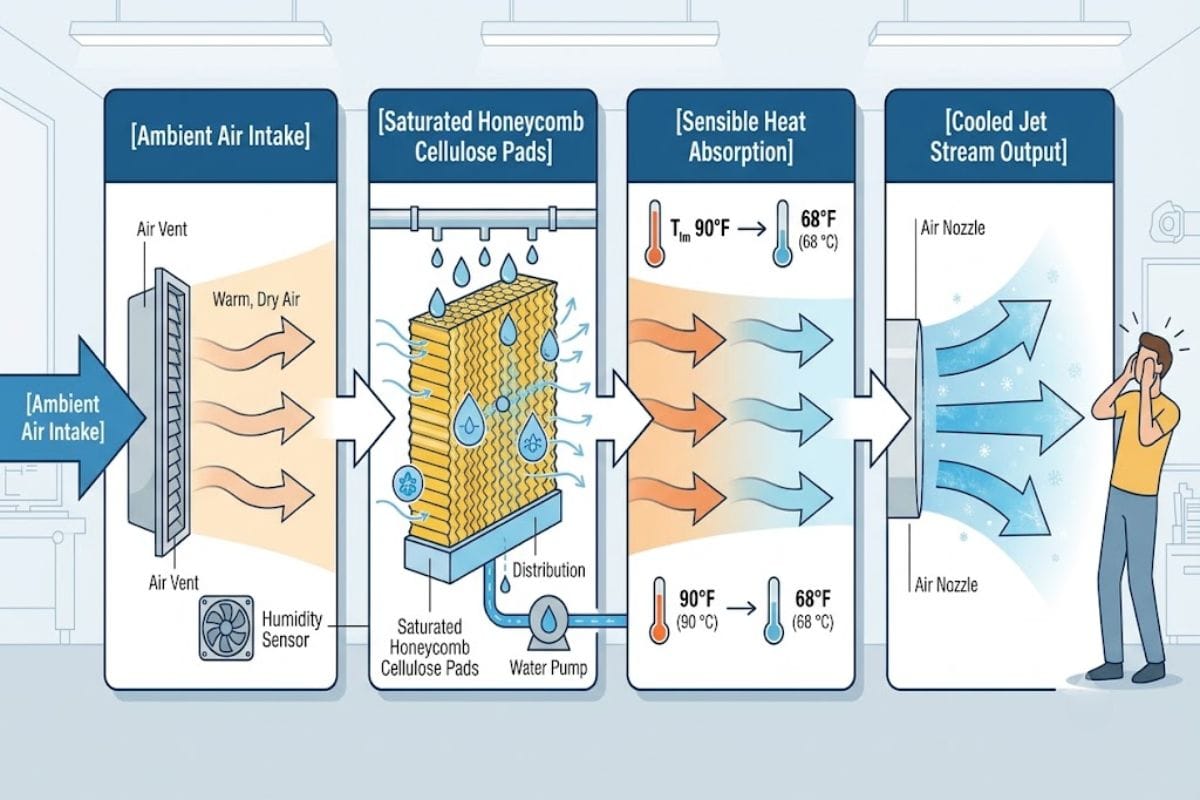
The internal mechanism of these modern units features large, multi-layered honeycomb cellulose pads that are continuously saturated with chilled water via an internal distribution pump. Powerful, variable-speed industrial blowers draw the hot ambient air directly through these wet pads.
As the air passes through the intricate channels of the damp honeycomb matrix, the sensible heat within the air is absorbed by the water, causing it to evaporate. The air emerges from the other side as a highly concentrated, chilled stream of clean, refreshing air capable of being projected across vast distances. By placing these energy-efficient mobile coolers in strategic, staggered formations, event planners can easily customize the cooling footprint to match any layout, providing instant relief exactly where foot traffic is highest.
Smart Sensoring and Automated Algorithmic Climate Control
The true intelligence behind Dubai’s modern summer outdoor events lies within the digital backend software governing these cooling systems. Open-air environments fluctuate wildly throughout the day and night, with rapid shifts in humidity levels, wind vectors, and guest density directly impacting the overall heat index. Relying on manual adjustments by technicians is far too slow to keep conditions stable.
To solve this, modern event setups integrate localized networks of Internet of Things environmental sensors that continuously scan the venue’s atmosphere.
These smart sensors track ambient temperature, relative humidity, barometric pressure, and wind speed in real time, feeding a constant stream of data into a centralized, algorithmic control module. If a sudden spike in coastal humidity threatens to slow down the flash evaporation process, the automated system instantly adjusts, ramping up the pump pressure while modifying the blower speeds to maximize air movement.
Conversely, if a cool evening breeze passes through, the system dials back its output to conserve water and power. This dynamic, automated optimization guarantees a perfectly stable, premium guest experience from the first arrival to the final departure, all while drastically minimizing operational resource consumption.
Rewriting the Economics of the Hospitality Off-Season
From a commercial business perspective, the ability to successfully host outdoor events during the harsh summer months represents a massive financial paradigm shift for Dubai’s hospitality sector. Historically, the summer off-season forced venues into a defensive financial posture, marked by deep price discounting, reduced staffing hours, and a total reliance on indoor spaces to generate revenue.
By deploying advanced climate control innovation, venue owners can completely alter their annual revenue curves.
Artisanal markets, luxury product launches, destination weddings, and live music performances can now seamlessly continue their outdoor calendars right through July and August. This technological empowerment allows homegrown brands to maximize the return on investment of their premium outdoor real estate assets, maintain consistent, high-value employment opportunities for their hospitality teams, and significantly elevate Dubai’s global reputation as a non-stop, year-round capital of luxury lifestyle and world-class entertainment.
Also Read:
 Ummulkiram Pardawala
 Umema Arsiwala
 Shahba Mayyeri
 Ummulkiram Pardawala