The rapid evolution of consumer behavior in the United Arab Emirates has placed unprecedented pressure on traditional real estate infrastructure. In dense urban landscapes like Dubai, convenience is no longer measured by the proximity of a physical storefront, but by the speed of a digital transaction. The explosive expansion of quick commerce, commonly known as q commerce, has shifted consumer expectations entirely. Delivery windows that once spanned days or hours have been compressed to thirty, twenty, or even fewer than ten minutes.
This hyper local retail shift has triggered a profound structural reassessment among commercial property developers, architects, and asset managers across the emirate.
Traditional retail spaces, office basements, and commercial strip malls were fundamentally designed for foot traffic, long-term browsing, and bulk pallet deliveries. They were never engineered to handle the chaotic, continuous flow of high-velocity courier fleets, micro-picking operations, and instant order dispatching. To remain competitive and maximize rental yields, developers are aggressively redesigning and retrofitting commercial properties to serve as decentralized, high-speed logistics engines.
The Spatial Migration: Converting Prime Retail into Neighborhood Dark Stores
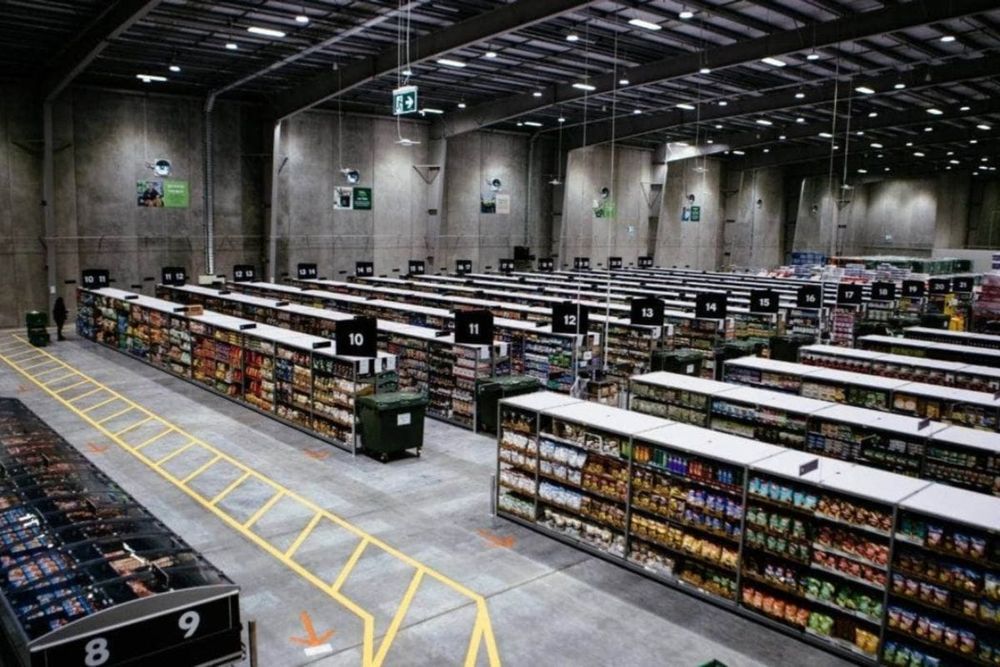
For decades, the financial value of ground floor commercial real estate in high-density Dubai corridors, such as Dubai Marina, Downtown Dubai, and Business Bay, was determined by high consumer visibility and luxurious window displays. Today, a significant portion of this valuable real estate is migrating toward a highly functional, inward facing model: the urban dark store. Unlike conventional retail outlets, these micro fulfillment centers are completely closed to the public and optimized exclusively for rapid online order picking.
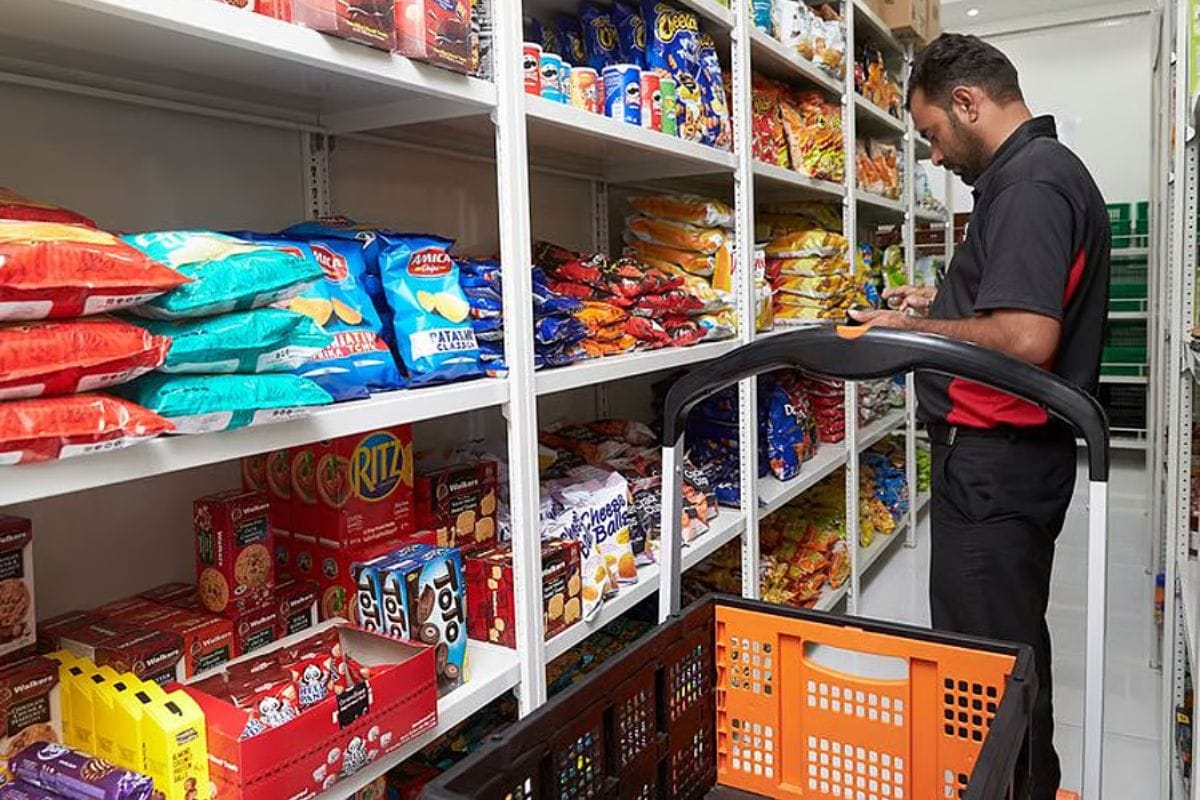
Converting a legacy retail unit into an operational dark store requires a total structural overhaul of the interior floor plate. Traditional boutique layouts prioritize wide corridors, decorative partition walls, and soft ambient lighting to encourage relaxed customer browsing. Architects stripping these units are replacing them with ultra dense, high-ceiling rack configurations that maximize vertical storage volume within compact footprints often measuring under two hundred square meters.
The internal navigation pathways are engineered with algorithmic precision. Linear aisles are mapped out to align perfectly with automated warehouse picking applications, ensuring that packagers can navigate the inventory and compile an order within a maximum two-minute window from the initial screen tap. This spatial reconfiguration effectively turns a prime retail address into a hyper local fulfillment asset capable of servicing a restricted one-kilometer delivery radius with immense speed.
Retrofitting Underground Infrastructure: Basements as Vertical Fulfillment Hubs
As real estate costs in prime metropolitan areas continue to rise, commercial landlords are looking beneath the surface to unlock hidden logistical capacity. Dubai commercial tower basements and multi-level underground parking facilities, which historically served as static vehicle storage zones, are being creatively retrofitted into functional, multi-temperature micro-warehouses.
This underground architectural migration provides an immense competitive advantage. It allows delivery networks to anchor their inventory directly beneath major residential and office structures, completely bypassing the traffic congestion of major surface-level arterials like Sheikh Zayed Road. However, retrofitting an active commercial basement for fast-paced logistics introduces severe engineering and environmental challenges.
Standard parking garages possess low overhead clearances, heavy structural pillars, and minimal mechanical ventilation systems that were designed strictly to extract intermittent vehicle exhaust. Upgrading these subterranean environments requires a massive injection of capital to install industrial grade HVAC systems, high-capacity dehumidifiers, and advanced fire suppression arrays tailored for high-density storage. Furthermore, floors must be reinforced with heavy duty epoxy coatings to withstand the continuous friction of automated guided vehicles and automated pallet jacks moving inventory around the clock.
Redesigning Ingress and Egress: Dedicated Fleets and Two-Wheeler Corridors
The most visible bottleneck in the fast-delivery ecosystem occurs at the property perimeter. A commercial venue that attempts to merge thousands of daily motorcycle couriers, on-demand drivers, and traditional corporate visitors into a single entrance gate will inevitably experience operational gridlock. To resolve this perimeter friction, modern commercial developments are implementing a total separation of human and logistical traffic.
Architects are designing dedicated, high-speed entry and exit lanes exclusively for delivery two-wheelers and light electric cargo vehicles. These lanes bypass primary customer parking structures entirely, leading riders directly to secure, weather-sheltered dispatch courtyards hidden from the building frontages.
The design of these staging zones mimics the precision of an airport tarmac. Riders pull into numbered, angled staging bays equipped with digital overhead displays that sync directly with the dark store’s dispatch queue. By utilizing biometric sensors or automatic license plate recognition, riders are granted instant access without interacting with manual security gates. This smooth perimeter movement ensures that a rider can arrive, retrieve a freshly packed order from a secure locker, and exit onto public roads in under sixty seconds, preserving critical minutes of the delivery timeline.
Advanced Thermal Control: Multi-Temperature Micro-Zoning
Dubai’s intense ambient environment, characterized by extreme summer heat and soaring coastal humidity, introduces a constant threat to inventory integrity. When ambient external temperatures exceed forty-five degrees Celsius, a traditional commercial property with poorly insulated loading docks faces immediate climate control failure. For fast logistics operations handling volatile pharmaceuticals, premium cosmetics, and fresh grocery products, preserving a continuous, unbroken cold chain is an absolute regulatory and operational mandate.
Redesigned commercial units are addressing this challenge through the implementation of micro-zoned, variable temperature compartmentalization. Within a single micro-fulfillment footprint, space is structurally divided into precise thermal cells regulated by independent smart thermostats. High-velocity air curtains are installed above internal doorways to act as invisible thermal dams, preventing chilled air from escaping when picking teams transition between ambient, chilled, and deep-freeze zones.
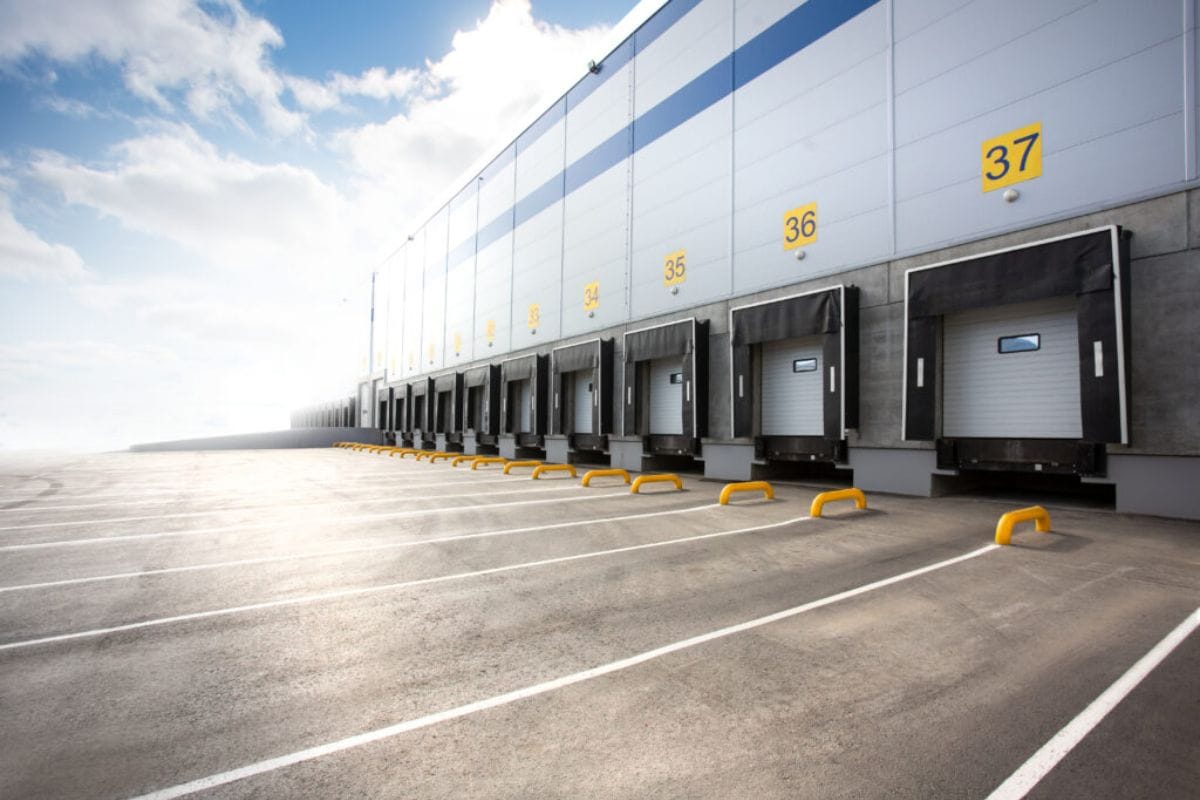
Additionally, the loading docks themselves are undergoing an engineering transformation. Traditional open-air loading bays are being enclosed within fully refrigerated, pressurized vestibules. When a multi-temperature supply truck backs into the bay, it forms a hermetic seal against an inflatable dock shelter. This design ensures that product unloading occurs entirely within a climate-controlled envelope, completely eliminating thermal shock and guaranteeing that fresh inventory enters the urban micro-fulfillment center in pristine condition.
Smart Loading Docks and AI-Driven Staging Infrastructure
The efficiency of an urban logistics property is ultimately governed by its loading bay turnover rate. In traditional commercial buildings, loading docks operate on a primitive, first-come, first-served schedule, leading to massive delivery truck queues that block local traffic and waste operational hours.
To eliminate this supply chain friction, forward-thinking commercial developers are deploying AI-integrated smart docking platforms. These software-driven hardware systems require inbound freight vehicles to register for precise, algorithmically determined time slots before departing from regional distribution centers in areas like Dubai South or Jebel Ali Free Zone. As a truck approaches the destination property, GPS tracking coordinates with the building management system, automatically opening a specific dock door the moment the vehicle arrives.
The docking bays themselves are equipped with embedded weight sensors, automated conveyor belts, and overhead computer vision cameras that instantly scan and register incoming inventory packages against digital manifests. This automated ingestion process bypasses the need for manual clipboard auditing, allowing incoming stock to be sorted, categorized, and funneled onto internal vertical freight lifts within minutes of arrival, keeping the property’s logistics pipeline moving smoothly without administrative delay.
Future-Proofing Assets: Electric Fleet Charging and Autonomous Integration
As the Dubai government continues to accelerate its sustainability initiatives under the Dubai Clean Energy Strategy and the broader Dubai 2040 Urban Master Plan, the long-term commercial value of real estate is becoming deeply tied to environmental efficiency. A commercial property designed today without the electrical infrastructure to support large-scale fleet electrification runs a major risk of becoming obsolete.
Redesigned logistics hubs are incorporating massive industrial power upgrades to support dedicated high-voltage charging grids for electric delivery fleets. Dozens of motorcycle charging bays, commercial vehicle fast chargers, and battery-swapping kiosks are being integrated directly into the building layout. This allows delivery networks to charge their fleets passively during natural downtime windows, lowering long-term operating costs and minimizing corporate carbon footprints.
Looking further ahead, progressive asset developers are designing property perimeters to accommodate the next frontier of urban transport: autonomous delivery drones and rolling pavement robots. Roof structures are being reinforced and cleared to host dedicated drone landing pads complete with automated guided pathways, while ground-floor entryways are fitted with low-profile ramps and digital proximity beacons that allow autonomous sidewalk rovers to navigate seamlessly from the dark store straight onto municipal pedestrian pathways.
The New Paradigm of Urban Commercial Valuation
The structural re-engineering of commercial properties for quick-delivery logistics marks a permanent pivot in how global metropolitan real estate is conceptualized, designed, and valued. The traditional separation between distant industrial warehouses and prime urban retail has officially dissolved, replaced by a highly integrated hybrid model that brings inventory closer to the end consumer than ever before.
While the capital investment required to upgrade legacy buildings with high-speed staging lanes, advanced subterranean HVAC networks, and smart loading docks is significant, the long-term rewards are undeniable. Commercial landlords who proactively future-proof their properties to meet the demanding requirements of the q-commerce economy are securing highly stable, premium tenants, maximizing their square-meter revenue metrics, and playing a vital role in shaping Dubai’s international standing as a hyper-efficient, forward-looking global capital of modern digital commerce.
Also Read:
 Ummulkiram Pardawala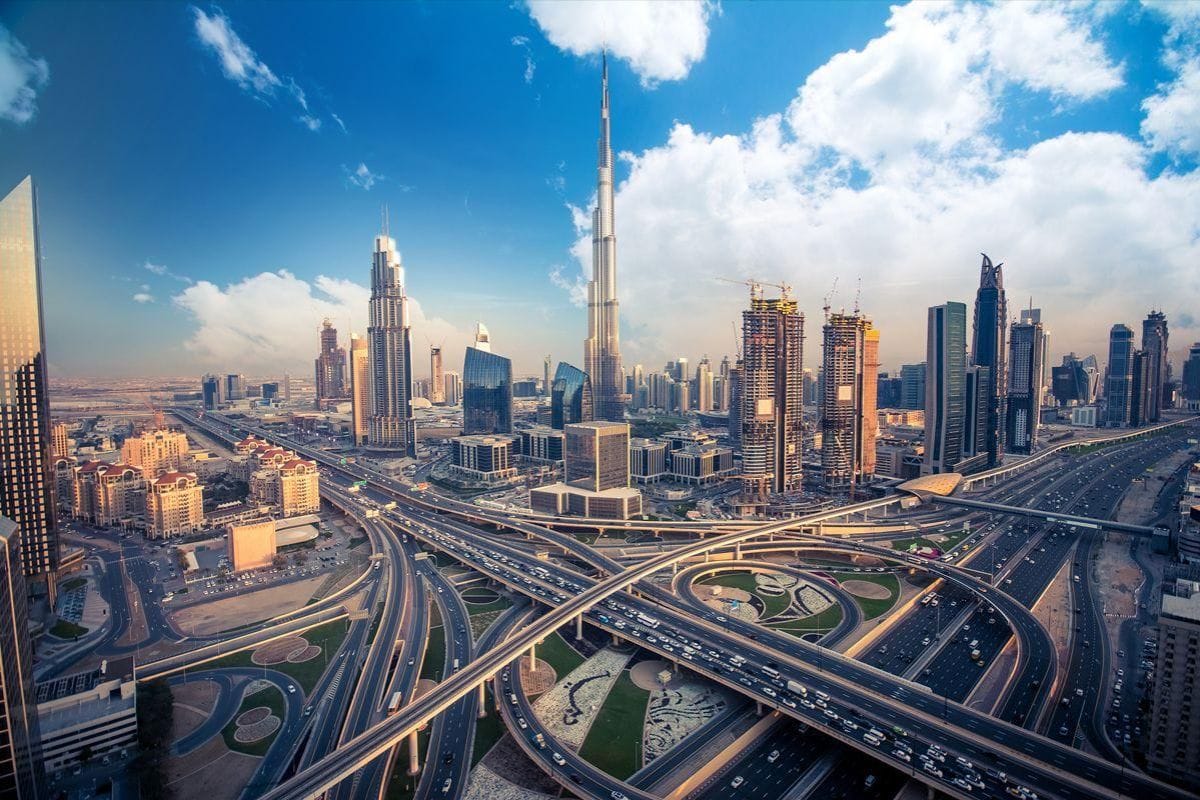
 Shahba Mayyeri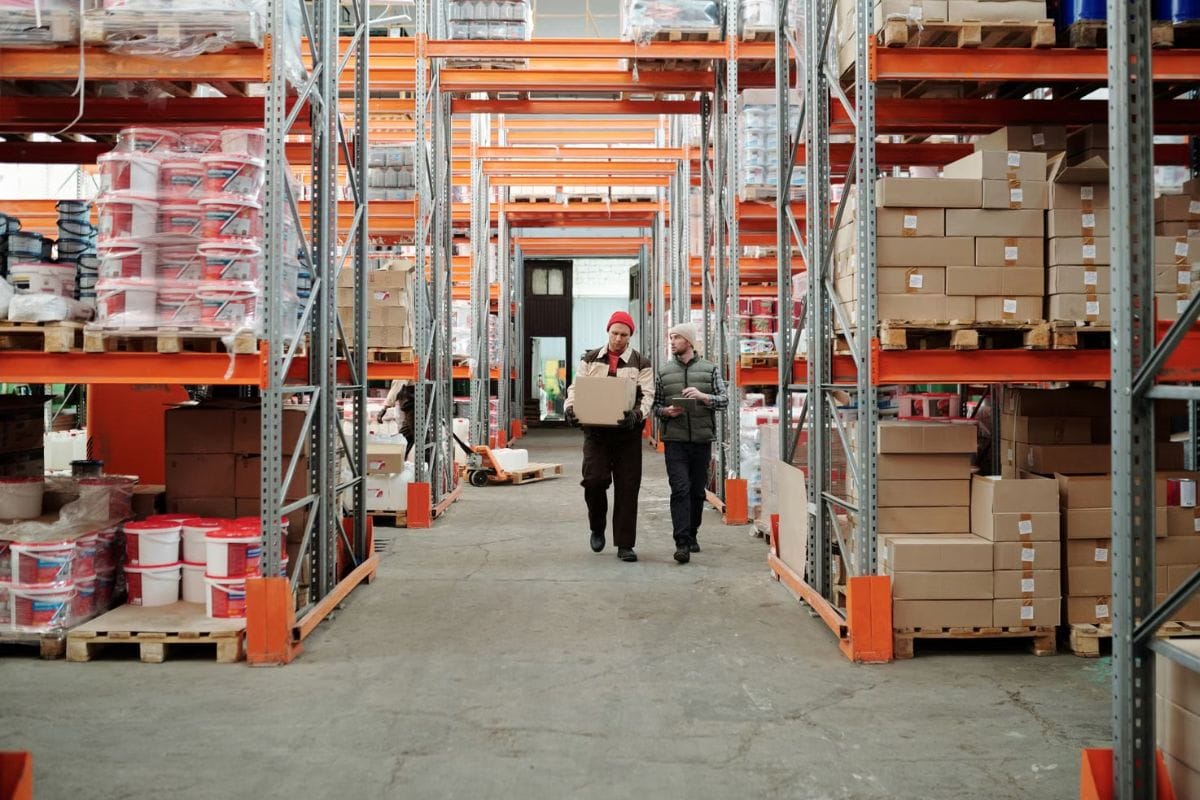
 Ummulkiram Pardawala
 Shahba Mayyeri