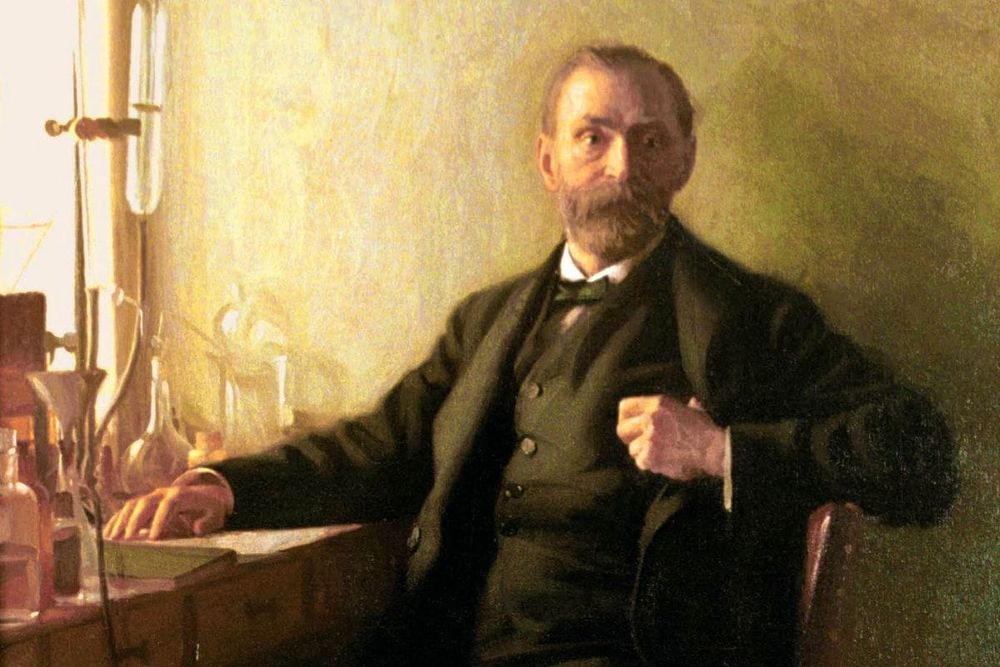
Most people know Alfred Nobel as the name on the world's most famous awards, yet during his lifetime he was known as something far less glamorous, a hard-driving industrialist who spent decades running explosives plants, chasing patents and defending his territory in court.
By the time he died in 1896 his companies operated around 90 factories across more than 20 countries, and the fortune they produced is the only reason the prizes exist today. The ceremony gets the attention but the business built the endowment, and the way he built it holds practical lessons for anyone running a company now.
A closer look at how Nobel built his businesses and then planned for what would come after them reveals far more that owners can use today than the prize ceremonies ever suggest.
Who is Alfred Nobel?
Alfred Benhard Nobel was born in Stockholm in 1833 into a family that lived close to financial disaster. His father Immanuel was an inventive engineer whose ventures in Sweden collapsed into bankruptcy, which pushed the family to St Petersburg where Immanuel eventually found success supplying the Russian military. That move gave young Alfred a first-rate education in chemistry and engineering and also a front-row seat to how fragile a business can be when it depends on one customer and one product.
He took that lesson with him when he returned to Sweden in the early 1860s to work with nitroglycerin, an Italian invention that was enormously powerful and dangerously unstable. A blast at the family's Stockholm facility in 1864 killed his younger brother Emil along with several others, and public fear was so strong that the authorities pushed his experiments out of the city. Nobel responded by moving production to a barge on a lake and then to a remote site, which shows an early founder instinct to keep the work going while solving the problem that was actually in the way.
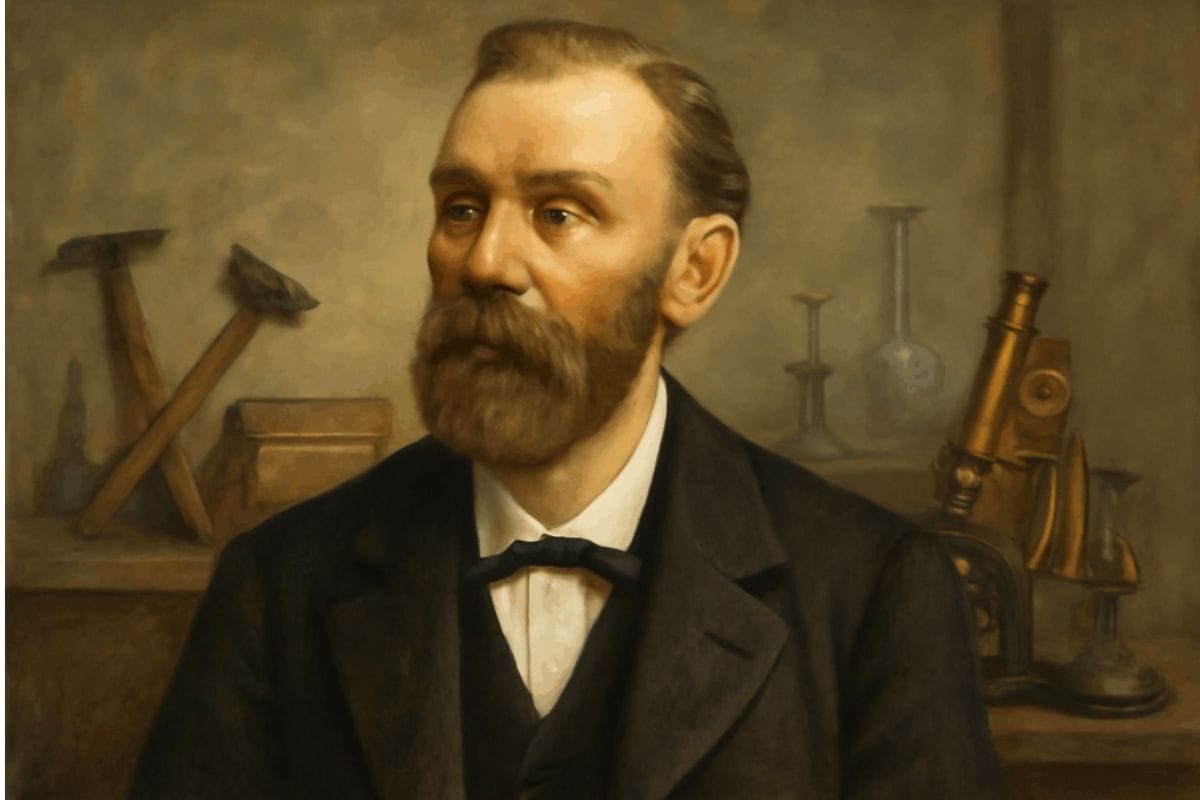
Building a Global Network
The breakthrough came in 1867 when he patented dynamite, a mixture that made nitroglycerin stable enough to handle and ship. Demand from mining, railway building and tunnelling was already enormous across Europe and North America, so he had a product that arrived at exactly the right moment. What set him apart was how he scaled it, because instead of running a single plant and licensing the rest he set up companies and factories in country after country, often with local partners and always with close attention to local regulation.
His other moves were just as deliberate and they went well beyond one product line:
- He kept inventing, eventually holding more than 300 patents that covered everything from blasting caps to smokeless powder.
- He protected those patents aggressively and spent years in legal fights, including a bitter dispute in France that eventually drove him to leave Paris.
- He diversified, taking an interest in the Baku oil business through his brothers and later buying the Swedish steelmaker Bofors.
That spread of activity gave him a company that could absorb a bad year in one market without putting everything at risk.
The Playbook Owners Can Still Use
Read as a business case, Nobel's career is surprisingly modern. He treated research as a core function of the company rather than a side project, which meant his products kept improving while competitors were still copying the last version. He understood that intellectual property is only worth what you are willing to defend, and he built operations that could be adapted to each country instead of forcing a single model onto every market.
He also lived with a level of operational risk that most owners would find uncomfortable, which taught him to invest in safety and process long before regulators demanded it. Founders who run service businesses or property portfolios will recognise the pattern, since the businesses that last tend to be the ones that treat the unglamorous parts, such as compliance, documentation and quality control, as part of the product.
There is a human side to the playbook too. Nobel was a restless and private man who never married and spent much of his life travelling between his plants, which gave him direct knowledge of how each one actually ran. Owners today have far better tools for remote oversight, but the habit of going to see things for yourself still separates informed decisions from comfortable ones.
The Legacy Plan that Nearly Unraveled
The most talked-about part of his story is what he did with the money. A widely repeated account says a French newspaper mistakenly printed his obituary in 1888 after his brother Ludvig died, and that the harsh description of him as a merchant of death pushed him to think about how he would be remembered. Historians debate how much weight that episode deserves, but the outcome is clear enough, because in November 1895 he signed a will that directed most of his fortune into a fund whose income would reward people who had delivered the greatest benefit to humanity in physics, chemistry, medicine, literature and peace.
The plan was bold and the execution was messy. He drafted the will largely on his own without a lawyer, he named institutions that had not been asked whether they would take on the work, and his relatives were not pleased to learn how much would be set aside. It took years of negotiation led by his executor Ragnar Sohlman before the Nobel Foundation was formed in 1900 and the first prizes were awarded in 1901. The fund was invested conservatively, and that discipline is a large part of why the prizes have continued for well over a century.
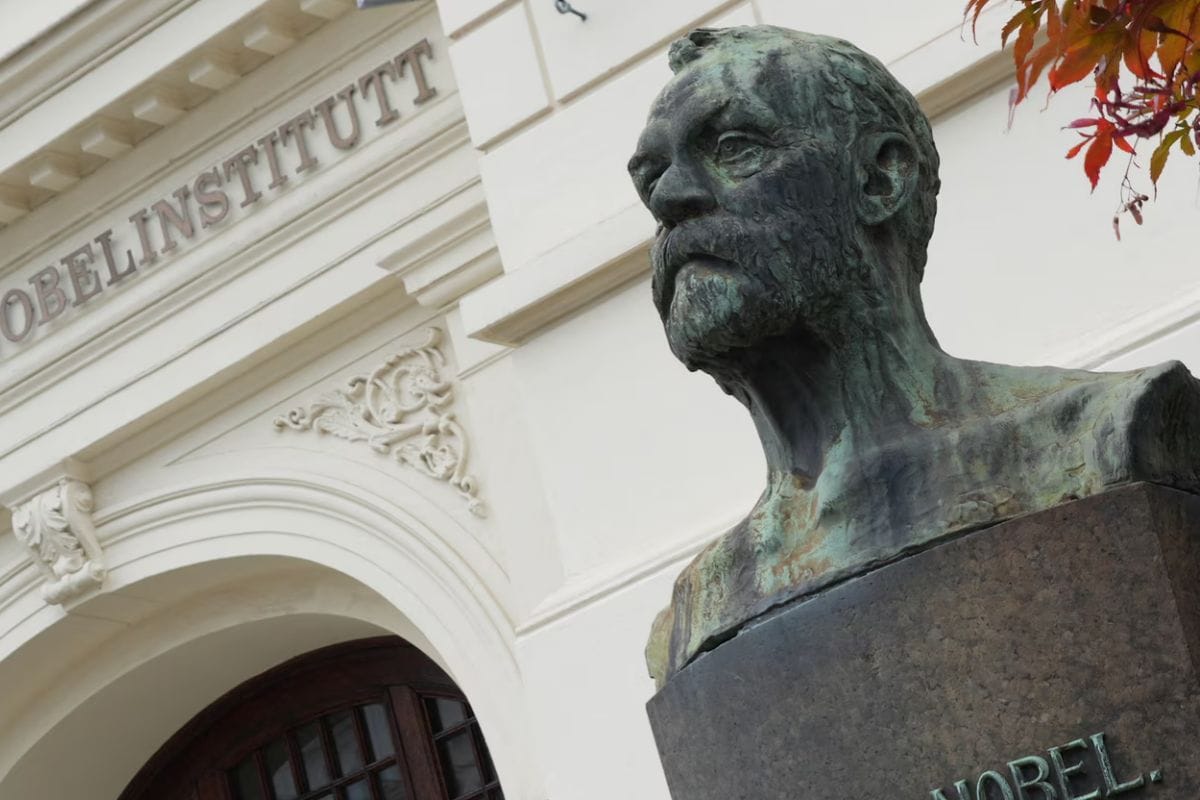
What Owners Can Take From the Man Behind the Prize
The first lesson is that wealth with no plan attached tends to get argued over, so owners who know what they want their business or assets to achieve should write it down in clear language and have it reviewed by professionals who can test it against local law. Nobel had the right idea and the wrong process, and his estate paid for that in delays and legal friction.
The second lesson is to choose people who will carry out your wishes with independence and patience, because a plan is only as strong as the executors and trustees who have to defend it. Sohlman's persistence is the reason a handwritten document turned into an institution that people still trust.
The last lesson is that a legacy is built long before the will is signed. Nobel's reputation as an innovator, his global footprint and his financial discipline gave the prizes the weight they carry today, which suggests that the best succession planning begins with building a business worth continuing and then making sure the intentions behind it are clear, funded and protected.
Also Read:
 Ummulkiram Pardawala
 Shahba Mayyeri
 Ummulkiram Pardawala
 Shahba Mayyeri
 Umema Arsiwala