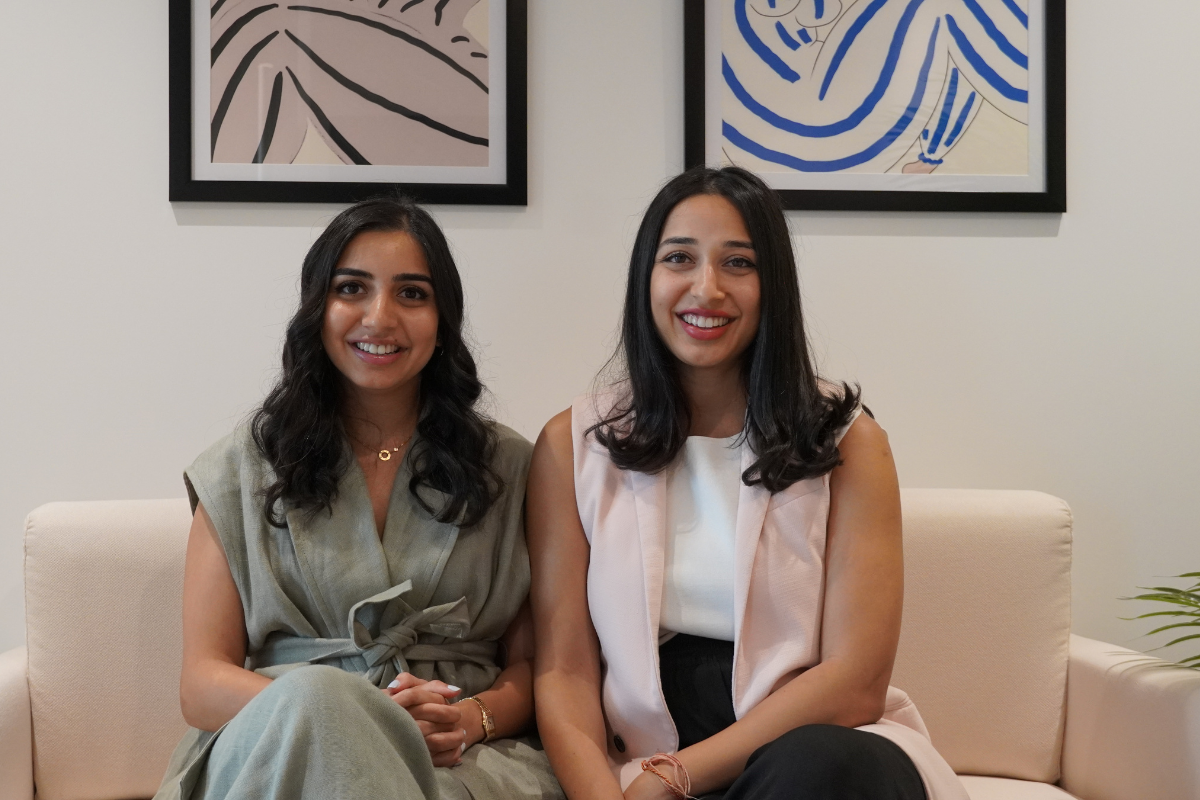
Most entrepreneurship programs for teenagers stop at theory. Founder Mode Bootcamp, a 12-week accelerator-style program launching in Dubai this September, is built on a different premise: young people learn to think like founders by actually doing the work of one.
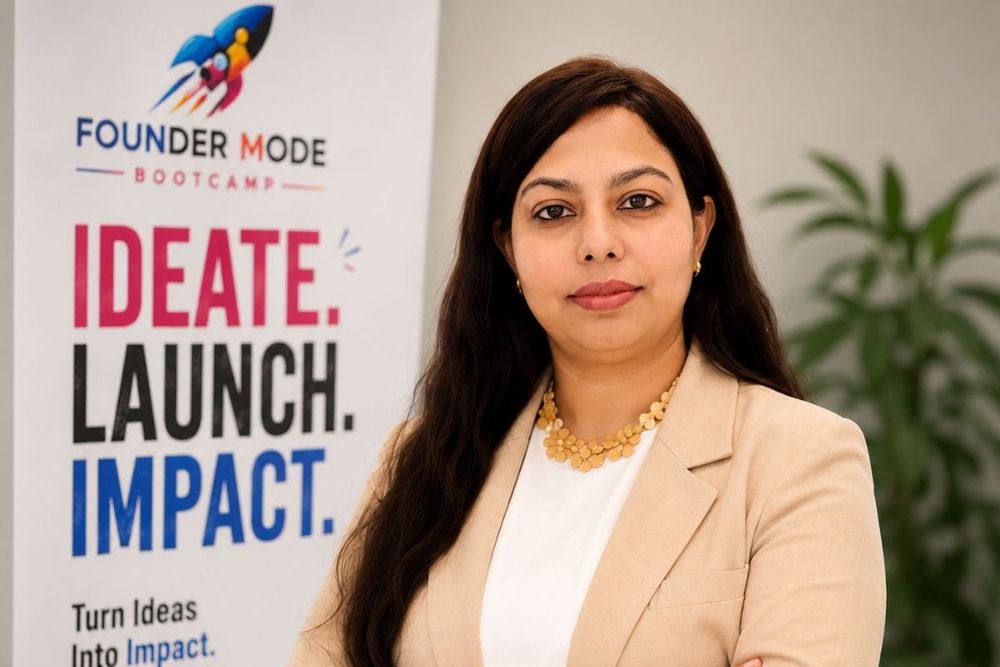
Under the direction of founder Ankita Garg, students move through problem discovery, customer validation, MVP development, pricing, go-to-market strategy and pitching, all grounded in real conversations with real customers rather than classroom simulations.
In this interview, Garg talks candidly about what separates genuine founder skills from the appearance of them, how the program handles failure, money and accountability for minors, and why she believes the goal was never to turn every teenager into a CEO.
Introduce yourself the way you would to a student on day one, not the way you would to an investor.
Hi, I’m Ankita. I’ve been on the messy side of building a business — starting with an idea, putting it in front of strangers, asking them to pay for it, figuring out manufacturing and fulfilment, dealing with things that did not go according to plan, and learning as we went.
That experience is a big part of why I created Founder Mode Bootcamp.
I’m not there to give students a formula for becoming a founder. I’m there to help them ask better questions, test their assumptions and learn how to turn an idea into something the real world can respond to.
On day one, I would probably tell them: you do not need to arrive with the perfect idea. You just need to be curious enough to find a problem worth solving and open enough to change your mind when the evidence tells you to.
Take me back to 2016. Where were you when you hit your $30,000 Golchi goal, and what’s the part of that story you don’t put in the pitch?
We launched Golchi on Kickstarter in 2016, and on the very same day, Tech Insider featured the product. Harsh and I were at home, glued to the Kickstarter dashboard, watching the numbers move and celebrating every single backer who chose to believe in something we had created.
At around 9pm that evening, we crossed our $30,000 funding goal. That feeling is still difficult to put into words. There was excitement, of course, but more than anything, there was an enormous sense of gratitude. These were people we had never met, trusting us with their money and their expectations.
What often gets left out of the pitch is that crossing the goal was not the end of the story. It was the moment the responsibility really began. Once people back you, you are no longer just selling an idea. You have made a promise. Then comes manufacturing, suppliers, timelines, shipping, customer communication and all the unexpected problems that happen behind the scenes.
Golchi eventually raised more than $400,000 from over 5,000 backers, but when I think back to that first evening, I remember the people behind those numbers. That experience taught me something I now bring into Founder Mode Bootcamp:
Fundraising may validate an idea, but delivering on the trust people place in you is what truly tests you as a founder.
When did you go from building products to teaching people to build them? Was there a specific student or moment that made you decide this was a business?
There wasn’t one dramatic moment or one student. It was a pattern I kept noticing. Young people today have extraordinary access to information. They can learn what an MVP is in minutes, ask AI for a business model or create a polished pitch deck in an afternoon. What is much harder to learn from a screen is how to speak to a real customer, hear “no”, discover that your assumption was wrong and decide what to do next.
That gap stayed with me. I realised that the most valuable parts of my own founder journey were not the definitions or frameworks; they were the decisions, conversations, mistakes and course corrections. Founder Mode Bootcamp grew from the idea that teenagers should have a structured environment in which to experience that process early — while the stakes are low enough for experimentation to be genuinely educational.
What did you see in Dubai specifically that told you this gap existed and that parents would pay to close it?
Dubai has an incredibly ambitious education ecosystem. Teenagers here have access to coding, robotics, debate, leadership programs, competitions and strong academic opportunities. At the same time, I kept seeing a gap between learning about entrepreneurship and actually practising it.
A student may know how to make a business plan or pitch an idea, but has that student spoken to ten potential customers? Has someone rejected the idea? Have they changed the product because of evidence? Have they thought about what it would really cost to build, price and sell?
That is the space FMB is designed to fill. I do not assume every parent wants or needs this kind of program. We are for families who see value in experiential learning — where communication, problem-solving, financial thinking, resilience and execution are developed through building something real rather than simply studying theory.
Why teenagers? Why not 22-year-olds who can legally sign contracts, open a bank account and register a company?
Because at 22, entrepreneurship can already feel like a career decision. At 15, it can still be a learning experience.
I do not need a teenager to register a company to benefit from thinking like a founder. I want them to learn how to notice a problem, understand another person’s needs, test an assumption, ask for feedback, deal with rejection, make decisions with incomplete information and change direction when the evidence demands it.
Those skills are useful whether that teenager eventually becomes an entrepreneur, a doctor, an engineer, a designer or joins a large organisation. FMB is not built on the belief that every young person should start a company. It is built on the belief that young people benefit from learning how ideas move from imagination to evidence and execution.
Whose name is legally on the campaign, and whose bank account receives the money?
A student does not automatically launch a live public crowdfunding campaign simply because they complete the FMB program. During the program, students learn the mechanics of crowdfunding and build the strategy, messaging, validation and campaign plan around their venture.
If a student later progresses to a live fundraising campaign, it has to comply with the rules of the platform and the relevant legal jurisdiction. For a minor, that means an eligible adult or entity must be involved, with parent or guardian oversight where required. The verified creator or entity — not Founder Mode Bootcamp — would receive and manage any funds.
This distinction matters to us.
The educational objective is to teach students what it means to ask the market to back an idea and what responsibilities come with that.
We do not treat public fundraising as an automatic classroom exercise.
What does the student actually own at the end — the idea, the entity, the funds raised or none of it?
The student owns their idea and the work they create around it. Founder Mode Bootcamp does not take equity in student ventures and does not claim ownership of their intellectual property.
What they leave the program with is much more than an idea: customer research, validation evidence, an MVP or prototype, a business and go-to-market approach, and a pitch or crowdfunding campaign plan.
A legal entity and actual fundraising are separate steps. If a student and their family decide to take the venture beyond the program, issues such as company registration, banking, contracts or ownership structure need to be handled appropriately for the student’s age and jurisdiction. FMB’s role is educational and mentoring-led; it is not to own or control the businesses students may go on to build.
Is this a business-skills program or a university-application booster? Which are you actually selling?
It is a business-skills and founder-development program.
If a student finishes FMB with a meaningful project that later strengthens a university application, that is a positive secondary outcome, but it is not what we are selling. I would rather a student build something small and genuinely tested than produce an impressive-looking project that exists only for an application.
The purpose is to develop skills through the process: customer empathy, research, communication, financial thinking, decision-making, resilience, storytelling and execution. The student has to be able to explain what they tried, what customers told them, what changed and why.
The portfolio is a consequence of doing the work. It is not the reason for doing the work.
How many students from past cohorts still run their venture 12 months later, out of how many total?
We do not have that data yet, because Founder Mode Bootcamp is new. Our first 12-week cohort begins on 26 September 2026, so it would be misleading for me to present a 12-month student track record that does not exist.
What I bring to the program is first-hand founder experience, including building and crowdfunding Golchi, and a curriculum designed around real-world validation and execution. But FMB itself now has to earn its own outcomes.
We intend to follow students beyond Demo Day and track what happens at 3, 6 and 12 months: whether they continue the same venture, pivot it, start something new or decide entrepreneurship is not for them. I actually think all four can be useful outcomes if the student has learned how to think and act with greater independence.
What does the program cost, and why isn’t the price on your website?
The 12-week Founder Mode Bootcamp program costs AED 8,000.
The price has not been displayed prominently enough on the website, and that is fair criticism. In the early admissions phase, we designed the journey around a Founder Fit conversation because we wanted to understand the teenager’s interest, expectations and readiness before focusing on enrolment.
However, fit and price transparency are two different things. Families should be able to understand the investment before they enter that conversation, and we are addressing that. The Founder Fit process will remain because the program is intentionally small and hands-on, but it should not be used as a substitute for clear information about cost.
If a campaign succeeds and the product can’t be delivered, who’s accountable: the student, the parent or you?
The first safeguard is that students do not automatically take public money during the program. A live campaign is a separate step and must have an eligible legal creator or entity behind it.
If a real crowdfunding campaign is launched, accountability sits with that legally recognised campaign creator or entity under the platform’s rules. Founder Mode Bootcamp does not receive or hold campaign funds.
More importantly, we teach students that crowdfunding is not “free money”. It is a promise to real people.
Product feasibility, costing, supplier assumptions, timelines, communication and fulfilment all have to be considered before asking someone to back you.
Having lived through fulfilment myself after Golchi, I probably emphasise this more strongly than the excitement of raising money. A successful campaign creates responsibility; it does not remove it.
Your content promotes AI for customer discovery and pitch decks, but your promise is “no simulations, real customers.” If AI does the discovery, what’s still real? Where’s the line, and is it enforced?
AI does not do customer discovery. People do.
A student can use AI to help brainstorm interview questions, organise research, summarise their own notes, challenge an assumption or improve the clarity of a pitch. But an AI-generated answer is not customer evidence.
If a student tells me, “AI says teenagers would buy this,” my next question is: “Which teenagers did you speak to, and what did they actually say?” Real customer discovery means conversations, observations, surveys, behaviour and evidence from the people for whom the student is trying to solve a problem.
That is the line we enforce: AI can accelerate the work, but it cannot manufacture proof. At FMB, AI is a tool — not evidence.
Is AI use monitored or unrestricted? Is there a point in the 12 weeks students must work without it?
AI use is guided, not unrestricted. We do not think banning AI would prepare teenagers for the world they are entering, but we also do not want them outsourcing their thinking to it.
Students can use AI where it improves speed or helps them explore possibilities, but they still need to understand, verify and defend the work. There are moments in the program that are naturally “AI-proof”: speaking to a customer, listening to an uncomfortable answer, making a judgment call, explaining why evidence changed your mind or standing in front of a room and defending your decisions.
So rather than creating an arbitrary AI-free week, we focus on ensuring the student remains the thinker and decision-maker throughout the 12 weeks. If they cannot explain how they reached a conclusion without referring back to a generated response, the work is not finished.
Is there an actual ethics module that tackles data privacy, honest claims, disclosure of AI-generated work, or is it folded into pitch training?
At present, ethics is embedded across the program rather than taught as one standalone lecture. Data privacy and respectful research come into customer discovery; truthful claims and evidence come into marketing and crowdfunding; responsible AI use comes into research, content and pitch development.
That said, I think it is important for those expectations to be explicit, not simply assumed. We are formalising them into a Responsible Founder framework covering areas such as handling customer information, making honest and supportable claims, appropriate AI use and disclosure and the responsibilities that come with asking people for money.
For me, ethics should not be something students discuss for an hour and then move past. It should show up in the decisions they make throughout the build.
A teenager’s public campaign puts their name and failure online permanently. What do you do to protect a student whose venture flops in public? Has it happened?
It has not happened within FMB because our first cohort has not yet launched, and not every student project will become a public campaign.
Students should earn the decision to go public through validation, feasibility and readiness, with appropriate parent or guardian involvement. We would never make public exposure a requirement simply to make the program feel “real”.
I also think we have to be careful about what we call failure. Discovering after five weeks that customers do not want an idea can be an excellent outcome if a teenager learns how to respond to that evidence.
The goal is not to protect every idea from failing; it is to protect the young person while giving them space to experiment.
A teenager should be able to say, “That idea did not work,” without translating it into, “I am a failure.” That distinction is central to how we mentor.
Where in the 12 weeks does a student get told their idea doesn’t work, and who tells them?
Very early. Customer discovery and validation happen near the beginning of the program because I do not want students spending 12 weeks polishing an idea nobody needs.
But ideally, I am not the person who tells them, “Your idea does not work.” The evidence tells them. A customer who will not use it tells them.
Repeated interviews reveal the problem is not important enough. A prototype exposes a flaw. A price test shows the economics do not make sense.
Our mentors then help the student interpret that evidence and decide what comes next: persist, pivot, narrow the problem or park the idea entirely.
One of the principles behind FMB is that mentors should not fall in love with students’ ideas either. Our job is not to keep every idea alive. Our job is to help students become comfortable letting evidence challenge what they believe.
Everyone is being pushed to become a founder right now. Is this program adding entrepreneurs to a market that already has more founders than solvable problems?
I agree that not everyone needs to become a founder, and FMB is not trying to manufacture teenage CEOs.
What we are trying to develop are founder skills: curiosity, problem-solving, customer empathy, communication, financial awareness, resilience, initiative and the ability to execute an idea. Those abilities travel well into almost any career.
In fact, a student could complete FMB and decide, “I do not want to be an entrepreneur,” and I would still consider that valuable learning. They have discovered something about themselves through experience rather than through an abstract idea of startup life.
The world does not necessarily need more people calling themselves founders. It does need more young people who can identify meaningful problems, test assumptions and take responsibility for turning ideas into action.
What’s a normal session actually like? Who’s in the room, and what do students do hour to hour?
A normal session is deliberately different from a traditional class. You are unlikely to see students sitting through a two-hour PowerPoint.
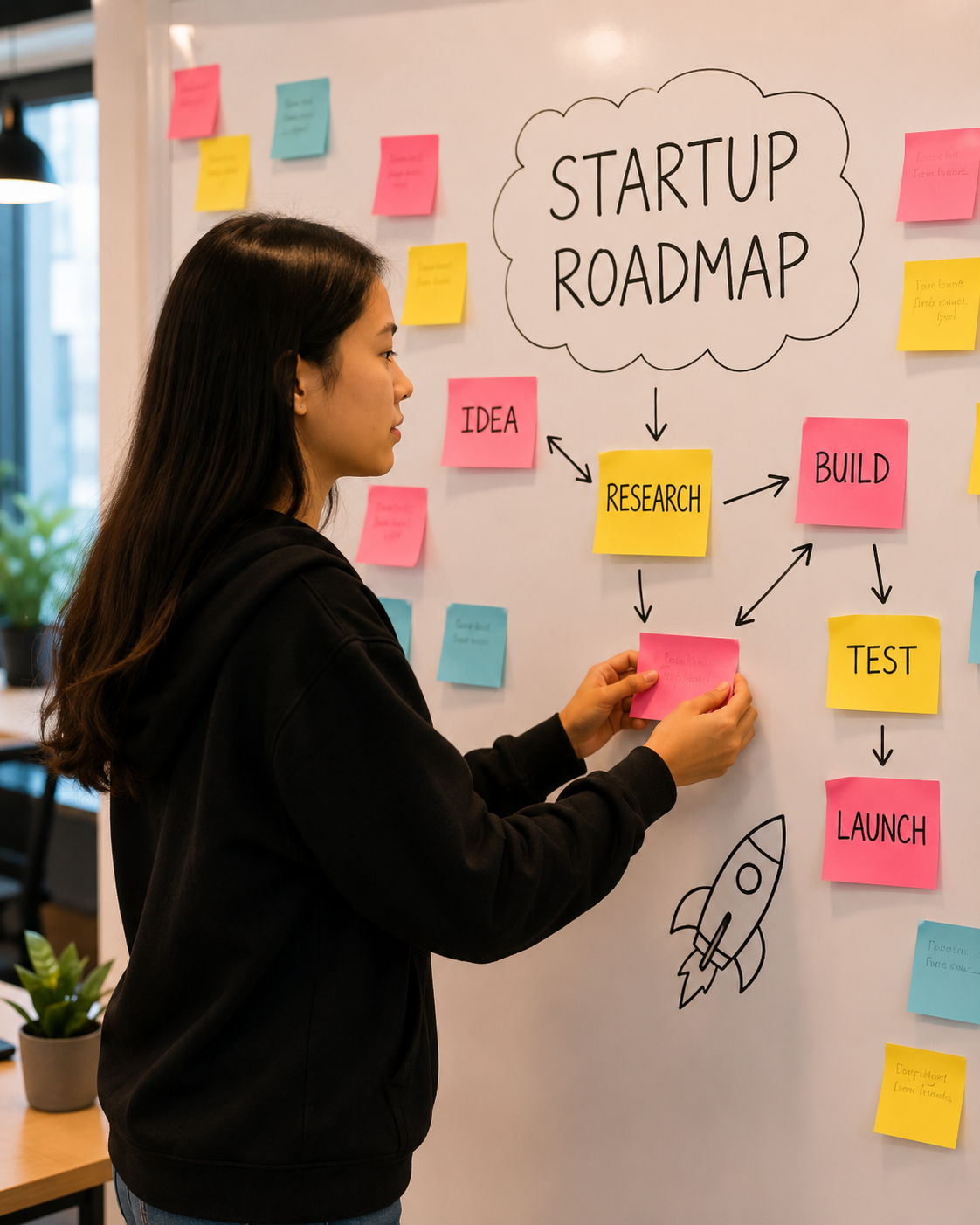
We usually begin with the work: what did you test since the last session, who did you speak to, what surprised you and what changed? We then introduce the framework or skill needed for the next stage, but the majority of the time is spent applying it: reviewing interview evidence, rewriting questions, defining a customer, building or improving an MVP, working through pricing, critiquing positioning or practising how to communicate the idea.
Mentors are in the room to challenge thinking rather than provide all the answers. Students also learn from each other because they have to explain and defend their choices.
The rhythm is simple: learn, build, test, come back with evidence.
Describe one student who struggled, not the success story. What happened to them?
I cannot honestly give you a past FMB student case yet because our first cohort begins this September. I would rather be transparent about that than retrofit someone else’s story into an FMB success or failure narrative.
What I expect to be one of the hardest moments for students is not building a pitch deck; it is becoming emotionally attached to an idea and then hearing repeatedly that customers do not care about it in the way they expected.
That is exactly where mentoring matters.
We do not rescue the idea just to keep the student feeling successful. We help them separate “this idea is not working” from “I am not capable”. Then we go back to the evidence: what did you learn, what assumption was wrong and what could you test next?
When we have completed cohorts, I want us to talk about those stories as openly as the wins.
Make the case against your own program. Who should not enroll?
Do not enrol a teenager in Founder Mode Bootcamp simply because you want something impressive for their university application. Do not enroll a student who is being forced to attend by a parent. And do not enroll if what you are looking for is a class where the teacher gives the student the right answer.
The program asks teenagers to speak to people, hear “no”, question their own assumptions, do work between sessions and occasionally be uncomfortable. It works best for students who are curious and willing to participate, even if they arrive without a business idea.
FMB is intentionally not for every teenager. I would rather have a smaller cohort of students who genuinely want to explore, build and learn than a larger cohort attending only for a certificate. The point is not to complete 12 weeks. The point is to leave thinking differently.
Also Read:
 Shahba Mayyeri
 Shahba Mayyeri
 Shahba Mayyeri
 Shahba Mayyeri
 HiDubai Newswire