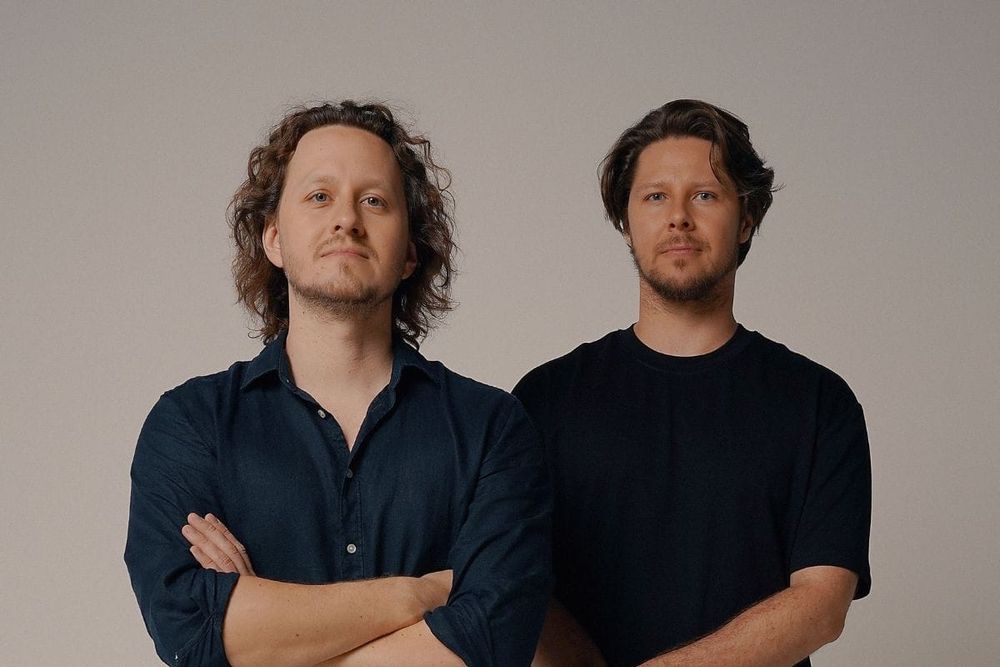
Dubai's streets are quietly filling up with power bank rental stations, tucked into restaurants, malls, gyms and cinemas, and Ray is behind much of that shift. Founded by Igor Kosolap and Roman Averianov, the company launched the UAE's first Tap-to-Pay charging network in November 2025, letting guests rent a portable charger instantly via Apple Pay, Google Pay, contactless cards or the Ray app, even when their phone is completely drained. Before Ray, Igor spent over a decade at MTS, one of Europe's largest telecom companies, while Roman founded GetEnergy, an early power bank sharing business in Russia later acquired by Yandex.
In this interview, Igor and Roman discuss why the UAE was their natural first market, how ditching the app changed customer conversion, and what it will take to stay ahead as bigger players take notice.
You've worked in shared mobility before. What specifically made you look at the GCC and think, 'power banks, here, now?'
Igor and Roman: Our decision was built on nearly a decade of experience in the power bank sharing industry. Since 2017, we have been developing and operating one of the largest power bank sharing networks in the CIS region, reaching more than 20,000 locations through a single technology platform.
In 2025, this business was acquired by a strategic investor, allowing us to shift our focus to international expansion, with the GCC becoming our first priority.
When entering a new market, we evaluate several key factors: demographics, purchasing power, GDP per capita, digital adoption, consumer openness to new technologies, and the density of potential partner venues.
The UAE stood out as a particularly attractive market. It has a young, international, highly digital population, strong purchasing power, and one of the world's highest concentrations of F&B venues, with Dubai ranking second globally after Paris in restaurant density.
We also assessed technological readiness, especially the availability of modern fintech infrastructure. Within the GCC, the UAE was the only market mature enough to support our tap-to-pay model at launch. In other countries, the required solutions are still developing, although we are already working with fintech partners to enable similar technologies in markets such as Saudi Arabia.
The competitive landscape was another key factor. When we entered the UAE, there were already at least six power bank rental players in the market. However, together they operated fewer than 2,500 stations.
Based on our experience, a mature market typically requires more than one station per 1,000 residents. In the UAE, however, the opportunity extends beyond the resident population due to the high number of tourists and the exceptional density of hospitality venues. Taking these factors into account, we estimate the market capacity at 10,000–15,000 stations.
At the time of our entry, the market was only around 20% penetrated, with no clear leader and no company offering tap-to-pay technology. This created the ideal market entry point: consumers were already familiar with the service, so we did not need to spend years educating the market, while there was still significant room for innovation and growth. Finally, the UAE is one of the most business-friendly markets for international companies. We see it not only as our launch market in the GCC but also as the headquarters for our broader global expansion.
Your investors built JET, a kick-sharing company. What did you learn from that business that you're applying to Ray, and what did you decide not to repeat?
Igor: JET’s experience extends beyond kick-sharing as the company also operates successful power bank sharing businesses in several countries, including Brazil and Kazakhstan.
Before launching in the UAE, I visited JET’s operations in Kazakhstan to study the most successful power bank businesses in the region (operating 5,000+ stations) and understand how they built their operations. We also benefit directly from the expertise of Olzhas Otashov, CEO of JET Powerbanks, who is an investor in Ray and actively supports our growth.
We adopted many operational best practices: choosing the right station hardware, selecting high-performing locations, building efficient sales processes and creating the right incentives for venue partners.
However, we deliberately chose a different product strategy. While the Kazakhstan model is built around a mobile app, we focused on eliminating friction through tap-to-pay. We believed customers needed the fastest possible way to solve a simple problem, a dead phone battery and our data has confirmed that approach.
Power bank sharing has existed in Asia since 2015. Dubai is one of the highest-footfall cities on earth. Why was this market still wide open when you arrived?
Igor: The success story began primarily in China rather than across Asia as a whole. By 2017-2018, power bank sharing had already become a mainstream service there. Today, the Chinese market includes nearly six million stations and generates more than $3 billion in annual revenue.
However, this success did not translate globally as quickly as many expected. This is not only a Dubai story. Even major cities such as New York or Paris still have fewer stations than Dubai.
There are several reasons for this. First, Chinese companies were focused on serving their enormous domestic market and had limited incentive to expand internationally. Second, the user experience was designed around local habits, such as WeChat and QR-code payments, which are far less natural for consumers in Europe, the Middle East and the US.
There was also a wave of power bank sharing start-ups in Europe and North America between 2018 and 2020, but the COVID-19 pandemic disrupted their growth before they reached scale. Many businesses remained small and never evolved beyond their early-stage models. The same happened with some players in the UAE, which remained at a 2020-2022 level of development.
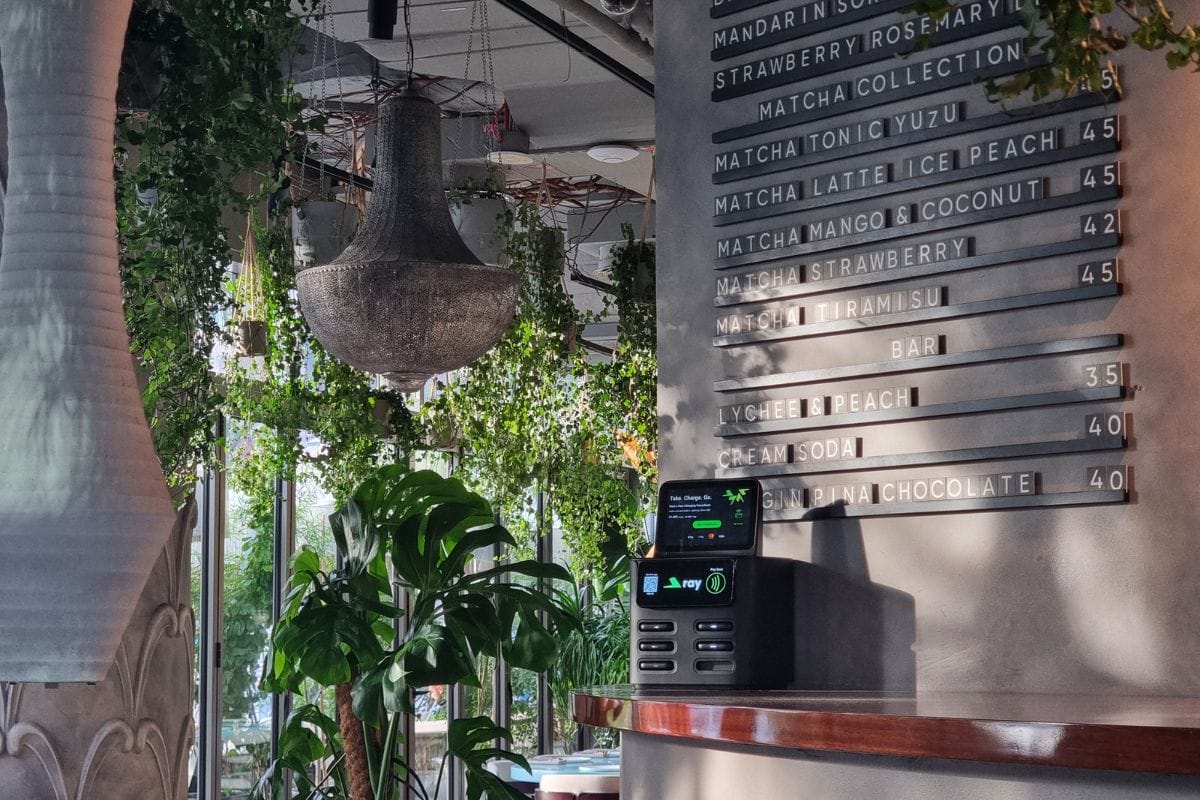
Our approach was different. We adapted the model to local behaviour: people in Dubai spend most of their time inside venues such as restaurants, malls, gyms and entertainment spaces. Instead of requiring an app download and registration, we introduced tap-to-pay, turning power bank rental into a transaction that takes only a few seconds. That shift in convenience significantly changes customer conversion and makes the model much more scalable.
What does your actual conversion data look like? What percentage of people who approach a station complete a rental, and how does that compare to app-based systems?
Roman: We have both market observations and our own performance data that demonstrate the impact of removing friction from the customer journey. For instance, one of our partners monitored customer behaviour at a location without tap-to-pay functionality and found that 4 out of 6 potential customers abandoned the rental process because they were required to download an app and complete registration.
Our own analytics also clearly support this trend: 93% of our revenue comes through tap-to-pay transactions. This confirms that customers strongly prefer the fastest and most seamless charging experience.
You claim tap-to-pay increases revenue by up to 4x versus app-only systems. Is that number from your live UAE data or a supplier projection?
Roman: The figure is supported by both supplier data and our own market validation. In the UAE, we compared our performance against Ray and JETCharge, two brands that launched around the same time but operated without tap-to-pay technology. The comparison showed that our stations generated up to four times higher revenue, demonstrating the significant impact of a frictionless payment experience.
What does it cost to deploy one station, what's the average daily revenue per station right now, and at what point does a single station break even?
Roman: The main deployment costs include the station itself, comprising hardware, shipping and applicable taxes, as well as installation costs such as sales efforts, logistics and onboarding of the venue. Our ongoing operational expenses account for approximately 30% of revenue.
On average, a station reaches payback within approximately one year. However, performance is highly location-dependent: top-performing locations can recover their investment within a single month, while poorly selected locations may never reach break-even. This is why location selection and network optimisation are among the most important factors in building a profitable power bank rental business.
What does the venue partner actually receive: revenue share, dwell-time value or fixed fee? And who holds the power in that relationship?
Igor: We solve an existing customer need. Visitors already come to venues expecting help with charging their phones, and businesses are currently addressing this problem in different ways: allowing customers to charge devices behind the counter, offering access to power outlets, or purchasing their own power banks. Our solution removes friction for both the end customer and the venue partner.
For the venue, installing a station provides several benefits:
● Better customer experience. Guests can charge their phones conveniently without handing over their devices or being limited to a wall socket.
● Reduced staff workload. Employees no longer need to handle customers' devices, manage charging requests or maintain their own power banks.
● Increased dwell time. Particularly valuable for malls, beach clubs, gaming venues, shisha lounges and restaurants, where longer visits can directly increase spending.
● Additional foot traffic. Especially relevant for quick-service restaurants and food courts, where customers may visit specifically to pick up or return a power bank.
● Revenue generation. We share rental income with our venue partners.
In the early stages of market entry, the bargaining power naturally sits with the venues, as they decide whether to adopt the service. However, as the network expands and consumer adoption grows, the dynamic shifts. Customers begin to actively look for places where they can rent or return a power bank, creating demand from venues themselves.
For example, our partners in Kazakhstan now operate largely through inbound requests, as the service has become so widely adopted that venues see a power bank station as an essential amenity.
$1.2M for 2,000 locations by the end of 2026 is a tight budget. How does the math close?
Igor: We are a highly efficient team with a proven platform and operational experience across multiple markets, which allows us to deploy capital very carefully. However, hardware costs remain a significant factor, and it is true that the current round is not sufficient to reach 2,000 locations by the end of 2026.
The funding round is designed to support the rollout of approximately 1,300–1,500 locations, which is enough to establish market leadership in the UAE and achieve operational profitability. We are planning a follow-on funding round in autumn, which could be structured either as additional equity financing or debt financing.
Once you prove the market works, what stops a telco, a payments network or Energy Monster from walking in and copying you?
Igor: At first glance, the business may seem simple and easy to replicate. However, we understand the operational complexity behind it. Building the platform, sourcing equipment and developing a reliable network would take at least a year even with an aggressive execution strategy.
Large corporations are typically less agile and often have different strategic priorities. The speed at which a startup can develop and scale is difficult to match within a corporate structure, where a similar project could easily take 18–36 months. By that time, we expect to have already secured a significant share of the market.
For major players, it is far more efficient to partner with us or invest in an established business with a strong team, rather than build the entire ecosystem from scratch.
No app means no user accounts, no behavioural data, no loyalty loop. How do you build customer intelligence without that layer?
Roman: We don't see tap-to-pay as a replacement for the app — we see it as a new top layer of the customer funnel.
It removes the biggest point of friction for first-time users: people whose phones are about to die, users who have already lost access to their phone, tourists who don't want to download an app while roaming, or anyone who needs a quick one-time charge.
At the same time, this first interaction naturally connects to the app-based journey for repeat users or customers who need additional functionality, such as returning a power bank at a different location.
We researched multiple markets and spoke with industry partners, but we have not seen customer data and direct engagement become the key growth driver in power bank rental. The core customer need remains simple — to get charged immediately. Our priority is to make that moment as seamless as possible while still providing a path to deeper engagement for customers who need it.
Your batteries degrade and eventually fail. At scale, that's a serious e-waste question. What's your battery replacement cycle and what happens to end-of-life units?
Roman: Batteries do degrade over time, and based on charge-discharge cycles, the average lifespan of our units is around four years. There is also natural fleet turnover, as some customers choose to keep the power bank by paying the maximum rental fee (AED 200), effectively purchasing it from the network.
More broadly, we believe the sharing model itself is a more sustainable approach. Most personal power banks are rarely used, stored in households for years or passed on without users considering proper disposal. With a sharing model, consumers do not need to own a device, and the responsibility for managing its lifecycle, including end-of-life disposal, sits with the operator. We have not yet reached the stage of a full fleet replacement, but when we do, we will ensure all batteries are processed according to local environmental regulations.
This sustainability aspect has also been recognised in our collaboration with the Fowler Center for Business as an Agent of World Benefit as part of a project exploring business contributions to the United Nations Sustainable Development Goals.
There's an argument that shared powerbanks reduce total lithium battery consumption; fewer people buy personal ones they rarely use. Has Ray quantified that environmental offset, and is it a story you're telling to partners or regulators?
Roman: We hear this argument, and we hear it from customers too, like people who tell us they stopped carrying a personal powerbank because Ray is available where they need it. The logic makes sense.
But we don't have solid research to back it up yet, so we're not actively using it with partners or regulators. We'd rather say nothing than overstate something we can't properly support.
Powerbank sharing underperformed in the US and parts of Europe despite well-funded players. What went wrong there, and why doesn't that apply here?
Igor: The first wave launched around 2017–2018. Most US and European teams bet heavily on the IT platform and the tech, planning to scale internationally through franchising. What they underestimated was the operational complexity: actually placing stations, building habits, managing hardware on the ground.
By 2020 they had decent software and very thin networks, and then COVID hit. By 2022 they were running out of runway; early funding had gone into large tech teams, not equipment. They didn't have enough stations to generate the revenue needed to keep going, let alone expand. Investors took losses and largely stepped away from the category.
The demand was always real, and the market actually works. The first wave just ran the wrong playbook at the wrong time. We're the second wave.
No registered accounts mean bad actors face no accountability. How do you handle theft and loss without that layer?
Roman: When a customer taps their card, the bank processes the payment and sends us a token. That token allows us to charge for additional days if the powerbank isn't returned, up to AED 200 maximum. No account needed, no deposit required.
In practice, our non-return rate is below 0.1%. Most of those aren't theft; people simply forget the powerbank is in their bag. And occasionally someone needs a powerbank for a trip and is happy to pay the AED 200 rather than return it. That's a legitimate outcome for both sides.
The UAE is an exceptionally low-risk market for this. That's precisely why we don't ask for deposits; it would add friction for no real reason.
How are you deciding where to place a station: footfall estimates, partner relationships, or something more data-driven?
Igor: It's genuinely complex. We pull from a lot of sources: traffic data, reviews, competitor presence and partner recommendations. Sometimes a venue has barely any online presence, sits outside the city and turns out to be packed with locals every single day. You only find that by going there yourself, talking to the staff and watching what actually happens.
When we're unsure, we'd rather run a test than miss a great location. Putting a station in for a month or two and seeing what the numbers say is often more valuable than any dataset.
Is Ray building to be a standalone infrastructure company, a data business or an acquisition target? Because those are three very different companies that look identical at seed stage.
Igor and Roman: We are building a global mobile energy infrastructure company. Our mission is to ensure that people remain connected wherever they are, and we believe this can become a profitable and self-sustaining business with strong fundamentals. Data may become a valuable asset over time, but it is not the foundation of our strategy. The foundation is a scalable infrastructure network solving a real, everyday problem.
Power banks are only the first step in our vision. In the future, we see opportunities to expand into broader charging infrastructure, including solutions for delivery robots, autonomous delivery drones and micromobility vehicles.
An exit is not our goal today. Our focus is on becoming the market leader in the UAE and proving our model internationally. However, if large ecosystem players share our vision and can accelerate our ability to achieve that mission, we are open to exploring different forms of strategic partnership, investment or acquisition.
Also Read:
 Shahba Mayyeri
 Shahba Mayyeri
 Shahba Mayyeri
 Shahba Mayyeri
 Shahba Mayyeri