
Apple's Pro Max lineup has become something of a yearly ritual. A new number gets attached to the same slab of glass and titanium, the camera gets a tweak, the chip gets faster and millions of people ask themselves the same question: is this actually worth upgrading for, or is it just last year's phone wearing a new price tag?
That question matters more this year than most. The iPhone 18 Pro Max landed in UAE stores on September 18 at AED 5,499 for the base 256GB model, a jump of AED 400 over what the iPhone 17 Pro Max cost at launch. Analysts had spent months predicting a much steeper hike, so the actual increase came as something of a relief. But a smaller price jump doesn't automatically mean a better deal.
Here's what actually changed, and whether it justifies the extra cost, broken down piece by piece.
Design and Build: Barely Any Difference to the Eye
If you lined up both phones on a table, you would struggle to tell them apart at a glance. The dimensions are identical at 163.4 x 78 x 8.8mm, both use Ceramic Shield 2 glass up front, and both carry an IP68 rating that lets them survive a dunk in up to six metres of water for half an hour.
The one physical change you would notice quickly is the weight. The iPhone 18 Pro Max comes in at 249 grams, a full 16 grams heavier than the 17 Pro Max's 233 grams. That difference comes mostly from a larger battery, which we will get to shortly. It is not a dramatic shift, but if you already find the Pro Max a bit much to hold for long stretches, this year's model will not make that easier.
Colour options have also shifted. The 17 Pro Max came in Silver, Cosmic Orange and Deep Blue. The 18 Pro Max drops those in favour of Black, Silver, Glacier and a new Burgundy finish, giving buyers a slightly different palette to choose from.
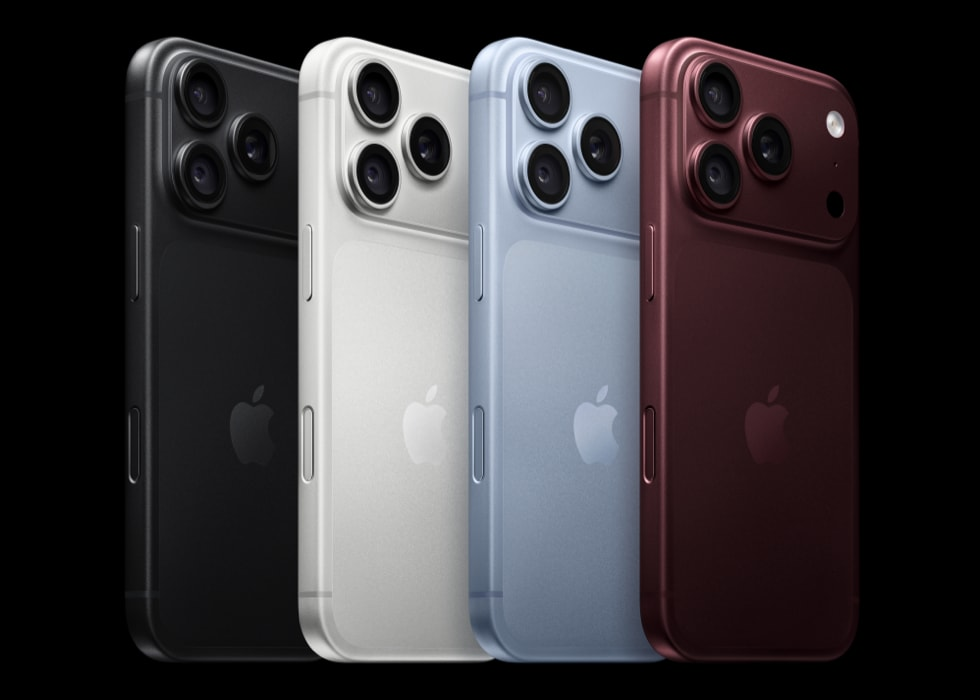
Display: No Changes Worth Mentioning
This is one area where Apple clearly decided not to fix what wasn't broken. Both phones use the same 6.9 inch LTPO Super Retina XDR OLED panel, running at 120Hz with the same 1320 x 2868 resolution and roughly 460 ppi pixel density. Peak brightness tops out at 3000 nits on both models, and both support HDR10 and Dolby Vision.
If display quality is your main upgrade trigger, there simply isn't one here. You are getting the exact same screen experience either way.
Performance: The Real Generational Leap
This is where the iPhone 18 Pro Max starts to separate itself. It ships with Apple's new A20 Pro chip, built on a 2 nanometre process, compared to the A19 Pro on the 17 Pro Max, which used 3 nanometre manufacturing. On paper, that is a meaningful jump in efficiency and raw power.
A few specifics worth knowing:
- The CPU clock speed rises from 4.26 GHz on the high-performance cores in the A19 Pro to 4.93 GHz on the A20 Pro.
- The GPU moves from 6 cores to 7 cores, which should translate into better sustained performance for gaming and heavier creative tasks.
- Both chips remain hexa-core overall, so the architecture philosophy hasn't changed, only the execution.
For most people using their phone for messaging, browsing and social media, this jump will be nearly invisible day to day. For anyone who edits 4K video on their phone, plays graphically demanding games or runs multiple heavy apps at once, the difference should be noticeable, particularly in how the phone handles sustained workloads without throttling.
Camera: A Genuine First for iPhone
The camera system is arguably the headline change this year, and it goes beyond a simple megapixel bump. Both phones keep the same 48MP main sensor, the same 48MP periscope telephoto lens with 4x optical zoom, and the same 48MP ultrawide. On paper, the numbers look identical.
The difference is in the aperture. The iPhone 18 Pro Max introduces a variable aperture on its main camera, ranging from f/1.5 to f/4.0, controlled by six laser cut blades that physically adjust to manage depth of field and light. This is the first time Apple has put a mechanical variable aperture in an iPhone. The system can adjust automatically depending on the scene, or manually through a new Pro controls panel that also exposes shutter speed, white balance and a histogram for people who want more manual input over their shots.
Apple has also opened up an API so third party camera apps can tap into the aperture controls directly, which could matter a lot to content creators and photographers who prefer shooting outside the native Camera app.
On video, the 18 Pro Max adds a Cinematic mode that can now be applied to regular video footage rather than requiring a dedicated shooting mode, a small but useful convenience for anyone who forgets to switch modes before filming.
Everything else on the camera side, including the video recording specs, ProRes support and Apple Log 2 capabilities, stays the same across both phones.
Battery Life: A Bigger Jump Than the Spec Sheet Suggests
Battery capacity has grown noticeably. The iPhone 17 Pro Max uses a 4823 mAh cell in its Nano SIM version, while the iPhone 18 Pro Max jumps to 5391 mAh, an increase of over 500 mAh. In the eSIM only variants sold in some markets, the numbers go from 5088 mAh to 5567 mAh.
Apple's own EU battery endurance ratings back this up. The 17 Pro Max is rated at 53 hours of endurance, while the 18 Pro Max is rated at 62 hours, a nine hour improvement. Combine that with the more efficient A20 Pro chip, and this year's model should genuinely last longer between charges rather than just looking better on a spec sheet.
Charging speeds have improved too. Wired charging now reaches 50 percent in 15 minutes on the 18 Pro Max, down from 20 minutes on the 17 Pro Max. Wireless charging speeds through MagSafe or Qi2 remain unchanged at 25W.
Software and Longevity
The iPhone 17 Pro Max ships with iOS 26 and is upgradable to iOS 27. The iPhone 18 Pro Max ships with iOS 27 out of the box. This is a fairly standard pattern for Apple and not a meaningful differentiator on its own, since both phones will receive the same software support window going forward. What it does mean is that early adopters of the 18 Pro Max skip a year of hand me down software before getting the newest features.
Price Comparison in the UAE
Here is where the numbers matter most for anyone weighing this decision.
| Storage | iPhone 17 Pro Max (launch price) | iPhone 18 Pro Max |
|---|---|---|
| 256GB | AED 5,099 | AED 5,499 |
| 512GB | AED 5,949 | AED 6,349 |
| 1TB | AED 6,799 | AED 8,049 |
| 2TB | AED 8,499 | AED 10,599 |
The entry level gap is a manageable AED 400. But the gap widens considerably at higher storage tiers, particularly at 1TB and 2TB, where the difference stretches well past AED 1,000. If you typically buy the base storage option, the price increase this year is fairly modest by recent standards. If you tend to go for more storage, the jump is considerably steeper.
Apple's Trade In programme in the UAE currently offers between AED 640 and AED 3,260 in instant credit for an iPhone 13 or later, which can meaningfully soften the cost for anyone upgrading from an older device.
Strip away the marketing language and the iPhone 18 Pro Max is a phone built around three real upgrades: a noticeably faster and more efficient chip, a longer lasting battery and a genuinely new camera feature in the form of variable aperture. The display, design and core camera hardware remain largely untouched from last year.
Whether that combination justifies the extra AED 400 at entry level, or the steeper gap at higher storage tiers, depends heavily on how you use your phone. Someone who shoots a lot of photos and video, or who keeps their phone for years and values longer battery life, is getting real, tangible improvements. Someone mainly looking for a screen upgrade or a fresh look will find very little reason to move on from the 17 Pro Max.
What's clear is that this isn't simply a case of new packaging and a higher number. The question worth sitting with is whether the improvements Apple did make land in the areas that matter most to how you actually use your phone every day.
Also Read:
 Shahba Mayyeri
 Ummulkiram Pardawala
 Ummulkiram Pardawala
 Shahba Mayyeri
 Shahba Mayyeri