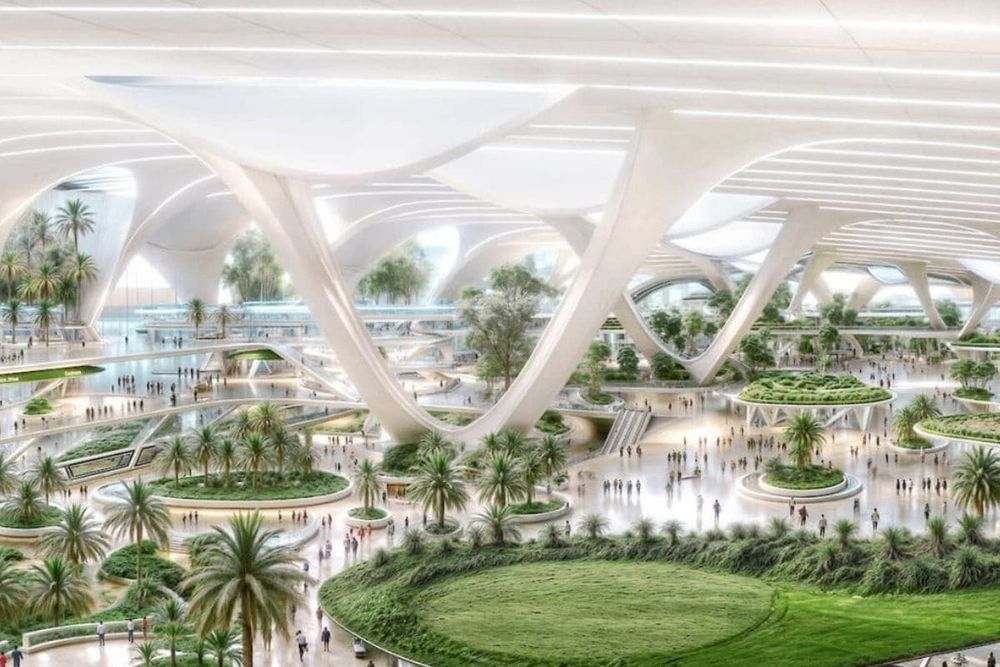
Dubai has never been shy about building big, but few projects match the scale of what is rising in the south. The ruler of Dubai approved a AED 128 billion passenger terminal at Al Maktoum International Airport in 2024, with a plan to make it the largest airport in the world.
Cranes, runways and concrete piles are already changing the skyline out there and the pace of work has picked up noticeably through 2025 and 2026. The city's aviation centre of gravity is starting to shift, and the effects will reach well beyond the airfield, touching real estate, logistics, jobs and everyday commuting patterns.
Here's what exactly is being built and how will it change the way Dubai moves, trades and grows?
What the AED 128bn Actually Builds
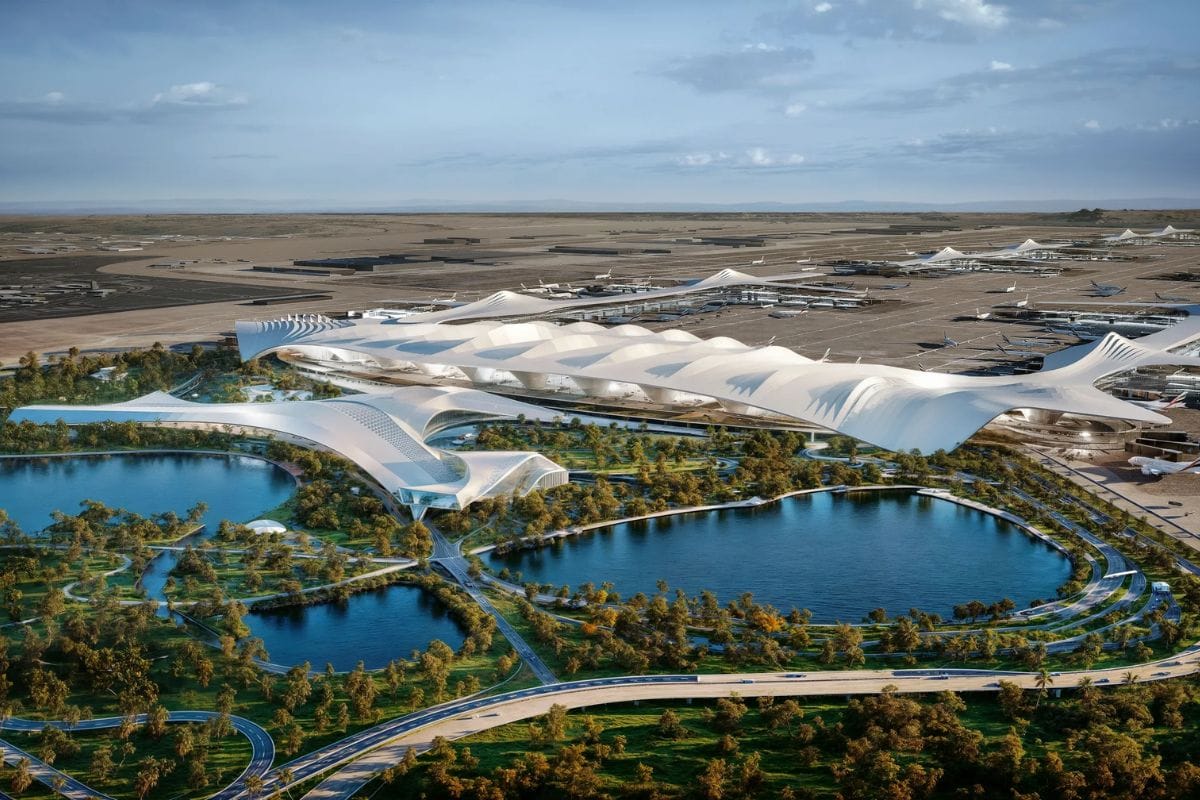
The numbers are hard to ignore. The future airport is designed for up to 260 million passengers a year alongside 12 million tonnes of cargo, five parallel runways and more than 400 aircraft stands. The masterplan covers roughly 70 square kilometres, which puts the scale in perspective. Heathrow covers about 12 square kilometres, so Al Maktoum will be close to six times its size while eventually handling more than three times Heathrow's current passenger throughput.
Dubai International, by contrast, works with just two runways and is boxed in by the city that has grown up around it over the decades. That constraint is really the whole reason this project exists.
The plan is also a long game rather than a single big reveal. The first major phase is expected to handle about 150 million passengers a year once it opens, with full capacity of 260 million coming later in further stages. The West Terminal alone tells you how big even "phase one" really is. Its substructure is a seven level building covering 800,000 square metres, built to handle 45 million passengers a year on its own, which is close to half of what Dubai International handles today.
The direction of travel is also settled policy rather than speculation. Sheikh Mohammed bin Rashid has stated plainly that all operations at Dubai International will move to Al Maktoum in the coming years, calling the new airport "the world's largest airport with a capacity of up to 260 million passengers." The reason is straightforward. Dubai International recorded 95.2 million passengers in 2025 and has almost no physical room left to expand within its current footprint.
Funding for the project reportedly follows a three way structure. Emirates airline is expected to contribute somewhere in the range of $10 to $12 billion, with the remainder coming from the Dubai government and Dubai Airports through a mix of capital and financing. That is a meaningful signal in itself, since it shows the national carrier has skin in the game alongside the government.
What Changes Once the Airport Opens
Once Al Maktoum International is fully operational, the shift goes well beyond a bigger terminal. Dubai Airports CEO Paul Griffiths has confirmed the plan is to move the entirety of operations from Dubai International, stating plainly that there will be no need to operate and maintain two airports once the new hub is ready. That means Dubai eventually returns to a single super-hub model, but one built for a completely different scale of demand.
A few things stand out about what travellers and businesses can expect:
- No more slot constraints. Dubai International is already slot-constrained with a peaky schedule because of its physical limits. Five independent runways at Al Maktoum remove that bottleneck, allowing far more aircraft movements across the day rather than bunched departure and arrival waves.
- A different baggage experience. Reports on the new terminal point to a design aimed at eliminating one of air travel's most tedious moments, standing around a carousel waiting for luggage, through automation built into the terminal from the ground up.
- Multimodal access, not just roads. Griffiths has pointed to three major surface transport links planned around the airport: the Etihad Rail high-speed railway, a dedicated Airport Express and Dubai Metro's Gold Line. The Gold Line in particular is designed for daily commuting between major population centres and the airport, not just passenger drop-offs.
- A internal people mover on top of that. Inside the airport itself, an automated people mover network will move passengers and staff across a site too large to navigate on foot, tying together terminals, concourses and gates that are spread across 70 square kilometres.
- A new economic anchor, not just an airport. Dubai's own project updates describe Al Maktoum as a pillar of the Dubai Economic Agenda, D33, intended to strengthen the emirate's position as a global hub for trade, tourism and logistics, not simply a place planes take off from.
The transition itself is being managed carefully rather than as a single switch. Dubai has stated the move from Dubai International will be phased, aimed at protecting existing service standards while the new hub scales up. For businesses and residents, that likely means a long runway of gradual change rather than a sudden disruption, with the biggest shifts in daily travel patterns showing up progressively through the 2030s as more operations relocate south.
Why the South is Set to Change
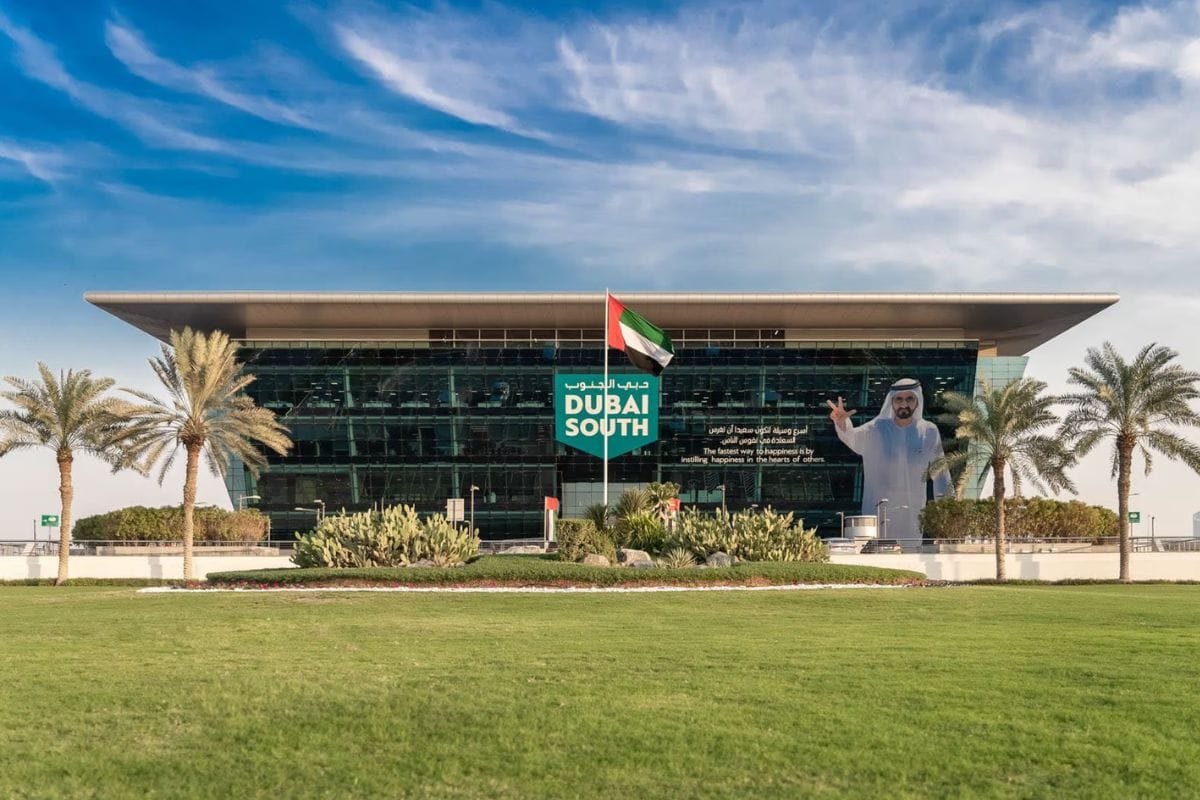
Airports pull cities toward them over time, and Dubai South is already showing early signs of that pull. Investor interest is building steadily across southern Dubai as aviation, logistics, employment and residential development begin to form what analysts are calling a new growth corridor stretching around the airport site.
Emaar South has emerged as one of the corridor's principal residential communities, offering apartments, townhouses and villas positioned to serve the workforce and businesses that will eventually cluster around the new hub. Property specialists argue that passenger capacity alone is not the number investors should be watching. The scale of business activity, job creation and population growth around the airport matters more for property values, and all three tend to follow infrastructure and employment as they move south.
The construction phase itself is already contributing to the wider economy, not just the eventual finished airport. An aviation economic impact study estimated that construction activity tied to the expansion could add approximately AED 6.1 billion to Dubai's GDP in 2030 alone. Once the airport is operational, the longer term gains are expected to come from several directions at once:
- Cargo and logistics operations built around a 12 million tonne annual capacity, likely drawing freight forwarders and distribution centres closer to the site.
- New commercial space near the terminals and freight zones, from offices to hotels to retail.
- Fresh employment across aviation, hospitality, logistics and construction that draws more people to live in the surrounding area.
- Better road and transit links connecting the south to the rest of the city, since a hub this size cannot function on car access alone.
Whether that growth matches the pace of some of Dubai's past development cycles remains to be seen, but the underlying logic, that infrastructure of this scale reshapes the land around it, has played out in most major cities that have built new airports far from their centres.
What It Means for Dubai as a Whole
The shift will be gradual, which gives businesses and residents time to plan rather than adjust overnight. Traffic patterns, office locations, supply chains and even school runs could look meaningfully different by the mid 2030s as activity gradually redistributes from Dubai International toward Dubai South. Companies that rely on air freight or frequent international travel will eventually find a larger, more efficient and better connected gateway, with five independent runways removing a lot of the congestion risk that comes with operating at capacity on just two.
There are genuine open questions too. Moving an entire hub's worth of operations from one airport to another is a complex logistical undertaking on its own, separate from the construction itself, and will need very careful sequencing so that Dubai does not lose capacity mid transition. Timelines on projects at this scale also tend to shift as they progress, so 2032 should be read as the current target rather than a fixed certainty.
Still, the direction is settled, the funding is committed and the construction milestones keep arriving on schedule so far. Al Maktoum is on track to become the centre of Dubai's aviation story for decades to come, and the south is where much of the city's next chapter is quite literally being poured in concrete right now.
Also Read:
 Shahba Mayyeri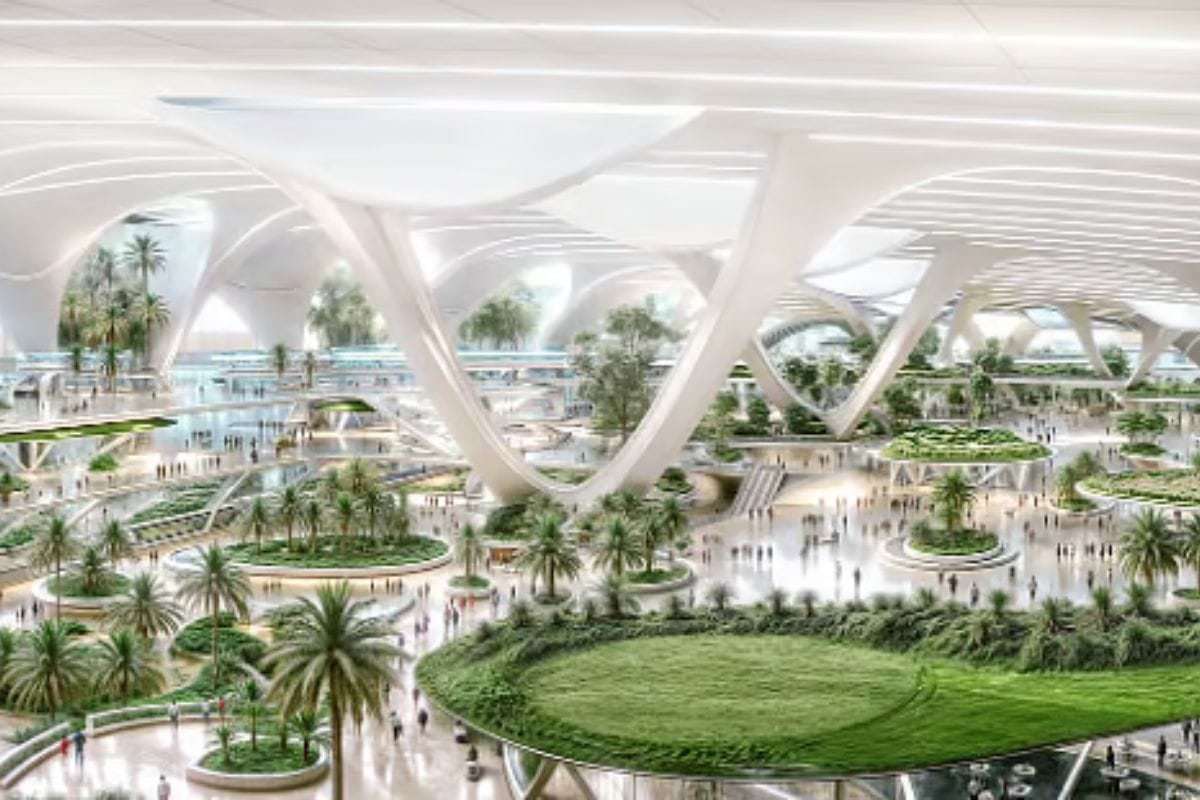
 HiDubai Newswire
 Shahba Mayyeri
 Habiba Shahid
 Shahba Mayyeri