The food and beverage landscape in the United Arab Emirates is undergoing a quiet, chemical transformation. Step into any premium supermarket across Jumeirah or a specialty cafe in the Dubai Design District, and a close reading of the ingredient labels reveals a striking trend. Classic carbonated sodas, locally brewed kombuchas, artisanal iced teas, and botanical wellness tonics are completely rewriting their foundational recipes.
This wave of recipe reformulation is not merely a voluntary marketing play designed to capture the health-conscious consumer demographic. It is a highly strategic, defensive response to a powerful combination of fiscal regulatory policy and shifting corporate economics.
The implementation of comprehensive excise tax frameworks by the UAE Federal Tax Authority has fundamentally changed the financial math of commercial beverage production. By placing a substantial financial premium on added sugars and artificial sweeteners, the government has turned recipe formulation into a critical variable that directly dictates a brand's shelf price, market competitiveness, and net profit margins.
The Economic Reality of the UAE Excise Framework
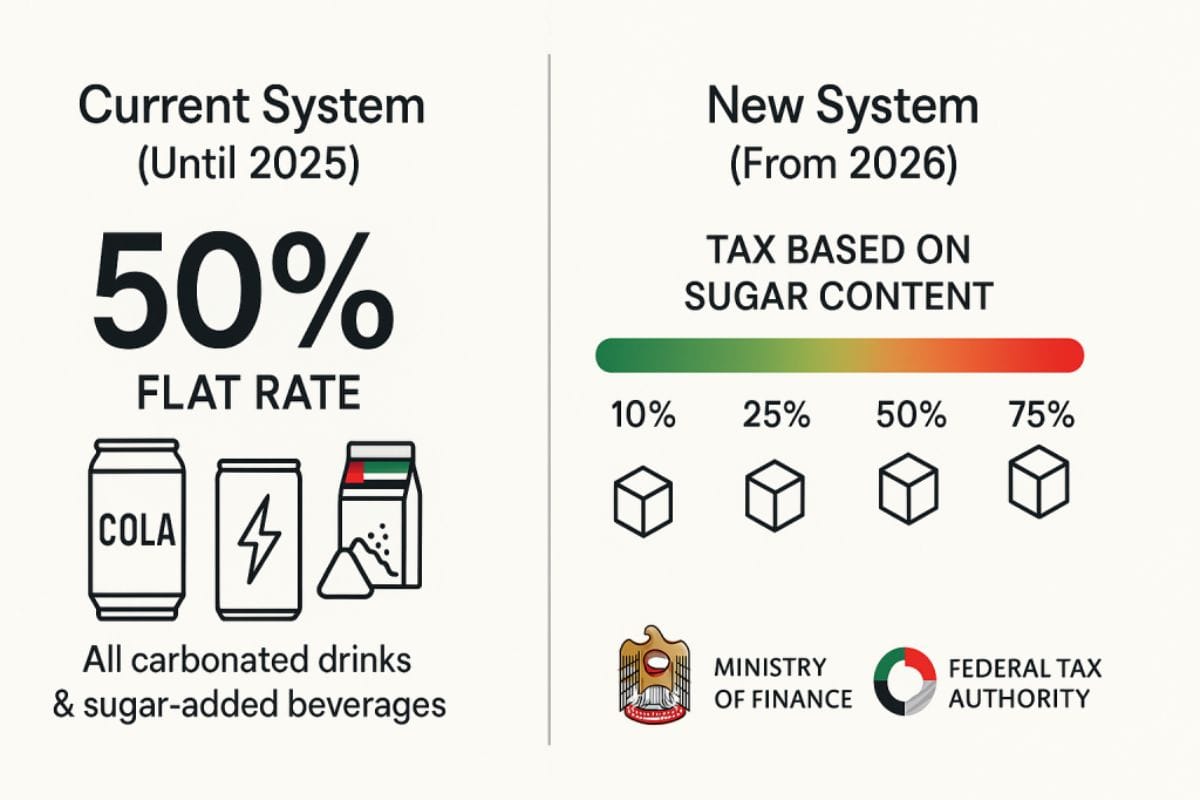
To navigate the modern Gulf beverage market, a brand must understand the uncompromising architecture of the UAE excise tax system. Unlike some international markets that utilize graduated, tiered tax scales based on the exact number of grams of sugar per milliliter, the UAE utilizes a decisive, categorical approach.
Under the current federal mandates, a flat fifty percent excise tax is levied on all sweetened beverages. The regulatory definition of a sweetened beverage is incredibly broad, encompassing any product with added sugar, concentrated syrups, or artificial sweeteners, regardless of the final calorie count.
The Fiscal Threshold:
• Any Added Sugar or Sweetener ➔ Hits the 50% Excise Tax Blanket
• Zero Added Sugar (100% Pure Fruit Juice/Botanical) ➔ Completely Exempt From Excise
This binary regulatory structure leaves zero room for minor, incremental sugar reductions. A beverage brand cannot simply shave off two grams of cane sugar to slide into a lower tax bracket. If a drink contains even a fraction of a gram of added sugar or a synthetic sugar substitute, the entire product is hit with the fifty percent tax blanket at the point of manufacture or import.
The only path to achieving complete tax exemption is total elimination. Brands must either manufacture a product with absolutely zero added sweeteners, or rely exclusively on one hundred percent natural fruit juices, which are legally exempt from the excise framework.
This fiscal reality forces local drink manufacturers into an intense R&D cycle. They must either accept a massive retail price hike that risks alienating price-sensitive consumers, or completely re-engineer their flavor profiles from scratch using natural, non-taxed ingredients.
The Molecular Challenge of Removing Sugar
For food scientists and product developers, stripping sugar out of a successful commercial beverage is an incredibly complex molecular puzzle. Sugar is a multi-functional powerhouse within liquid chromatography. It does not simply provide sweetness. It functions as a critical texturizing agent, adds viscosity, affects the structural mouthfeel, preserves color, and acts as a natural preservative to extend shelf life.
When sugar is abruptly removed from a carbonated soft drink or a flavored water, the liquid instantly loses its body. It tastes thin, flat, and watery, even if the sweetness level is successfully replicated using zero-calorie substitutes. Furthermore, high-intensity sweeteners, such as stevia, monk fruit, or erythritol, possess distinct molecular weights and chemical structures that behave unpredictably when pasteurized or carbonated.
To combat these structural deficits, Dubai beverage labs are leaning heavily on advanced food tech innovations. Product developers are blending ultra-pure stevia extracts with natural flavor modulators that effectively mask the bitter, metallic aftertaste historically associated with plant-based sweeteners.
To restore the lost viscosity and mimic the luxurious mouthfeel of real sugar syrups, formulation teams are incorporating functional hydrocolloids, such as natural apple pectin, citrus fibers, or chicory root inulin. These soluble fibers add density to the liquid matrix, ensuring that a low-sugar or zero-sugar beverage coats the palate in a way that feels identical to a traditional full-sugar product.
Capitalizing on the Natural Fruit Juice Loophole
Because one hundred percent natural fruit juices and milk-based beverages containing natural lactose are completely excluded from the fifty percent excise penalty, local beverage brands are creatively restructuring their ingredient decks to exploit these legal exemptions.
Instead of sweetening a carbonated tonic with high-fructose corn syrup or refined cane sugar, regional product developers are utilizing concentrated, clarified fruit juices as their primary sweetening base. White grape juice concentrate, deionized apple juice, and clarified pear juice have emerged as the new industry standards for natural liquid sweetening.
Through highly advanced enzymatic processing, these fruit juice bases are completely stripped of their characteristic fruit flavors, color compounds, and intense aromas, leaving behind a clean, neutral, liquid fructose-glucose matrix.
When mixed into a beverage formulation, this clarified juice provides a robust, round sweetness profile that functions exactly like traditional sugar syrup on the tongue. Crucially, because the source ingredient is technically classified as one hundred percent pure fruit juice, the entire finished product remains legally exempt from the fifty percent excise tax. This allows homegrown Dubai brands to maintain highly competitive premium shelf pricing while preserving an entirely clean, natural ingredient list that appeals directly to modern wellness consumer expectations.
Navigating the Technical Demands of Local Pasteurization
The elimination of refined sugar from a beverage recipe introduces significant logistical and microbiological challenges further down the supply chain, particularly during the bottling and pasteurization phases. Refined sugar acts as an osmotic preservative. High concentrations of sugar bind water molecules tightly, making it incredibly difficult for wild yeasts, molds, and bacteria to proliferate within the liquid container.
When a drink manufacturer transitions to a clean-label formula powered by raw botanical infusions, delicate natural extracts, or volatile fruit concentrates, the liquid matrix becomes a highly fertile breeding ground for microbial contamination. This vulnerability is heavily magnified by the extreme ambient summer temperatures experienced across the UAE supply chain, where delivery trucks and warehouse loading docks can easily reach internal temperatures exceeding forty-five degrees Celsius.
To guarantee a stable twelve-month shelf life without relying on chemical preservatives like sodium benzoate, which modern health-conscious consumers actively avoid, Dubai beverage factories are investing heavily in advanced processing infrastructure. Brands are upgrading their facilities to support high-precision Flash Pasteurization systems combined with Aseptic Cold-Filling technology.
By heating the liquid to exactly seventy-two degrees Celsius for a brief fifteen seconds before instantly chilling it and sealing it into sterilized aluminum cans within a completely sterile cleanroom environment, manufacturers can neutralize microbial threats without damaging the volatile, heat-sensitive top notes of their expensive, natural fruit extracts.
The Consumer-Led Shift Toward Functional Wellness
While the fiscal pressure of the excise tax serves as a powerful operational stick, an equally potent carrot is driving this reformulation wave: the rapid evolution of Dubai’s consumer psychology. The modern UAE demographic is highly educated, affluent, and hyper-focused on longevity, physical fitness, and preventative healthcare.
The post-pandemic era has witnessed a dramatic decline in the mass-market consumption of highly processed, synthetic foods. Today’s consumers view their beverage choices as an extension of their personal wellness identity.
A drink is no longer expected to simply quench thirst. It is demanded to actively deliver functional health benefits, such as supporting gut health, enhancing mental focus, or boosting immunity.
This cultural shift has created a massive, high-margin market for functional beverages that naturally bypass the excise tax. Homegrown Dubai brands are packing their reformulated portfolios with active prebiotics, raw apple cider vinegar cultures, adaptogenic ashwagandha extracts, and marine collagen peptides.
By framing a beverage as an active wellness supplement rather than a casual indulgence, local brands can command immense pricing power, easily justifying a premium retail price point of fifteen to twenty-five dirhams per bottle. This strategic positioning completely insulates the brand from mass-market price wars while building profound consumer loyalty within the city's elite lifestyle hubs.
Future-Proofing Local Beverage Portfolios
The aggressive regulatory environment of the UAE is not an isolated anomaly. It is a highly deliberate blueprint aligned with the nation's broader long-term social goals, including the reduction of childhood obesity rates and the mitigation of lifestyle-related chronic illnesses. As public health policies continue to tighten globally, the brands that master the complex science of clean-label, sugar-free formulation today are positioning themselves for long-term survival.
For forward-thinking beverage entrepreneurs and corporate executives operating out of Dubai, recipe reformulation must no longer be viewed as a frustrating compliance obstacle or an administrative burden. It represents a profound corporate opportunity to innovate, upgrade production infrastructure, and capture market share.
By combining cutting-edge food science with a deep understanding of natural ingredient exemptions and local supply chain logistics, Dubai’s beverage industry is demonstrating that fiscal taxation can actively serve as a powerful engine for genuine, high-value product innovation.
Also Read:
 Ummulkiram Pardawala
 Ummulkiram Pardawala
 Ummulkiram Pardawala
 Shahba Mayyeri