The way businesses occupy office space has changed more in the past five years than in the previous five decades. The pandemic forced companies to run lean on real estate, and many found, perhaps unexpectedly, that it worked. Productivity held up. Talent stuck around. Costs dropped. But as the dust settled and teams began returning to physical workspaces, a new reality started taking shape, one that isn't about going back to the old model or abandoning the office altogether. It's about something more deliberate: less space, better space, and a workforce that splits its time between home and the office in a way that actually makes sense.
Across Dubai and the wider region, this shift is playing out in real time. Companies are renegotiating leases, downsizing footprints, and trading sprawling suburban campuses for compact floors in premium business districts. The logic is simple enough on the surface, but the implications run deeper than a line item on a property budget.
What does it actually mean for a business to operate this way, and what separates the companies getting it right from those that are quietly struggling?
Why Companies Are Shrinking Their Footprints
For years, office size was a proxy for ambition. A large floor plate in a prestigious tower signalled growth, stability, and seriousness. That psychology hasn't entirely disappeared, but it has loosened considerably. When companies began tracking real utilisation rates during and after the pandemic, many discovered that their offices were running at 40 to 60 percent occupancy even on busy days, meaning they were paying full rent for space that sat empty more often than not.
The financial logic for downsizing became difficult to ignore. Commercial real estate is one of the largest fixed costs on any company's balance sheet, and in a city like Dubai where Grade A office space commands significant premiums, even a modest reduction in square footage translates into substantial annual savings. But the decision to go smaller isn't purely about cutting costs. It's also about rethinking what an office is actually for.
When every employee had an assigned desk and worked five days a week on site, you needed enough room for everyone simultaneously. Under a hybrid model, that calculation changes entirely. If a team of 80 people is in the office on a rotating basis, with perhaps 40 to 50 present on any given day, the space requirement drops accordingly. The office stops being a place where everyone works and becomes a place where the right work happens.
The Premium Location Logic
Here's where the strategy gets interesting. Many businesses aren't just downsizing; they're upgrading. The savings from reducing square footage are, in a growing number of cases, being reinvested into securing a better location or a higher-quality building. This counterintuitive move has a clear rationale behind it.
Why Address Still Matters
In client-facing industries, a prestigious address carries weight that is hard to quantify but easy to feel. A law firm, a financial advisory practice, or a regional headquarters for a multinational doesn't just need walls and desks. It needs an address that conveys credibility before anyone walks through the door. DIFC, Downtown Dubai, and Business Bay continue to command premium rates precisely because the signal they send is worth paying for.
For companies that previously occupied large offices in secondary locations, consolidating into a smaller but better-addressed space can actually improve brand perception while lowering total occupancy costs. The maths work when you stop thinking about cost per square foot in isolation and start thinking about value per square foot.
The Employee Experience Dimension
Location affects more than client perception. It shapes how employees feel about coming in. A well-located office in a walkable, amenity-rich area reduces the friction of the commute, offers proximity to good lunch options and transport links, and communicates to staff that the company takes their experience seriously. In a hybrid environment where employees have genuine choice about where they work, the office has to compete for their presence. A premium location is part of how it competes.
How Hybrid Work Has Redefined the Office's Purpose

The office, in the hybrid model, has shed several of its old functions. It is no longer the primary place where individual focused work happens. Most employees can do that just as well, often better, at home. What the office does particularly well, and what remote environments genuinely struggle to replicate, is facilitate the kind of interaction that drives collaboration, culture, mentorship, and trust.
This shift in purpose has profound implications for how offices are designed and used. The traditional layout of rows of assigned desks and a few meeting rooms is poorly suited to a space that exists primarily for collaboration and connection. The companies adapting most successfully are redesigning their interiors to reflect the office's new role, with more flexible common areas, a greater ratio of meeting and collaboration zones to individual workstations, and infrastructure that supports seamless interaction between people in the room and those joining remotely.
The assigned desk is increasingly giving way to hot-desking or activity-based working, where employees choose a workspace based on what they need to do rather than where they've always sat. This transition isn't without friction; many employees have strong preferences for a consistent personal space, and managing that cultural shift requires careful handling. But for organisations that have navigated it thoughtfully, the result is a more dynamic and efficiently used office environment.
What This Means for Lease Strategy
The shift toward smaller, higher-quality offices has also changed how companies approach lease negotiations. The traditional model of signing long-term leases on large spaces made sense when headcount was predictable and growth was linear. That world is harder to count on now.
Shorter, more flexible lease terms have become significantly more attractive, even at a cost premium, because they preserve the ability to scale space up or down as business conditions change. Serviced office operators and co-working providers have benefited enormously from this shift, offering companies furnished, tech-ready spaces on flexible terms that would have been unthinkable in a conventional lease.
In Dubai specifically, the rise of flexible workspace providers across premium locations has made it far more accessible for companies to occupy high-quality addresses without committing to long leases or large floor plates. A regional team of 20 can now sit in a well-appointed suite in DIFC on terms that would have been reserved for much larger enterprises a decade ago.
Designing for Density and Flexibility: What the Best Offices Do Right

The best-executed small-footprint offices share a set of design and operational principles that allow them to punch well above their weight in terms of functionality. Rather than simply fitting the same old office model into fewer square metres, they rethink the space from first principles.
- Collaboration zones take precedence over rows of desks. In a space designed for hybrid work, individual focused work is not the primary use case, so the layout skews heavily toward areas where groups can gather, brainstorm, and work through problems together.
- Technology infrastructure is non-negotiable. Every meeting room needs high-quality audio-visual equipment, reliable connectivity, and a seamless experience for remote participants. A hybrid meeting where the people dialing in can't hear clearly or see who's speaking quickly becomes a source of frustration that undermines the whole model.
- Quiet zones and phone booths serve the employees who do come in to focus. Even in a collaboration-first office, there will be days when someone needs three uninterrupted hours. Having bookable quiet spaces ensures the office serves different kinds of work rather than defaulting entirely to open, noisy layouts.
- Branding and environment reflect culture. When the office is visited less frequently, every visit carries more weight. A well-designed, thoughtfully branded environment makes an impression on employees and clients alike, and contributes to a sense of organisational identity that is harder to build remotely.
- Flexible furniture and moveable walls extend the usability of the space. A room that can shift from a board meeting setup to a workshop format to a town hall within an hour is a significantly more efficient use of real estate than a fixed-configuration room that works for one purpose only.
Key Decisions Businesses Face When Right-Sizing Office Space
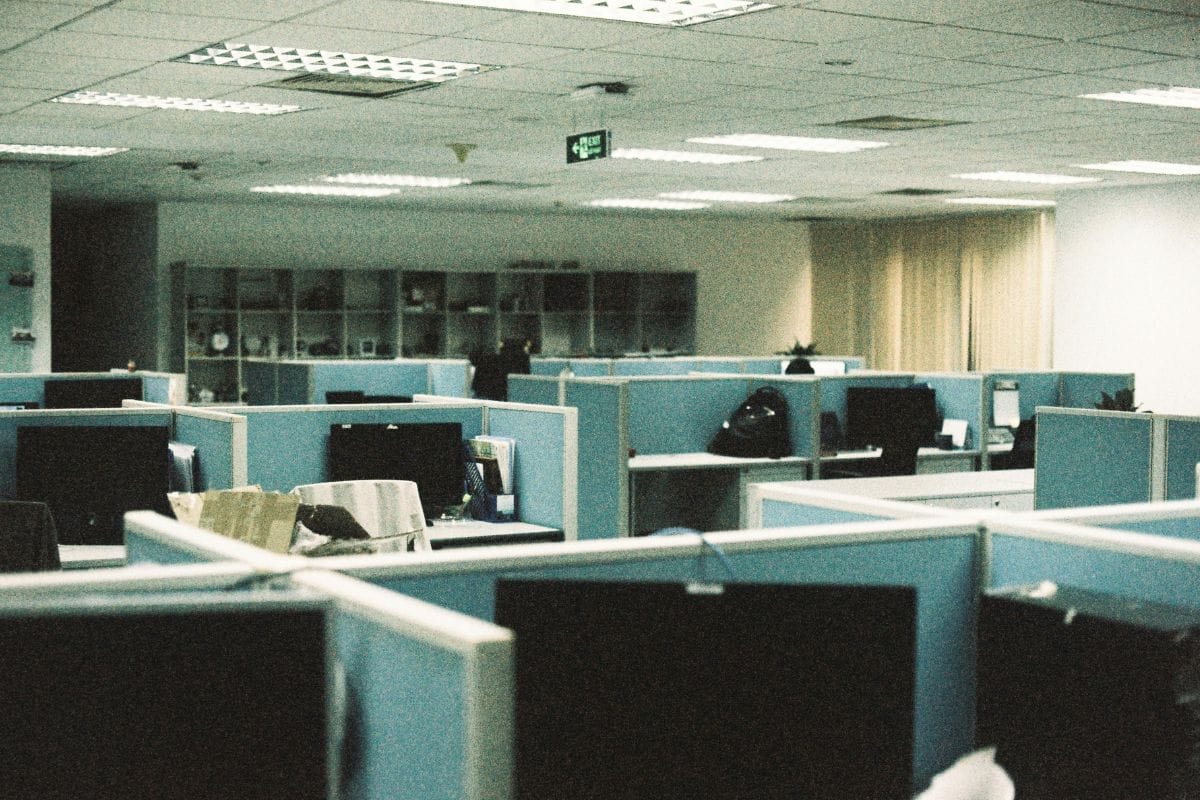
For businesses actively working through this transition, the decisions tend to cluster around a predictable set of questions. Getting clarity on these before signing a new lease or committing to a fit-out will save significant time and money.
- What is the actual peak occupancy on your busiest days? This is the number your space needs to comfortably accommodate, not your total headcount.
- What type of work do you most need the office for? If it's primarily client meetings, you need high-quality meeting rooms and a strong address. If it's team collaboration, you need open collaborative space and strong AV infrastructure.
- How much flexibility do you need in your lease terms? A company in a stable phase can capture savings with a longer commitment. A company in growth or transition mode pays a premium for flexibility that may well be worth it.
- What role does the office play in your talent proposition? For some roles and demographics, a premium office environment is genuinely influential in hiring and retention decisions. For others, it's secondary to compensation and remote flexibility.
- Are you designing the space yourself or taking a serviced solution? Custom fit-outs offer brand control and long-term cost efficiency at scale. Serviced offices offer speed, flexibility, and reduced capital outlay, especially for teams under 50.
- How will you manage the cultural dimension of hybrid working? This question has no property answer. It requires intentional management practices, and it's worth thinking through before, not after, the move.
Dubai's commercial property market is shifting as businesses downsize and prioritise quality over quantity. Demand for large floor plates is falling while flexible, premium spaces are rising. Landlords offering shorter, adaptable leases are retaining tenants better, and for businesses getting this balance right, the modern office is becoming a stronger asset than ever.
Also Read:
 Shahba Mayyeri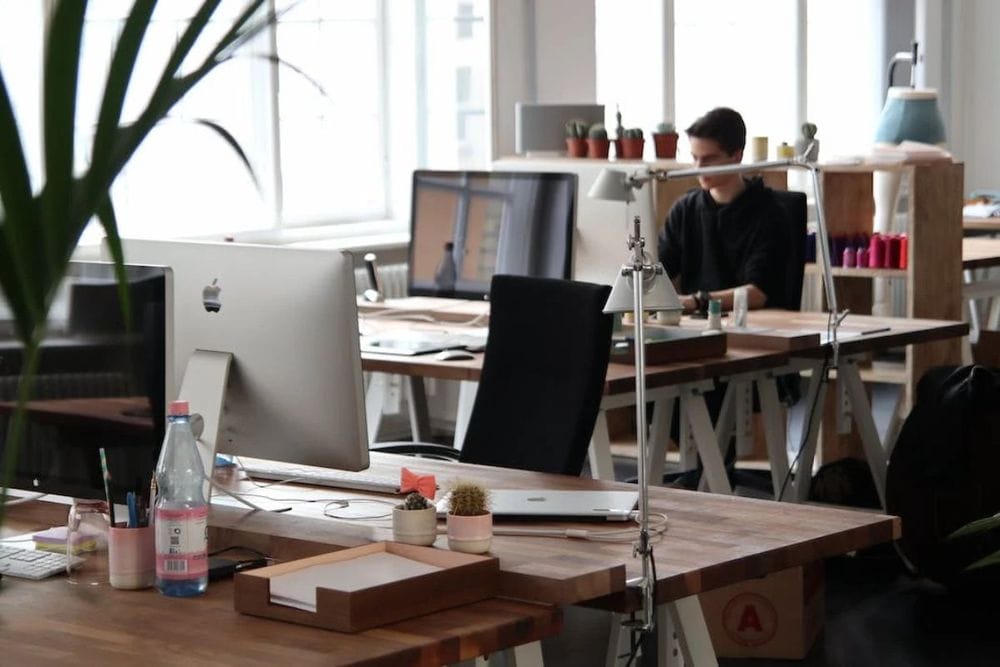
 Umema Arsiwala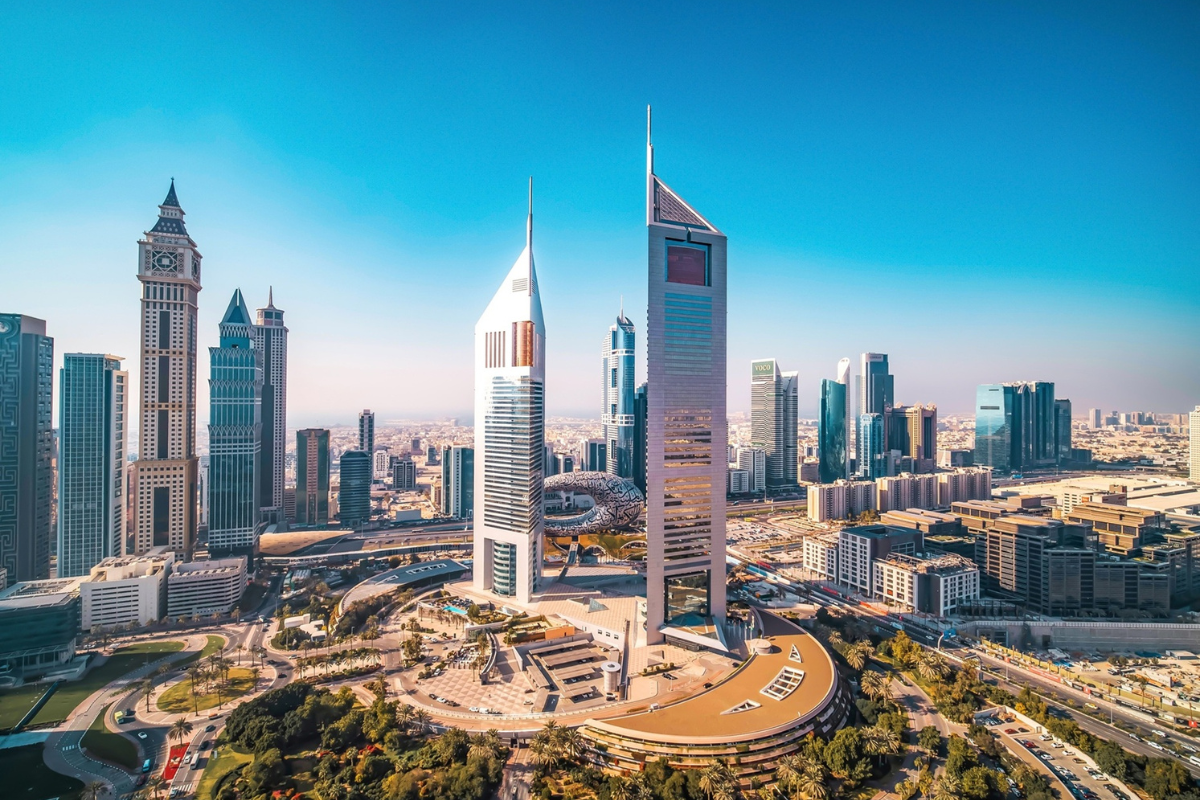
 Shahba Mayyeri
 Shahba Mayyeri
 Shahba Mayyeri