Instagram does not run on one algorithm. It runs on several. Feed, Reels, Stories, and Explore each have their own ranking system, and each system was built to predict a different kind of behavior. That single fact explains most of the confusion small business owners feel when a Reel flops, but a carousel quietly outperforms everything else in the grid.
Adam Mosseri, the head of Instagram, has confirmed the same three signals sit at the top of nearly every ranking system on the platform: watch time, saves (and likes per reach), and sends per reach, which is how many people DM your content to someone else. These three signals matter more than raw follower count, more than posting time, and more than most of the "hacks" still floating around social media advice threads. Reach today depends on how people actually behave once they see your content, not on how many people already follow you.
This changes how a small business owner should think about format. A Reel, a carousel, and a single image are not interchangeable containers for the same content. Each one is read by a different ranking engine, rewards a different behavior, and earns its keep at a different stage of the customer relationship. The question isn't which format wins. The question is which job you're hiring each format to do.
The Current Algorithm Reality
Three ranking systems matter most for a small business account: the Reels ranking system, the Feed ranking system, and Explore, which pulls from both depending on the content type. Instagram evaluates content across two kinds of reach:
- Connected reach — people who already follow you
- Unconnected reach — people who don't follow you yet, sourced from Explore and Reels recommendations
For unconnected reach specifically, sends per reach and watch-time-to-length ratio carry the most weight. A DM share is treated as a high-trust signal because someone made an active choice to hand your content to a specific person rather than just scrolling past it. For connected reach, saves and likes per reach still matter, but the algorithm is largely predicting whether your existing audience will engage, not whether strangers will.
Negative signals matter too. Instagram tracks how often people skip a post quickly, tap "not interested," or scroll away within the first couple of seconds. These signals push content down just as hard as positive signals push it up. Getting a viewer to stay, save, or send something is the entire game now.
Instagram Reels: The Discovery Engine
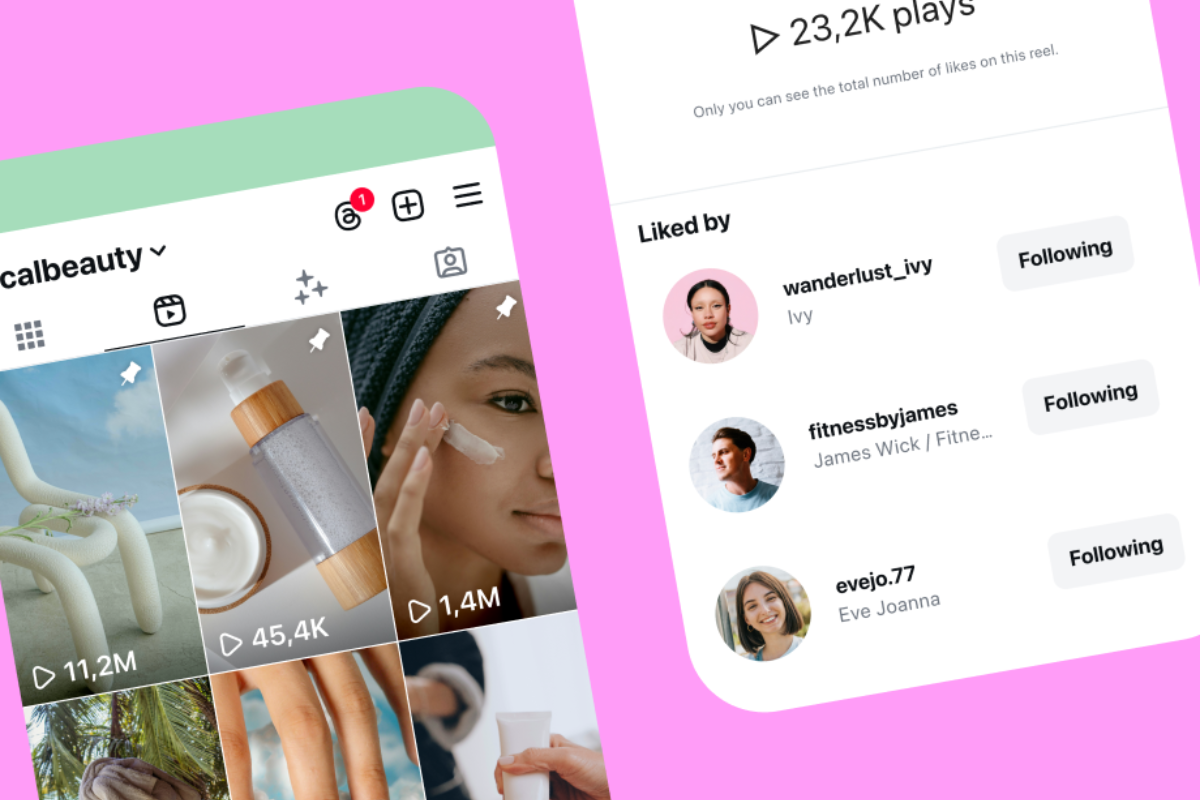
Reels remain the primary tool for reaching people who have never heard of your business. Instagram's own data shows Reels are shown to roughly twice as many non-followers as static photo posts, which makes Reels the format most suited to pure discovery.
The 3-second hook. Instagram weighs the first three seconds of a Reel heavily when deciding whether to keep showing it to more people. If viewers swipe away before that mark, the algorithm reads it as a signal the content isn't worth wider distribution. The opening frame needs to show a face, a result, or a question — something that stops the scroll immediately rather than a slow build-up or a logo intro.
Optimal length. Reels between 30 and 90 seconds tend to perform best for small business content because they give enough room to deliver value without losing the completion rate. Completion rate, meaning the percentage of viewers who watch to the end (or rewatch), remains one of the strongest signals inside the Reels ranking system. Instagram has expanded distribution for longer Reels up to three minutes, but for most small business use cases, shorter and tighter still converts better because dwell time density matters more than raw runtime.
Business use cases that work well as Reels:
- Quick behind-the-scenes process walkthroughs (how a product is made, packed, or set up)
- Before-and-after transformations, especially in service businesses
- Product teasers ahead of a launch or restock
- Fast answers to a common customer question, delivered directly to the camera
- Trending audio paired with a genuine moment from the business, not a forced skit
A useful habit for tracking Reels performance: check "Sends" in Insights, not just likes. A Reel with modest likes but strong DM shares is doing exactly what the algorithm rewards most, even if the numbers on the surface look unimpressive.
Instagram Carousels: The Engagement and Conversion Engine
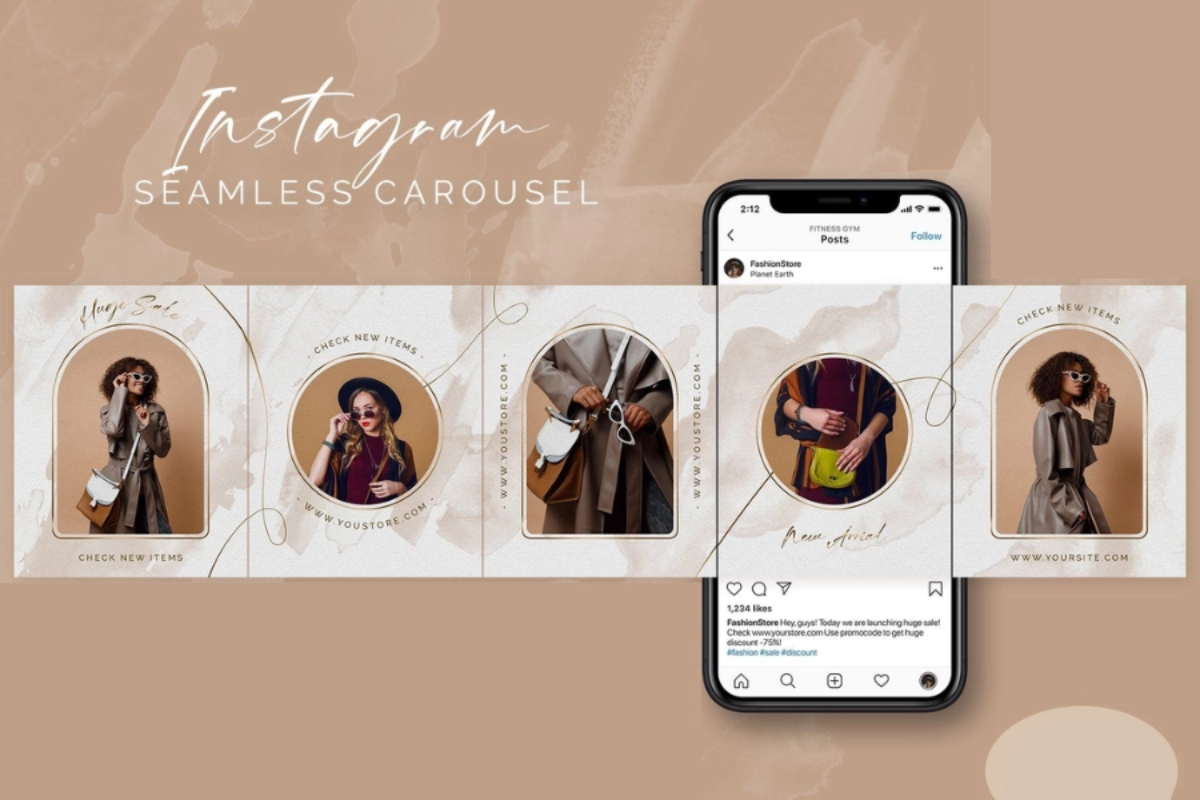
Carousels are built for a different job. They don't chase strangers the way Reels do. They deepen the relationship with people who are already curious enough to stop and swipe.
Each swipe inside a carousel counts as a distinct engagement action, which is part of why carousels tend to generate longer dwell time than a single image. Longer time-on-post is itself a positive signal, similar in spirit to watch time on video. A person spending fifteen seconds swiping through eight slides is giving the algorithm a much stronger vote of confidence than a person glancing at one photo for two seconds.
The re-serving mechanic. Instagram has a specific feature for carousels: if someone sees the post in their feed but doesn't swipe all the way through, the platform will show it to them again later, this time leading with the second slide instead of the first. This effectively gives a carousel two attempts at capturing attention from the same person, something no other format currently gets. It's part of why carousels have been shown to reach two to three times more accounts than a single image posting the same content.
Saves are the other major driver here. Instagram treats a save as a much stronger signal of value than a like, because saving requires the viewer to decide the content is worth returning to later. A post with fifty saves and a hundred likes will typically outperform a post with five hundred likes and five saves, because the algorithm interprets saves as high-intent behavior rather than passive approval.
Structural best practices for small business carousels:
- Aim for 8–10 slides. This is long enough to build a complete idea and encourage multiple swipes, without dragging past the point of interest.
- Use a 4:5 portrait aspect ratio. It takes up more vertical space in the feed, which increases the chance someone stops scrolling long enough to notice the swipe indicator.
- Open with a clear, benefit-driven headline on slide one. This is the only slide most people will see before deciding whether to keep swiping.
- Close with an explicit call to action to save the post — something like "save this for later" works because it directly prompts the exact behavior the algorithm rewards most.
- Keep text per slide short. Carousels that read like a slow blog post lose swipes; carousels that read like a checklist keep them.
Business use cases that work well as carousels:
- Step-by-step tutorials or how-to guides related to your product or service
- Myth vs. fact breakdowns relevant to your industry
- Before/after case studies laid out slide by slide
- Pricing or package comparisons
- Customer testimonials are presented one per slide
Single Posts: The Direct Communication Tool
Single static images haven't disappeared, and they still serve a real purpose. They just aren't the format to lean on for growth. A single post asks less of the algorithm and less of the viewer, which makes it the right choice when the message itself is the priority, not the reach.
High-converting scenarios for a single post:
- Major announcements — a new location, a holiday closure, a milestone
- Clean, high-resolution product shots meant to sit permanently on the profile grid as a kind of storefront window
- Simple quote graphics or short-form statements that don't need extra slides or footage to land
- Time-sensitive updates where the speed of posting matters more than production
One tactic worth noting: adding a trending or original audio track to a static image post nudges it toward the more immersive treatment the algorithm gives sound-based content, giving it a small path into surfaces it wouldn't otherwise reach. This is a minor lever, not a replacement for the reach that Reels and carousels naturally get, but it's an easy addition with no real downside.
Format Breakdown Table
| Factor | Reels | Carousels | Single Posts |
|---|---|---|---|
| Primary Objective | Discovery, reaching new people | Deepening engagement, driving saves | Direct, fast communication |
| Algorithm Driver | Watch time, completion rate, sends per reach | Dwell time, save rate, re-serving to non-swipers | Likes per reach, limited re-distribution |
| Reach Potential | Highest, especially with non-followers | Strong, 2–3x a single image for the same content | Lowest, mostly limited to existing followers |
| Engagement Quality | High for shares/sends, lower for comments | Highest for saves and detailed comments | Moderate, mostly quick likes |
| Production Effort | Medium to high (filming, editing, hook writing) | Medium (design and slide sequencing) | Low (single asset, quick caption) |
Content Strategy Framework for Small Business Owners
The right mix depends on where the account currently stands, not on picking one "winning" format.
Under 5,000 followers — growth phase
The priority here is unconnected reach, meaning strangers need a reason to find the account in the first place.
- 3–4 Reels per week, built around the 3-second hook and a clear, single idea per video
- 1–2 carousels per week, used to convert new discoveries into saves and follows
- 1 single post per week, reserved for announcements or a strong product shot
5,000+ followers — retention and conversion phase
At this stage, the existing audience is large enough that deepening engagement matters as much as finding new people.
- 2–3 Reels per week to keep the unconnected reach active
- 2–3 carousels per week, since save and share rates compound with a larger base
- Single posts are used more selectively, mainly for time-sensitive updates
Repurposing one topic across all three formats
A single piece of content can be broken into all three formats without tripling the workload:
- Film one short Reel demonstrating the idea in action (the hook, the process, the result).
- Turn the same idea into a step-by-step carousel, breaking the process into 8–10 slides with one clear takeaway per slide.
- Pull the single strongest frame or result photo from the process and post it alone with a short, direct caption for the grid.
This approach means one idea only needs to be developed once, but it gets tested across three different ranking systems, which increases the odds that at least one version reaches a meaningful audience.
Reels are the format to lean on when the goal is to be found by people who don't yet know the business exists. Carousels are the format to lean on when the goal is turning that initial attention into saves, shares, and a stronger relationship with the algorithm over time. Single posts still have a place for direct announcements and clean visual moments, but they carry the least reach potential of the three and should be used with that limitation in mind.
A small business account doesn't need to choose a single format and commit to it permanently. Growth-stage accounts should weight their effort toward Reels and use carousels to catch and convert the attention Reels generate. Larger, more established accounts can shift more weight toward carousels, since their existing audience makes saves and shares compound faster. Single posts stay useful throughout, mainly as a fast, low-effort tool for moments that need clarity more than reach.
The clearest path forward is treating format choice as a deliberate decision tied to a specific goal for each piece of content, rather than defaulting to whatever is fastest to produce that day.
Also read:
 Umema Arsiwala
 Umema Arsiwala
 Umema Arsiwala