Family-owned enterprises form the definitive backbone of the United Arab Emirates economic landscape. Accounting for approximately 90 percent of all private sector companies and contributing an estimated 40 percent to the national gross domestic product, these institutions span vital sectors from massive real estate conglomerates to global retail networks.
Yet, despite their current commercial dominance, family businesses worldwide face an infamous structural hurdle. Statistically, fewer than 15 percent of family-held firms successfully survive the transition to the third generation of ownership. The primary point of failure is rarely market competition or macroeconomic shifts. Instead, it is internal friction, the fragmentation of shareholdings among distant heirs, and the total absence of formal corporate governance frameworks to manage succession.
In Dubai, the regulatory environment has evolved aggressively to counter this structural vulnerability. The introduction of UAE Federal Decree-Law No. 37 of 2022 concerning Family Businesses, combined with the comprehensive operational integration of Federal Decree-Law No. 20 of 2025, which entered into full force in January 2026, has completely modernized the legal playing field.
For prominent local families, governance is no longer just an abstract set of internal agreements. It is a highly enforceable, legally binding corporate architecture. Structuring this system correctly requires a deep understanding of how to weave modern corporate compliance, legal share classes, and traditional family values into a single, cohesive operational strategy.
The Constitutional Foundation: Aligning the Articles of Association and the Family Charter
The first step in building a resilient, multi-generational governance model is separating operational corporate rules from the emotional and philosophical guidelines of the family unit. The UAE legal framework achieves this through a clear dual-document structure consisting of the Articles of Association and the optional Family Charter.
The Articles of Association serve as the public, legally binding contract filed with the Ministry of Economy and local licensing authorities. This document dictates the actual corporate mechanics, including board compositions, voting thresholds, and statutory management powers.
In contrast, the Family Charter is a private, highly flexible document designed to regulate the family's direct relationship with the enterprise. It outlines critical internal policies, such as the minimum education and external work experience required for a next-generation family member to apply for a corporate role, rules regarding profit distribution, and guidelines for managing family investments.
It is absolutely vital for family offices and legal counsel to ensure these documents are perfectly synchronized. Under the unified family business regulations, if a direct operational conflict arises between the two, the provisions within the Articles of Association will legally take absolute precedence. This rule ensures that the day-to-day commercial integrity and creditworthiness of the business remain completely insulated from internal family disagreements.
Capital Customization: Utilizing Multiple Share Classes to Balance Power
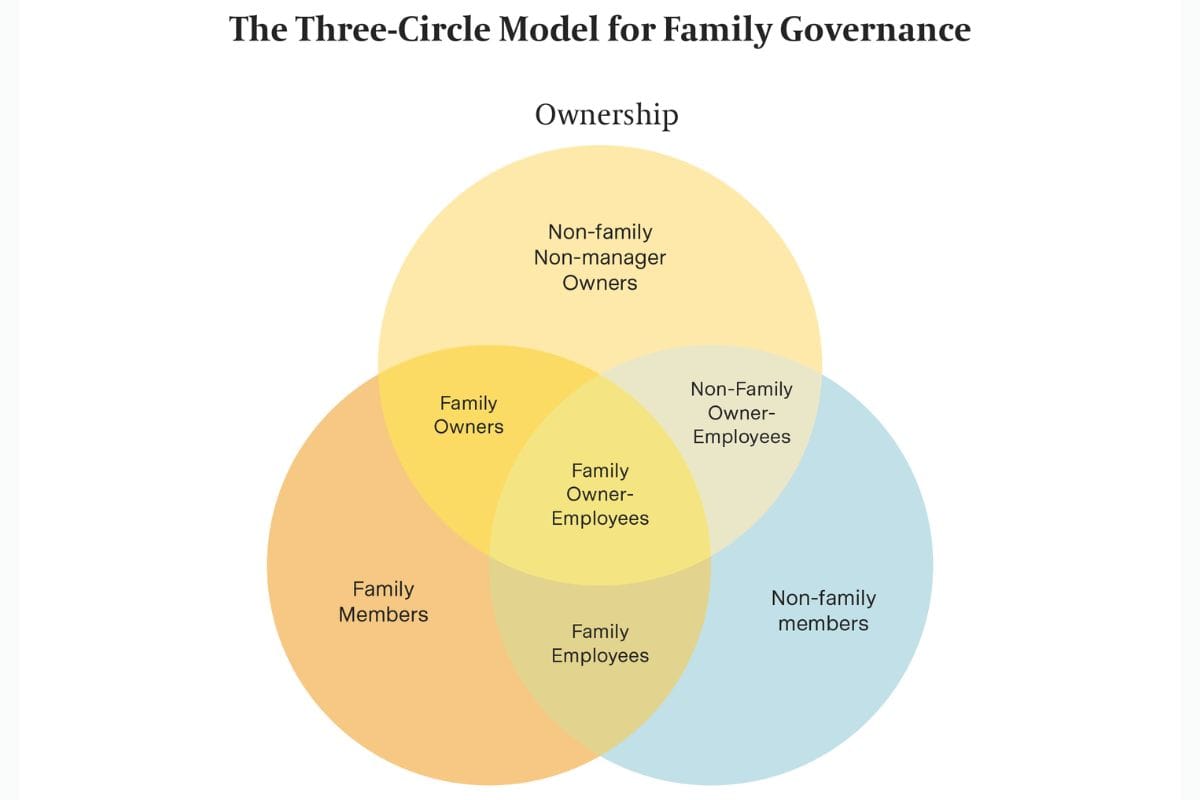
One of the most transformative legal updates driving the Dubai business sector in 2026 is the broad authorization of multiple share and quota classes for mainland Limited Liability Companies. Previously, this sophisticated structuring tool was largely restricted to offshore free zones like the Dubai International Financial Centre. The current expansion of the Commercial Companies Law allows onshore family entities to decouple economic benefits from operational control.
This flexibility directly addresses the demographic reality of a third-generation or fourth-generation expansion, where a single founding patriarch's equity is distributed among dozens of grandchildren and cousins. Inevitably, some heirs will possess the passion and professional acumen to manage the family enterprise actively, while others will prefer to pursue entirely different career tracks.
By creating distinct categories of equity, the family council can distribute Category A shares, which carry heavy voting rights and direct operational vetoes, exclusively to qualified family members running the business or trusted external executives. Meanwhile, passive family members can receive Category B shares, which guarantee robust profit entitlements and dividend rights but carry zero voting influence.
This mechanism protects active management from being paralyzed by the votes of non-operating shareholders, while simultaneously ensuring that all bloodline descendants receive their fair share of the generational wealth.
Operational Protection: Managing Deceased Shareholder Interests and Exit Strategies
The ultimate test of a family corporate governance structure occurs during a major succession event or when an individual shareholder demands to exit the business entirely. Without an explicit, legally backed mechanism, the sudden passing of a majority stakeholder can trigger an immediate asset freeze, lengthy court proceedings, or worse, the forced liquidation of core corporate assets to satisfy probate claims.
The 2026 implementation guide for the updated Commercial Companies Law introduces highly sophisticated statutory protections to manage these scenarios systematically. Onshore companies in Dubai can now embed explicit drag-along and tag-along rights directly into their Articles of Association, alongside pre-agreed valuation metrics for the transition of shares to heirs.
If a partner decides they want to cash out of the family firm to launch an independent venture, they cannot simply sell their equity to an external competitor or a hostile private equity fund. The law solidifies a strict Right of First Refusal, meaning the shares must be offered to existing family partners first.
Furthermore, the family entity possesses the legal right to execute a corporate buy-back of up to 30 percent of its own outstanding shares. This allows the business to buy out an disgruntled or exiting relative using corporate treasury funds, cleanly retiring their equity without threatening the overall stability of the primary operating group.
The Evolution of the Board: Introducing Independent External Oversight
As a Dubai family business matures past its second generation, the complexity of managing multi-sector portfolios, such as balancing real estate holding companies alongside manufacturing units and digital retail platforms, usually outstrips the capabilities of an purely family-run management team. Transitioning from an informal family management style to a institutionalized board structure is an absolute necessity.
A modern Dubai corporate governance board should actively incorporate independent, non-family directors. Bringing in seasoned external professionals, whether they are international logistics experts, corporate finance specialists, or local legal authorities, changes the entire psychology of the boardroom.
Independent directors serve as a neutral buffer, keeping discussions focused entirely on commercial metrics, risk management, and operational efficiency rather than historical family grievances.
Furthermore, the presence of an independent, highly structured board drastically elevates the institutional credibility of the family business in the eyes of external stakeholders. When a local enterprise seeks expansion capital, negotiates lines of credit with regional banks, or pursues complex mergers and acquisitions, demonstrating that the firm operates under rigorous, transparent board oversight significantly lowers the perceived risk profile, accelerating deal velocity and lowering borrowing costs.

Dispute Resolution: Leveraging the Family Business Settlement Committees
Even the most meticulously designed corporate governance structures cannot completely immunize a multi-generational family from internal disputes. The true strength of a governance framework lies not in the total absence of conflict, but in the speed, confidentiality, and fairness of the mechanism used to resolve it.
Public litigation in open courts can be catastrophic for a premium family brand. It exposes private financial records, damages relationships with global suppliers, and signals operational instability to key corporate clients. To prevent this reputational damage, the Dubai government has established dedicated, specialized judicial bodies known as the Family Business Dispute Settlement Committees.
When an internal ownership or management conflict reaches an impasse, the registered family business can bypass traditional court systems entirely. Disputes are referred straight to this specialized committee, which operates under strict confidentiality protocols.
The committee leverages deep expertise in both modern commercial law and traditional Sharia inheritance principles to mediate the situation. If a mutual agreement cannot be reached, the committee possesses the judicial authority to issue binding rulings that are fully enforceable by local authorities, resolving the roadblock quickly without dragging the family name through a public legal battle.
Future Proofing the Micro-Brand Network for the D33 Economic Agenda
The institutionalization of corporate governance is directly aligned with Dubai’s broader economic master plans, specifically the D33 Economic Agenda, which aims to double the city's economy over the next decade. The government recognizes that for Dubai to cement its status as a premier global financial hub, its largest private enterprises must be built to last for generations.
For forward-thinking family businesses, implementing robust corporate governance is not merely a box-checking exercise driven by legal compliance. It is a highly proactive, future-proofing strategy.
By utilizing the modern toolkits provided by the updated UAE legal codes, including tiered share classes, automated succession buy-backs, and confidential dispute resolution pipelines, local families can insulate their commercial empires from the natural fractures of generational expansion.
Ultimately, a family business that builds its foundation on an invisible grid of strong, transparent, and professional corporate governance ensures that its legacy remains unshakeable, enabling the next generation of leadership to steer the enterprise toward new heights of global competitiveness.
Also Read:
 Shahba Mayyeri
 Umema Arsiwala
 Shahba Mayyeri
 Ummulkiram Pardawala