
On the top-performing retail apps in the UAE, the window between a shopper's first tap and a completed purchase has become one of the most closely watched internal metrics in the industry. Leading retail groups track it session by session, and the direction of travel is consistent: shorter. A shopper who finds friction at any point in that window rarely escalates a complaint. They close the app and open a competitor's.
The pressure behind this compression has its roots partly in technology and partly in how the UAE's retail calendar works. Spending in the Emirates clusters around specific, high-intensity periods: Ramadan, the Eid breaks, UAE National Day, the Dubai Shopping Festival, and the back-to-school season. During these windows, consumer intent is high and dwell time is short. A shopper looking for an Eid gift set on the evening of the 27th of Ramadan has already decided to buy, and the only variable is where. Retailers that can surface the right product in the first few seconds of a session capture that intent. Those who cannot are effectively invisible during the moments that matter most commercially.
Taken together, the compression of individual decision windows and the intensity of culturally driven spending peaks have made the buyer journey itself the primary competitive battlefield in UAE retail. Product quality, price, and brand equity remain important, but the experience of moving from awareness to purchase, and specifically how much cognitive effort that journey demands of the shopper, has become equally decisive in determining where a transaction lands.
Predictive AI, and the hyper-personalization strategies built on top of it, address this directly. Rather than responding to actions a customer has already taken, these systems work ahead of the moment of intent, anticipating what a specific individual is likely to want next and positioning the relevant product, content, or offer accordingly. This capability is being deployed at scale by UAE-based retail conglomerates across fashion, grocery, beauty, and daily essentials, each adapting it to the specific rhythms of this market.
The Technology Layer: Beyond Recommendations
What Separates Predictive AI from Standard Personalization
Most consumers are familiar with basic personalization: a website that shows products similar to a previous purchase, or an email triggered by a browsing session. These systems are reactive. They process a completed behaviour and respond accordingly. The logic is straightforward: if a customer bought running shoes, show them sports socks.
Predictive hyper-personalization operates on a different model. It integrates multiple live data streams simultaneously and uses machine learning to identify patterns that no individual signal would reveal on its own. These streams include:
- Transactional history: what a customer has bought, returned, or exchanged, and at what price points
- Behavioural signals: time spent on specific product categories, scroll depth, session frequency
- Contextual data: time of day, day of week, public holidays, weather conditions in the customer's emirate
- Geo-spatial patterns: proximity to a store, distance from a fulfillment hub, movement patterns (where permissions allow)
- Lifestyle markers: family composition (inferred or declared), cultural events such as Ramadan or Eid shopping cycles, and local school calendar triggers
The output is not a product suggestion list. It is a probabilistic model of what a specific individual is likely to want next, and when. The system is continuously updated, meaning the model improves with every interaction.
In technical terms, UAE retailers are deploying a combination of deep learning models, large language models (LLMs) for natural language understanding, and real-time inference engines that can deliver a personalized output within milliseconds of a session beginning. The result is an experience that feels intuitive to the consumer because, in practice, the system has already done the decision-making work.
Data Residency and Compliance
Operating in the UAE adds a specific layer of complexity to data architecture. The country's data protection regulations, anchored in Federal Decree-Law No. 45 of 2021 on the Protection of Personal Data (PDPL) and its accompanying executive regulations, require that personal data about UAE residents be processed in ways that are transparent, purpose-limited, and subject to consent mechanisms.
For retailers building hyper-personalization systems, this creates a practical requirement: personal data used for AI inference must, in many cases, be held within UAE-based cloud infrastructure. Major cloud providers operating in the UAE, including Microsoft Azure, which operates from its UAE North region in Dubai, and AWS, which runs a dedicated UAE region, enable retailers to maintain data residency while still accessing the compute power required to run large-scale machine learning models. This is not simply a compliance checkbox. Retailers have found that local data residency also reduces latency, meaning personalization outputs reach the consumer faster.
Case Study: Luxury and Fashion (Chalhoub Group)
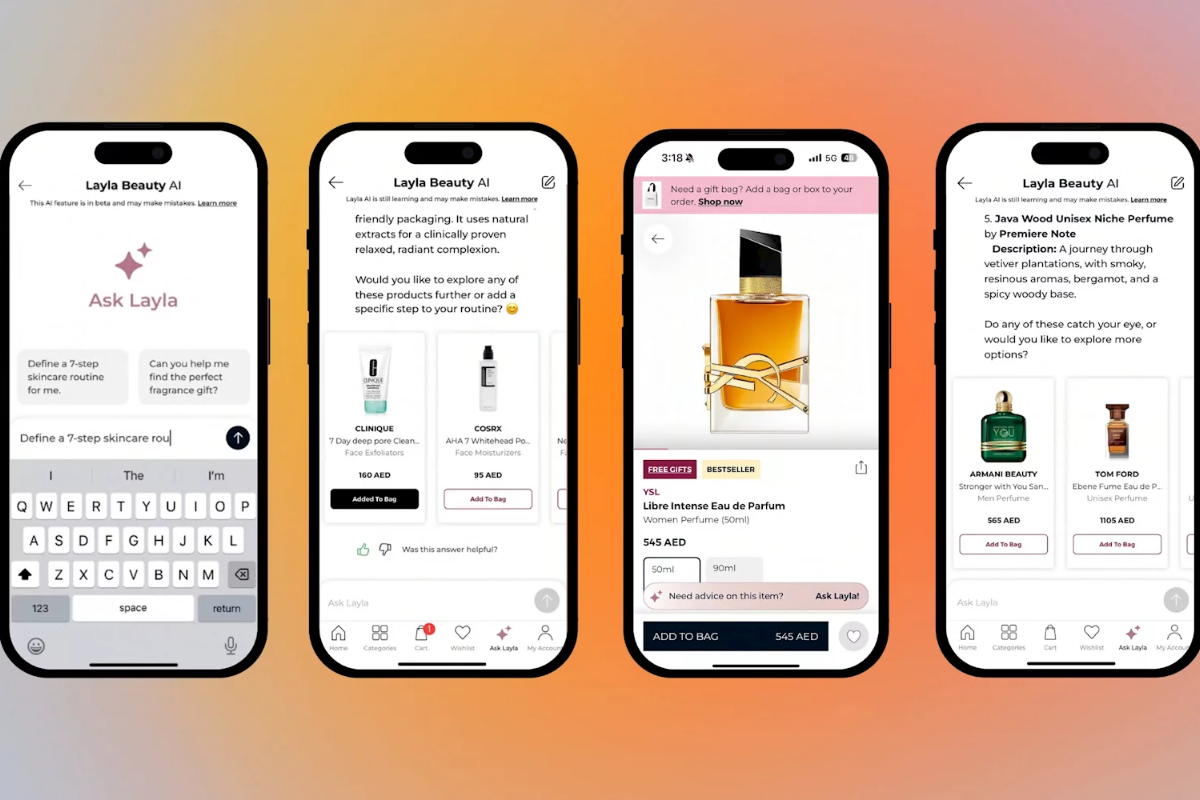
Building an Emotionally Intelligent Shopping Experience
The Chalhoub Group, one of the largest luxury retail and distribution businesses in the Arab world, has been public about its intent to reposition itself as a technology-led company by 2033. Its AI roadmap, anchored in what it calls its "Vision 2033", places AI-driven customer experience at the centre of its long-term growth strategy.
A core pillar of this roadmap is the development of AI-powered beauty and lifestyle assistants designed to move beyond the transactional logic of standard recommendation engines. Rather than serving a customer based solely on what they have already bought, Chalhoub's systems are built to engage with a customer's individual context, including the occasion they are shopping for, their brand affinities, and their position in the purchase cycle.
In practical terms, this means the personalization layer operates across several dimensions simultaneously:
- Preference modelling at depth: The system tracks not just which brands a customer gravitates toward, but the underlying pattern, including fragrance family preferences, gifting behaviour, seasonality, and price sensitivity thresholds.
- Occasion-aware recommendations: Chalhoub's customer base in the Gulf is heavily shaped by cultural and religious calendars. The AI layer is built to recognise the significance of gifting periods such as Eid, National Day, and Valentine's Day, and adjusts recommendations accordingly, often weeks in advance of the event.
- Cross-category inference: A customer who regularly buys premium skincare is offered relevant entry points into adjacent categories: a new perfume from a brand they already trust, or a complementary beauty tool. The connection is based on a calculated probability drawn from existing behaviour, not a generic upsell logic.
The goal is to reduce the average number of interactions required before a purchase decision is made. In a luxury context, where the purchase cycle can span multiple visits and considerable deliberation, compressing that journey without reducing the sense of quality and care is a significant challenge. Chalhoub's position is that an AI system built around context, what a customer values, what occasion they are shopping for, and what their history suggests about their next likely action, can deliver that compression without losing the human quality of the experience.
Case Study: Grocery and Daily Needs (Majid Al Futtaim and Lulu Group)
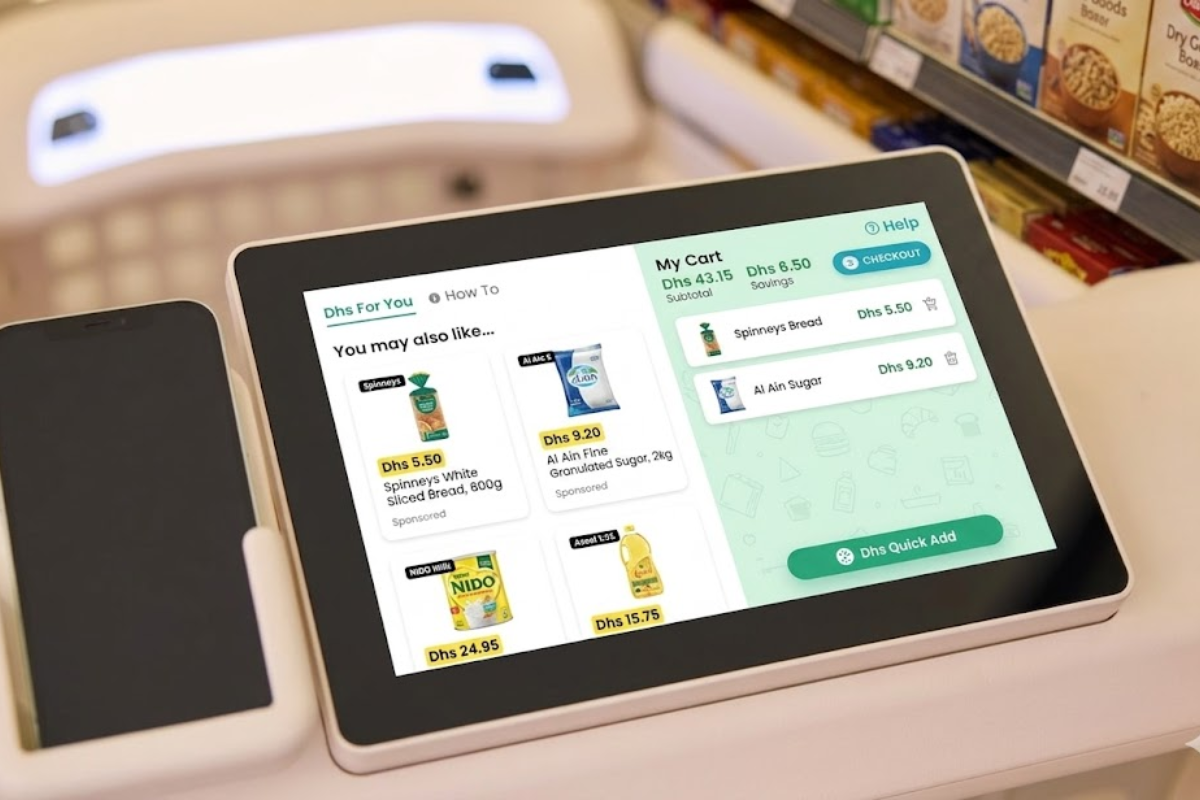
Anticipating the Weekly Shop
The application of predictive AI in grocery retail has a very different character to luxury. The stakes are different: a missed luxury recommendation costs margin, while a failed grocery delivery costs trust in a category defined by habit and reliability. The cadence is also different: a customer buys luxury items irregularly, but they interact with their supermarket multiple times a week.
Majid Al Futtaim (MAF), which operates Carrefour across the UAE and a number of other GCC markets, has invested significantly in AI-driven customer intelligence as part of its broader digital transformation. The group has a documented partnership with Microsoft Azure, and its customer experience teams have used data analytics and machine learning to deliver more relevant promotions, more precisely timed outreach, and a more coherent omnichannel experience across the Carrefour app, in-store interactions, and the group's loyalty programme, SHARE.
The predictive model in the grocery context works around a concept that retail technology teams call "basket anticipation." The system analyses a customer's purchase history over weeks and months, identifies their recurring buying patterns, and builds a model of their likely weekly or fortnightly basket. By the time a customer opens the Carrefour app on a Thursday afternoon, a common top-up shopping moment in UAE households before the weekend, the system has already generated a personalized list of likely purchases. The customer does not start from a blank search page. They begin from a curated starting point.
This has measurable effects on the buyer journey. Sessions that begin with a pre-populated anticipated basket show significantly shorter completion times and higher conversion rates than sessions that begin with a standard homepage. The customer has fewer decisions to make, because the system has already made reasonable inferences about what they need.
Lulu Retail Group has taken a parallel path. The group's 2025 and 2026 omnichannel strategy, which has been accompanied by significant investment in its technology stack, places predictive inventory management and personalized shopping at the centre of its digital experience. Lulu's mobile platform uses behavioural data across both its in-store (where loyalty card usage provides rich transactional data) and online channels to build household-level consumption profiles. These profiles feed directly into the group's "quick commerce" fulfilment model, targeting delivery windows of 40 to 60 minutes across major UAE urban areas.
Operational Efficiency: The Inventory Side of Personalization
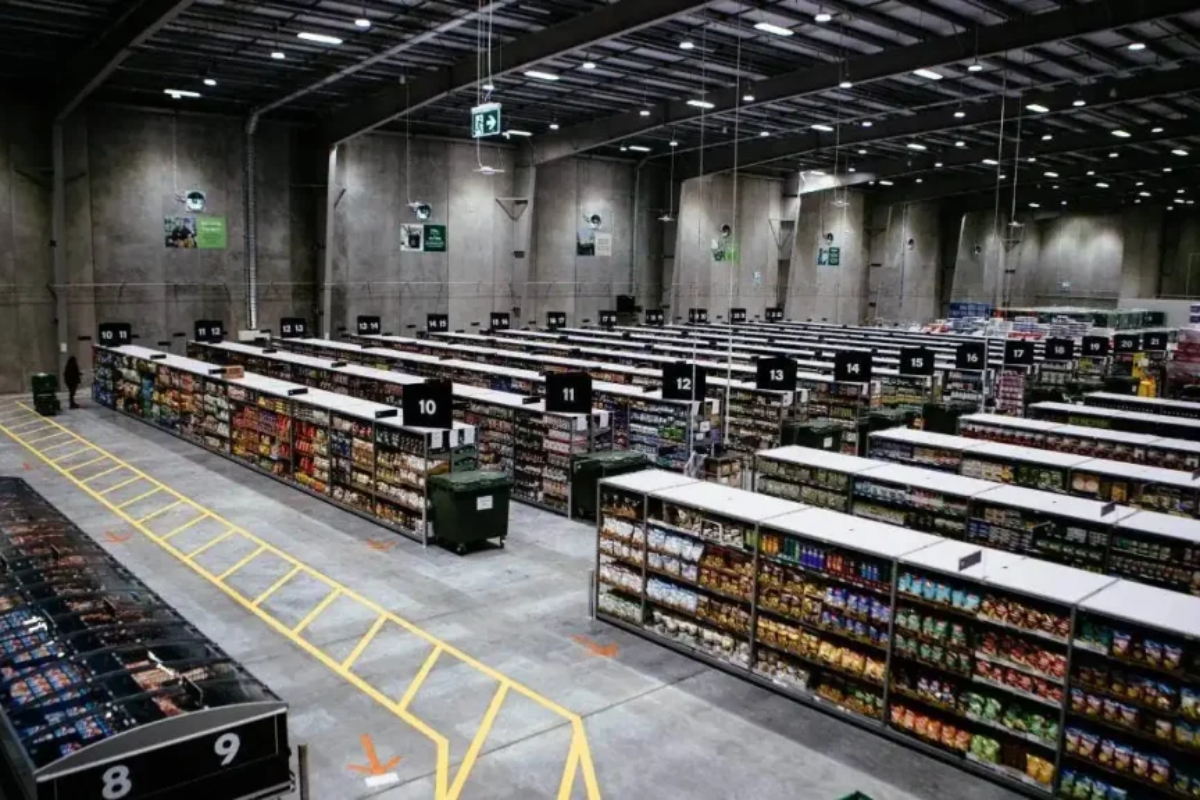
Moving Stock Before the Customer Decides
The most visible dimension of hyper-personalization is the front-end experience: what the customer sees and feels. The less visible, but equally important, dimension is what happens in the warehouse.
If a retailer's AI system predicts that a customer in Jumeirah will order a specific SKU within the next 48 hours, that prediction is only valuable if the item is physically close enough to fulfil a same-day or next-day delivery promise. This is the operational challenge of quick commerce: the speed of delivery is a function not just of logistics execution but of inventory positioning.
UAE retailers running sophisticated predictive models have begun feeding their personalization outputs back into their supply chain systems. The process works as follows:
- Demand aggregation: The system aggregates individual-level predictions across its customer base to produce a micro-market level forecast. For a dark store serving, say, the Mirdif or Al Barsha catchment area, the AI generates an expected demand curve for each SKU over the next 12 to 72 hours.
- Pre-positioning logic: Inventory management systems use this forecast to pull stock from a central warehouse to a local dark store or micro-fulfillment centre before the demand arrives. The item is not moved in response to an order. It is moved in anticipation of the cluster of likely orders that the model expects.
- Dynamic rebalancing: If purchasing patterns shift due to a promotion, a weather event, or a surge driven by a social media trend, the system updates its forecast and triggers a rebalancing of stock between nodes in real time.
For categories with high purchase predictability, such as household consumables and fresh produce, this pre-positioning has materially reduced the "failed delivery" rate, meaning occasions where a promised delivery window cannot be met because a SKU is out of stock at the nearest fulfilment point. It has also reduced the cost of last-minute inter-node transfers, which are expensive and slow.
This back-end intelligence is, in effect, the infrastructure that makes the front-end promise believable. A customer can only receive a product in 45 minutes if someone has already done the work of ensuring that the product is in the right place.
Consumer Trust and Data Privacy: The Regulatory Context

The UAE's Ethical AI Commitments
Hyper-personalization depends on data. The more granular and recent the data, the more accurate the predictive model. This creates an inherent tension: consumers benefit from personalization, but many are also cautious about the depth of data collection it requires.
In the UAE, this tension is managed within a specific regulatory and policy framework. The UAE National Strategy for Artificial Intelligence, launched with a 2031 horizon and overseen by the AI, Digital Economy, and Remote Work Applications Office, establishes principles that govern how AI is used in commercial contexts. These include requirements for transparency in automated decision-making, accountability mechanisms for organisations deploying AI, and a commitment to ensuring that AI systems do not discriminate or cause harm.
For retailers, this translates into several practical requirements:
- Consent management: Customers must be informed about what data is collected and how it is used for personalization. Opt-in mechanisms for AI-driven features are required in compliant deployments.
- Right to explanation: Where an AI system makes a decision that affects a customer, such as offering a promotional price to one segment but not another, the retailer must be able to explain the basis of that decision.
- Data minimization: Systems should not collect more data than is necessary for the stated purpose. This places a discipline on the data architecture that can actually improve model efficiency, since noisy or irrelevant data reduces predictive accuracy.
Beyond compliance, retailers in the UAE have found that transparency about personalisation is commercially advantageous. Customers who understand that their data is being used to make their shopping easier, and who trust the brand managing that data, are more likely to share additional information voluntarily, which in turn improves the quality of the personalization model. Trust is a prerequisite for hyper-personalization working well, not a constraint on it.
Major retail groups operating in the UAE have invested in dedicated data governance teams and, in some cases, published AI principles that align with both local regulatory requirements and broader international standards such as the OECD's AI Principles. This is a maturing posture: the retail sector is moving away from treating data privacy as a legal obligation to be managed, and toward treating it as a dimension of the customer relationship to be cultivated.
Comparing Approaches: Traditional vs. Predictive Hyper-Personalization
The following table summarizes the key structural differences between the standard personalization methods that most UAE retailers were using five years ago and the predictive hyper-personalization systems being deployed in 2026.
|
Dimension |
Traditional Personalization (2019–2022) |
Predictive Hyper-Personalization (2026) |
|
Trigger |
Customer action (click, purchase, search) |
Anticipated behaviour before the action occurs |
|
Data inputs |
Transaction history, basic browsing data |
Transaction + behavioural + contextual + geo-spatial +
lifestyle data |
|
Processing speed |
Batch processing (hours or overnight) |
Real-time inference (milliseconds) |
|
Output |
Product recommendation list |
Curated experience, pre-populated basket, or dynamic
interface |
|
Inventory link |
None or manual |
Direct feed into supply chain pre-positioning |
|
Personalization depth |
Segment-level (broad customer groups) |
Individual-level (one-to-one model per customer) |
|
Cultural sensitivity |
Seasonal promotions manually programmed |
AI-inferred cultural occasion awareness built into model |
|
Model improvement |
Periodic retraining (monthly or quarterly) |
Continuous learning from live session data |
|
Data governance |
Ad hoc, often reactive to regulation |
Embedded consent management and explainability frameworks |
|
Customer experience |
Reactive: responds after the shopper signals intent |
Proactive: reduces the steps to purchase before intent is
fully formed |
The shift described in this article goes beyond technology — it reflects what retailers believe the purpose of a shopping experience should be.
Reactive retail assumes that the customer knows what they want, and the retailer's job is to serve that expressed need quickly and efficiently. This model works, but it places the cognitive burden of discovery and decision-making entirely on the shopper. Every search query, every product comparison, every abandoned cart represents friction that the retailer has not yet resolved.
Proactive retail, made possible by the predictive AI systems being deployed by Chalhoub Group, Majid Al Futtaim, Lulu Retail, and a growing number of mid-market UAE operators, shifts this logic. The system does the work of anticipation, so the customer arrives at a decision point with less effort. The buyer journey is shorter, not because steps have been removed by force, but because the right information and the right product have been positioned closer to the moment of decision.
In the UAE's specific context, serving a digitally literate, time-sensitive, multi-cultural consumer base spread across urban catchments with high delivery expectations, this capability has moved from a competitive advantage to a baseline expectation. Retailers who cannot anticipate demand, position inventory intelligently, and deliver a personally relevant interface across mobile, web, and in-store channels are already operating at a disadvantage.
The underpinning of all of this remains human. Data governance, ethical AI commitments, and the cultural sensitivity required to serve a diverse UAE population well cannot be automated in their entirety. The retailers making the most effective use of predictive AI in 2026 are those who have understood that the technology accelerates and scales good judgment rather than replacing it.
The buyer journey is getting shorter. The infrastructure making that possible is deeper and more considered than it has ever been.
Also read:
 Shahba Mayyeri
 Ummulkiram Pardawala
 Ummulkiram Pardawala