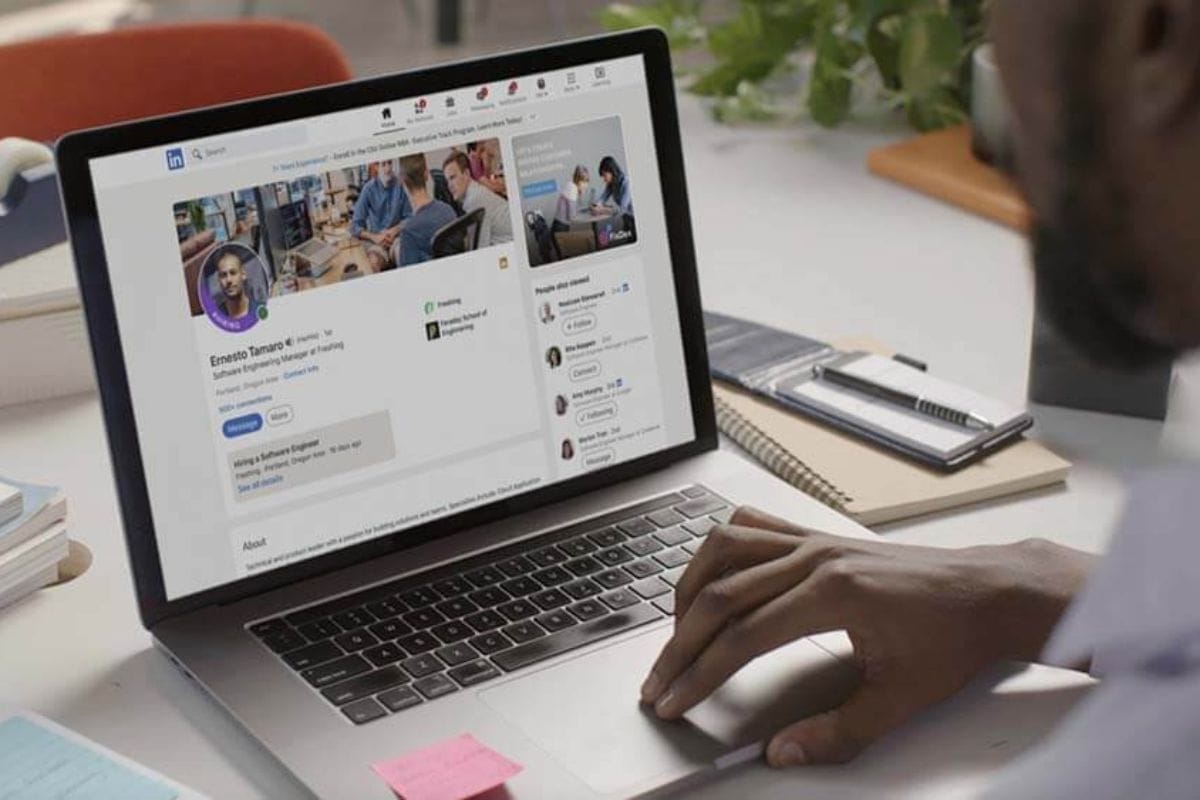
If you run a business page or a personal profile on LinkedIn and you have watched your numbers slide this year despite doing everything you did in 2025, you are not imagining it and you are not alone. Across Dubai and the wider Gulf, professionals who built steady followings through consistent posting are suddenly getting a fraction of the views they used to. Posts that would have comfortably crossed a few thousand impressions six months ago are now struggling to clear a few hundred. Comment sections that used to fill up within the hour are quiet for days.
For a region where LinkedIn has become one of the primary channels for hiring, business development and personal branding, that kind of drop is not a minor inconvenience. It changes how visible a company is to the clients it wants, how discoverable a candidate is to the recruiters searching for them, and how much weight a founder's voice actually carries online.
The obvious explanation would be to blame the algorithm and move on, but that misses what is actually happening here. LinkedIn has genuinely rebuilt how it decides who sees what, and the GCC market has its own layer of complexity sitting on top of that global shift. Multilingual audiences, a professional base that skews heavily toward finance, real estate and government-linked sectors, and a culture of relationship-driven networking all interact with the new system in ways that a generic global playbook does not fully account for. Understanding both layers, the platform-wide mechanics and the regional texture, is the only way to actually adapt rather than just react.
The Platform Shifted From Who You Know To What You Care About
For most of LinkedIn's history, what showed up in your feed was largely decided by your network. If someone was a first degree connection, their posts had a real chance of reaching you regardless of whether the content had anything to do with your interests. That system, often described as a relationship graph, has been replaced by something closer to an interest graph. The platform now builds a detailed picture of what each user actually engages with and distributes content based on topical relevance rather than proximity in your network. This means a well written post from someone you have never connected with can now land in your feed if the system believes the subject matches what you consistently read, save and comment on.
This single change explains most of the confusion professionals feel right now. Reach used to be somewhat democratic in the sense that a decent post from anyone in your network had a shot. Now the platform is asking a sharper question before it distributes anything: does this account actually have the authority to be talking about this topic, and does the content reward attention once someone stops to look at it. LinkedIn's underlying ranking model, widely referred to in industry circles as 360Brew, evaluates your profile, your posting history and your engagement patterns as one connected signal rather than judging each post in isolation. A finance director whose headline says exactly that and who consistently posts about regulation and market trends will get amplified further into a relevant audience than someone whose profile and content do not obviously match.

Why The Gulf Market Feels This Shift More Sharply
The GCC has some of the highest LinkedIn penetration rates in the world, with the UAE regularly cited among the countries where membership numbers exceed the size of the working population itself, a sign of just how central the platform has become to professional life here. That density cuts both ways. On one hand it means the audience for well positioned content is genuinely large and highly active. On the other hand it means the competition for a narrower slice of algorithmic attention has become intense, and a region built on relationship capital is now operating inside a system that rewards topical consistency over who you happen to know.
A few regional dynamics are worth calling out specifically.
The market is unusually multinational and multilingual. A single feed in Dubai might include a British expat in real estate, an Indian finance professional, an Emirati government relations specialist and a Lebanese marketer, all reading in English but bringing very different professional vocabularies and interests. The interest graph has to work harder to categorise this audience correctly, which means vague or generalist content struggles even more than it would in a more homogenous market.
Government, regulatory and Vision-linked content performs unusually well here. Posts that reference CBUAE updates, DIFC and ADGM developments, Saudi Vision 2030 progress, or sustainability commitments tied to national strategy tend to generate the kind of substantive discussion the algorithm now rewards, because these topics genuinely matter to a large share of the professional base and invite informed comment rather than generic praise.
LinkedIn functions as a hiring and vetting tool as much as a content platform in this region. Recruiters at banks, sovereign entities and multinationals lean heavily on LinkedIn Recruiter searches, which means a large share of daily activity is search and profile viewing rather than feed scrolling. That behaviour shapes what the algorithm considers a signal of authority, and it rewards profiles where the stated role, the posting history and the search-relevant keywords all line up cleanly.
Company pages are structurally disadvantaged everywhere, and the GCC is no exception. Organic reach for brand pages has fallen sharply worldwide because the platform is built to surface individual professional voices rather than corporate broadcasts, and Gulf businesses that have relied heavily on their company page as the main content hub are feeling that gap acutely.
What The Numbers Actually Show
It helps to look past the anecdotal frustration and at what independent analysis of 2026 LinkedIn performance data is actually showing, because the patterns are consistent enough to plan around.
- Average organic reach across the platform has reset to a meaningfully lower baseline compared with 2024 and 2025, with several independent studies putting the year on year drop for standard posts somewhere between a third and a half.
- Saves and bookmarks now carry far more weight than likes, with some analyses suggesting a single save can drive several times more distribution than a like and roughly double what a comment produces.
- Engagement that arrives a day or two after publishing, rather than in the first hour, is increasingly read as a sign of lasting value and can meaningfully extend a post's reach well after it would previously have gone quiet.
- Document carousels and native video continue to outperform plain text on average, though the gap is narrowing as more accounts flood the format and completion rates start to matter more than the format itself.
- Posts containing external links still see reduced distribution compared with identical posts that keep readers on the platform, even though the old trick of hiding a link in the first comment no longer offers meaningful protection.
- Polls, once a reliable reach hack, have become one of the weakest performing formats because they require almost no dwell time and provide little signal about genuine interest.
None of these numbers are unique to the Gulf, but because the regional audience is smaller and more concentrated than markets like the US or the UK, small shifts in algorithmic weighting tend to produce more visible swings in an individual account's performance.

How To Adapt Without Chasing Every Update
Reacting to every reported tweak in the algorithm is a losing game, since the underlying logic changes faster than any single tactic can keep up with. What actually holds up is aligning your presence with the principles the system consistently rewards, then adjusting the details as the platform evolves.
Start by tightening the match between your profile and your content. If your headline says operations director and your posts wander between leadership advice, weekend travel and unrelated commentary, the algorithm reads that as a mismatch and limits how far your content travels. Pick a clear professional lane, state it plainly in your headline and about section, and let your posting history back that up over time.
Shift your own definition of a successful post away from likes and toward saves and considered comments. When you write, ask whether the post gives someone a reason to bookmark it for later, whether that is a framework, a checklist, a regulatory breakdown or a genuinely useful piece of local market analysis. Generic motivational content rarely earns that kind of response, while specific, regionally grounded insight usually does.
Lean into the topics that already carry weight in this market rather than importing a content calendar built for a different region. Regulatory shifts, sector specific hiring trends, sustainability commitments tied to national strategy and honest commentary on how business is actually done in Dubai or Riyadh tend to draw the kind of substantive discussion the platform now favours, partly because the audience here has real professional stakes in those subjects.
Move your primary content effort from the company page to the personal profiles of your leadership and team, since brand pages are seeing a fraction of the reach individual voices get under the current system. A handful of employees consistently sharing thoughtful commentary will usually outperform a company page posting the same volume of content on its own.
Finally, resist the urge to post daily just to stay visible. Consistency matters far more than frequency, and publishing too often can cannibalise the reach of your own previous post before it has had time to circulate. Two or three well considered posts a week, each built around one clear idea worth saving, will generally outperform a scattered daily stream in this environment.
The platform has not become harder to use so much as it has become harder to fake. The accounts still growing steadily through 2026 are the ones treating LinkedIn as a place to demonstrate real expertise rather than chase quick engagement, and in a market as relationship driven and as densely professional as the Gulf, that shift rewards exactly the kind of credible, specific voice this region has always valued in person and is now finally starting to reward online.
Also Read:
 Umema Arsiwala
 Maryam Pervez
 Ummulkiram Pardawala